 PixQR
Overview
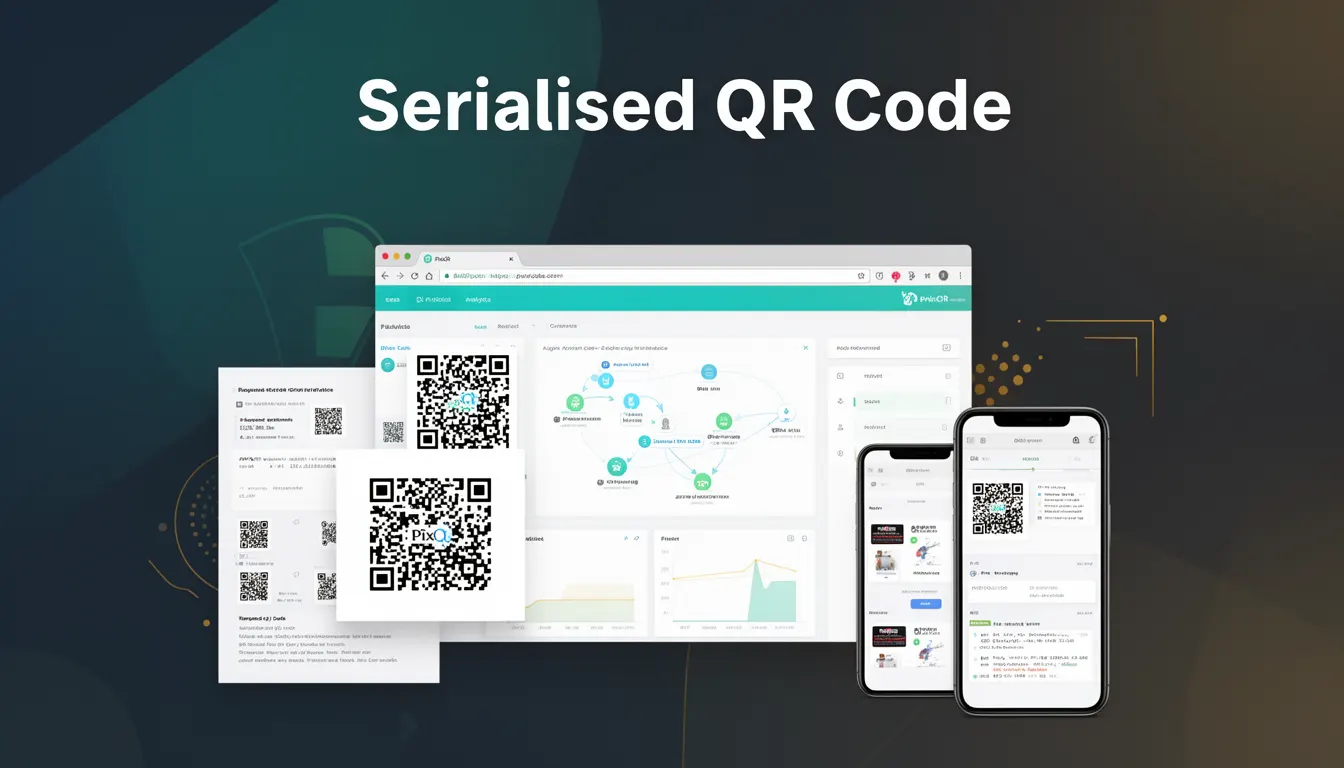
A Serialised QR Code is a specific type of QR code used in packaging and product identification where each physical item in a batch or production run is assigned a unique identifier. This identifier is encoded into a QR code that, when scanned, directs users or systems to a specific digital resource or data point. In the context of PixQR, this term refers to a workflow where a QR code maps to a unique digital entry in a database or content management system.
Unlike static QR codes that point to a single URL, a serialised QR code is part of a larger system that allows for dynamic content delivery. Each QR code in a sequence is tied to a unique product or batch, enabling traceability, personalized content, or product-specific analytics. This approach is particularly useful in industries such as pharmaceuticals, consumer goods, and logistics, where product tracking and verification are essential.
Why It Matters
Serialised QR codes are critical for product tracking, fraud prevention, and personalized user experiences. In a production environment, each QR code must reliably resolve to a unique endpoint or data set. This ensures that when a consumer scans a product, they are directed to the correct information, such as product details, usage instructions, warranty data, or recall notices.
From a developer’s perspective, implementing serialised QR codes requires careful attention to backend data handling, API security, and scalability. Each unique QR code must be registered in a system that can handle high-volume lookups without performance degradation. This also means that the system must maintain data integrity and avoid exposing sensitive information through predictable patterns or URL structures.
How It Works
Serialised QR codes function through a combination of unique identifiers, database mapping, and dynamic redirect logic. The process begins with assigning a unique serial number to each physical item. This number is then encoded into a QR code using a specific data format, such as a URL or a hash. When scanned, the QR code triggers a lookup in a database or API that maps the serial number to a specific digital resource.
- Each serial number is typically a unique string or numeric identifier that is generated during the manufacturing or packaging process.
- The QR code is generated using a standard encoding format, such as UTF-8, and may include additional metadata or parameters.
- When scanned, the QR code triggers a redirect or API call to a backend system that resolves the serial number to a unique digital resource.
- The system must ensure that the mapping between the serial number and the resource is secure, scalable, and resistant to abuse.
- Each QR code must be traceable and maintainable, allowing for updates or corrections to the associated digital content without re-printing the physical label.
Quick Reference
| Item | Purpose | Notes |
|---|---|---|
| Serial Identifier | Uniquely identifies a physical product | Must be unique within a batch or production run |
| QR Code Encoding | Encodes the serial identifier | Should use a standard format like URL or hash |
| Backend Mapping | Maps serial to digital resource | Must support high-volume, low-latency lookups |
| Redirect Logic | Handles QR scan response | Should be secure and prevent unauthorized access |
| Content Management | Updates or modifies digital content | Must support versioning and access control |
Basic Example
PixQR Example QR
This QR links directly to this glossary page, so printed notes, onboarding docs, and support material can bring scanners back to the current reference.
/glossary/qr-code-for-packaging/qr-codes-for-packaging-serialised-qr-code

This basic example demonstrates how a serial number can be encoded into a QR code URL. The serial number is appended to a base URL, forming a unique endpoint for each product.
https://api.pixqr.com/product/serial/123456789This URL structure allows for easy mapping to a backend service. The serial number 123456789 is unique and used to retrieve specific product data. The base URL is configured to route to the appropriate API endpoint for product information.
Production Example
In a production environment, serialised QR codes are typically generated using a backend system that ensures secure, scalable handling of unique identifiers. The following example shows a simplified workflow for generating a QR code with a serial number.
const generateQRCode = (serialNumber) => {
  const baseUrl = 'https://api.pixqr.com/product/serial/';
  const fullUrl = `${baseUrl}${serialNumber}`;
  return fullUrl;
};
This version is more suitable for production because it encapsulates the logic for generating QR code URLs, making it reusable and maintainable. It also ensures that the base URL is consistent and can be updated without affecting the core logic. The function can be extended to include additional parameters or validation steps.
Common Mistakes
- Reusing serial numbers across different products or batches, leading to incorrect data retrieval or duplication.
- Using predictable or sequential serial numbers, which can expose the system to enumeration attacks or data leaks.
- Not implementing proper access controls or authentication for the backend endpoints, allowing unauthorized access to product data.
- Failing to validate QR code content before generating the physical label, resulting in broken or incorrect links.
- Not designing the system to handle high-volume scans or API requests, which can lead to performance bottlenecks or outages.
Security And Production Notes
- Serial numbers should be cryptographically random or pseudo-random to avoid predictability and potential enumeration attacks.
- Backend APIs must implement rate limiting and authentication to prevent abuse or unauthorized access to product data.
- QR codes should not expose sensitive data directly in the URL or payload; instead, use a secure mapping system.
- Each QR code must be validated before printing to ensure it resolves correctly to a valid endpoint.
- Implement logging and monitoring for QR code scans to detect anomalies or unauthorized access attempts.
Related Concepts
Serialised QR codes are closely related to several other technologies and practices in product identification and digital content delivery:
- Dynamic Redirects: The mechanism used to route QR code scans to unique digital resources.
- Product Traceability: The ability to track a product through its lifecycle using identifiers.
- API Gateway: A system that manages access to backend services for QR code resolution.
- Unique Identifiers: The core concept behind serial numbers used in QR code generation.
- QR Code Encoding Standards: The technical specifications for how data is embedded in QR codes.