 PixQR
Overview
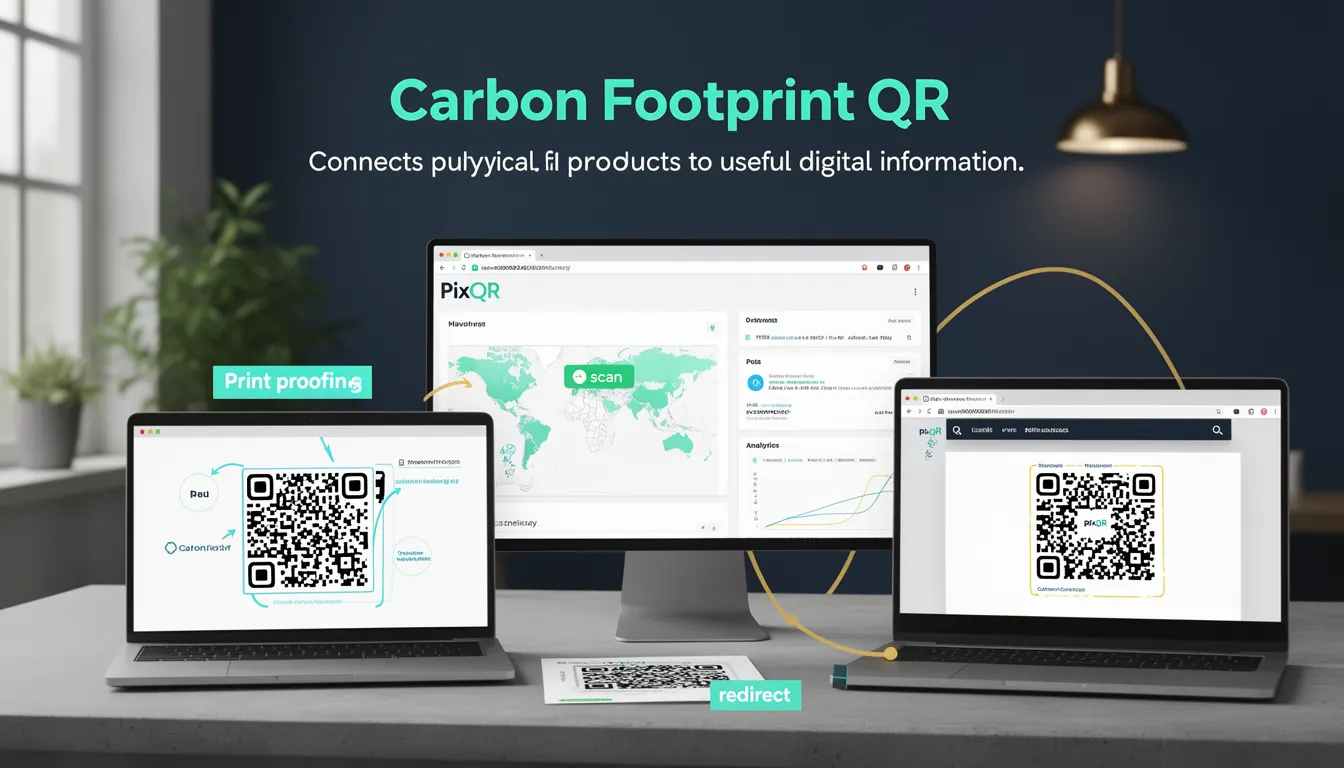
A Carbon Footprint QR is a specialized type of QR code used in product packaging to connect physical items to digital content that provides information about the environmental impact of that product. This type of QR code allows consumers to access detailed data such as carbon emissions, material sourcing, recyclability, and lifecycle analysis by scanning the code with a mobile device.
In the context of PixQR, Carbon Footprint QR codes are implemented using dynamic redirect technology, enabling brands to update information without reprinting physical packaging. These codes are particularly valuable for companies aiming to meet sustainability reporting standards, comply with environmental regulations, or communicate transparently with eco-conscious consumers.
Why It Matters
From a developer and product perspective, Carbon Footprint QR codes address the growing demand for environmental transparency in supply chains. They enable real-time updates of environmental data, which is critical for brands that need to adjust their information based on changing production processes, new certifications, or updated regulatory requirements.
Security and privacy are key considerations in production environments. These QR codes often link to content that may include sensitive data or be part of compliance reporting systems. PixQR ensures that dynamic redirects are secure and that access to underlying data is controlled through API keys and access tokens, reducing the risk of unauthorized access or manipulation.
Performance and scan reliability are also essential. In packaging environments, QR codes must be scannable under various lighting conditions and from different angles. PixQR's platform ensures that Carbon Footprint QR codes maintain high readability standards, even on low-quality print media or in challenging scanning environments.
How It Works
Carbon Footprint QR codes function as dynamic links that redirect to web-based dashboards or data pages containing environmental impact metrics. The QR code itself stores a URL or a reference to a backend system that dynamically retrieves the latest data.
- The QR code contains a unique identifier or URL that points to a data source, typically hosted on a secure PixQR backend or a branded domain.
- When scanned, the QR code triggers a redirect to a web page or API endpoint that delivers environmental data, such as carbon footprint, water usage, or recyclability.
- Data is often stored in structured formats like JSON or XML, allowing for easy integration with analytics tools or product information systems.
- Updates to environmental data are managed through PixQR's API, enabling brands to refresh content without changing physical packaging.
- Scan tracking and analytics are available to monitor how often consumers interact with the QR code, providing insights into engagement with sustainability messaging.
Quick Reference
| Item | Purpose | Notes |
|---|---|---|
| Dynamic Redirect URL | Points to environmental data page | Must be HTTPS and secure |
| API Key | Controls access to data | Required for content updates |
| Scan Tracking | Monitors QR code usage | Enables analytics |
| Data Format | Structured data for display | JSON or XML preferred |
| Update Frequency | How often data is refreshed | Can be real-time or scheduled |
Basic Example
PixQR Example QR
This QR links directly to this glossary page, so printed notes, onboarding docs, and support material can bring scanners back to the current reference.
/glossary/qr-code-for-packaging/qr-codes-for-packaging-carbon-footprint-qr

This basic example shows how a Carbon Footprint QR code might be generated with a dynamic redirect to a simple data page.
const qrData = {
  url: "https://api.pixqr.com/carbon-footprint/12345",
  type: "dynamic",
  format: "png",
  size: "200x200"
};

const qrCode = pixqr.generate(qrData);
The example demonstrates the minimal configuration needed to create a QR code that points to a dynamic data source. The url property specifies where the environmental data is hosted, and the type property indicates that the QR code is dynamic and can be updated.
Production Example
In a production environment, Carbon Footprint QR codes are implemented with enhanced security, validation, and analytics. This example shows how a brand might integrate such a QR code into a full workflow.
const carbonFootprintQR = {
  id: "cf-12345",
  url: "https://brand.pixqr.com/carbon-footprint/12345",
  api_key: "sk-abc123def456",
  data_format: "json",
  analytics: true,
  update_schedule: "weekly",
  redirect_type: "302"
};

const qrCode = pixqr.createQR(carbonFootprintQR);
This version includes API key management, analytics tracking, and a defined update schedule. It is more suitable for production use because it ensures secure access, enables performance monitoring, and maintains consistency in data refresh intervals.
Common Mistakes
- Not using HTTPS for data endpoints, which can lead to insecure data transmission and potential man-in-the-middle attacks.
- Hardcoding API keys in client-side code, exposing them to unauthorized access and misuse.
- Ignoring scan analytics, which prevents brands from understanding how consumers interact with sustainability information.
- Using outdated QR code formats that may not be compatible with all scanning devices or applications.
- Not implementing proper error handling for cases where the data source is unreachable or returns invalid data.
Security And Production Notes
- Always use HTTPS for QR code redirects to ensure secure data transmission and prevent interception of sensitive information.
- Implement API key rotation and access control to prevent unauthorized updates or data exposure.
- Validate all incoming data to ensure that it conforms to expected formats and does not introduce vulnerabilities.
- Ensure that QR codes are designed with high contrast and clear structure to maintain readability in print and scanning environments.
- Use PixQR's built-in analytics to monitor QR code performance and identify potential issues in real-time.
Related Concepts
Carbon Footprint QR codes are closely related to several other developer and packaging concepts:
- Dynamic QR Codes: These QR codes can be updated without reprinting physical media, making them ideal for environmental data that changes over time.
- Redirect Management: The system that controls how QR codes point to data sources, including handling redirects, error responses, and analytics.
- Scan Tracking: The ability to monitor how often and under what conditions QR codes are scanned, useful for understanding consumer behavior.
- Environmental Compliance: The regulatory and reporting requirements that brands must meet, often supported by data accessible via QR codes.
- Print Reliability: Ensuring that QR codes are scannable under various printing conditions and lighting environments.