 PixQR
Overview
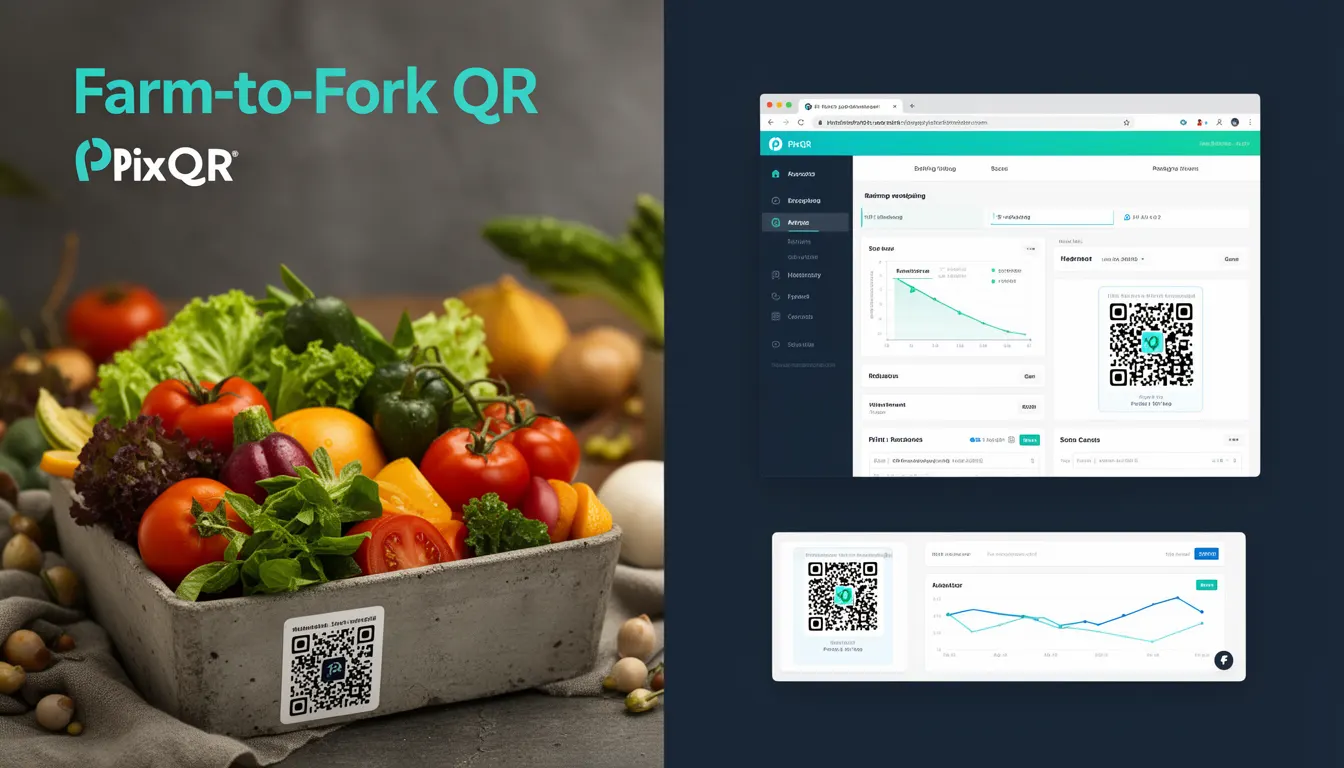
A Farm-to-Fork QR is a specific type of dynamic QR code used in food packaging to connect physical product information to digital content that supports traceability, transparency, and consumer engagement. This term refers to the implementation of QR codes in supply chain management, particularly within the food and agriculture industries.
In PixQR, a Farm-to-Fork QR is designed to link from a printed label or packaging to an online resource that provides detailed information about a product's origin, processing, and distribution path. It typically includes metadata about the farm, growing conditions, harvest date, and transport history, all accessible via a mobile scan.
Why It Matters
For developers working with PixQR, Farm-to-Fork QR codes are critical for enabling supply chain transparency and regulatory compliance. They allow brands to meet increasing consumer demand for product origin information, which is especially important in sectors like organic foods, fair trade, and locally sourced products.
From a technical standpoint, these QR codes must be designed to support high scan reliability, secure redirect handling, and scalable analytics. They also need to be resilient to tampering and support privacy controls to protect sensitive business data while providing public-facing information.
How It Works
The Farm-to-Fork QR system operates through a combination of QR code generation, dynamic redirect logic, and backend content management. When a consumer scans the QR code, it redirects to a URL that fetches product-specific data from a secure database or API.
- QR code generation uses PixQR's dynamic redirect feature to ensure that the link can be updated without reprinting physical labels.
- The redirect URL is typically structured as
https://pixqr.com/f2f/{product_id}where{product_id}is a unique identifier for the product batch. - Upon scan, the system checks for valid product data and serves a responsive web page or API endpoint with structured content.
- Analytics are collected on scan events, including geographic location, time, and device type, to support supply chain tracking and marketing insights.
- Content is cached to ensure fast response times and to reduce server load during peak scanning periods.
Quick Reference
| Item | Purpose | Notes |
|---|---|---|
| Product ID | Unique identifier for a product batch | Must be consistent across all packaging and digital records |
| Redirect URL | Dynamic link to product data | Should be stable and not change after production |
| Scan Analytics | Tracking usage and geographic data | Supports marketing and supply chain insights |
| Content Cache | Speeds up response time | Must be invalidated on data update |
| Privacy Controls | Manages access to sensitive data | Should support data minimization principles |
Basic Example
PixQR Example QR
This QR links directly to this glossary page, so printed notes, onboarding docs, and support material can bring scanners back to the current reference.
/glossary/qr-code-for-packaging/qr-codes-for-packaging-farm-to-fork-qr

This example shows a minimal Farm-to-Fork QR code structure in PixQR, using a static product ID to generate a dynamic URL.
const productId = "f2f-12345";
const qrUrl = `https://pixqr.com/f2f/${productId}`;
console.log(qrUrl); // https://pixqr.com/f2f/f2f-12345
The generated URL will redirect to a page or API endpoint that serves information about the product with ID f2f-12345. This structure supports future updates to product data without re-printing labels.
Production Example
This example demonstrates a more robust Farm-to-Fork QR implementation that includes validation, error handling, and analytics tracking.
function generateFarmToForkQR(productId, brandId) {
  if (!productId || !brandId) {
    throw new Error("Product ID and Brand ID are required");
  }
  const baseUrl = "https://pixqr.com/f2f";
  const qrUrl = `${baseUrl}/${brandId}/${productId}`;
  return qrUrl;
}

const qrCodeUrl = generateFarmToForkQR("batch-001", "organic-farms");
console.log(qrCodeUrl); // https://pixqr.com/f2f/organic-farms/batch-001
This version is more suitable for production because it includes input validation, supports multi-tenant branding, and uses a structured URL format that enhances scalability and traceability.
Common Mistakes
- Using static URLs instead of dynamic redirects, leading to outdated information after product updates.
- Not validating product IDs, which can cause broken links or data leakage.
- Ignoring analytics configuration, resulting in missing insights about consumer engagement.
- Hardcoding brand identifiers, making it difficult to scale across multiple product lines.
- Using low-quality QR code generation that fails to scan in poor lighting or on damaged packaging.
Security And Production Notes
- Ensure QR code URLs are not guessable to prevent unauthorized access to internal product data.
- Implement rate limiting on redirect endpoints to prevent abuse or denial-of-service attacks.
- Use HTTPS for all redirect targets to maintain secure data transmission.
- Validate and sanitize all input parameters to avoid injection or misrouting issues.
- Regularly audit QR code analytics for anomalies that may indicate tampering or system issues.
Related Concepts
Several developer concepts are closely related to Farm-to-Fork QR codes, including dynamic QR generation, supply chain traceability, API-driven content delivery, secure redirect handling, and consumer data privacy frameworks.
Dynamic QR generation is foundational, as it allows product data to be updated without physical label changes. Traceability systems depend on consistent identifiers and structured data formats. Content delivery must be fast and secure, often using CDN or edge caching. Redirect handling must be robust to support high-volume scanning. Privacy compliance ensures that sensitive data is not exposed beyond intended audiences.