 PixQR
Overview
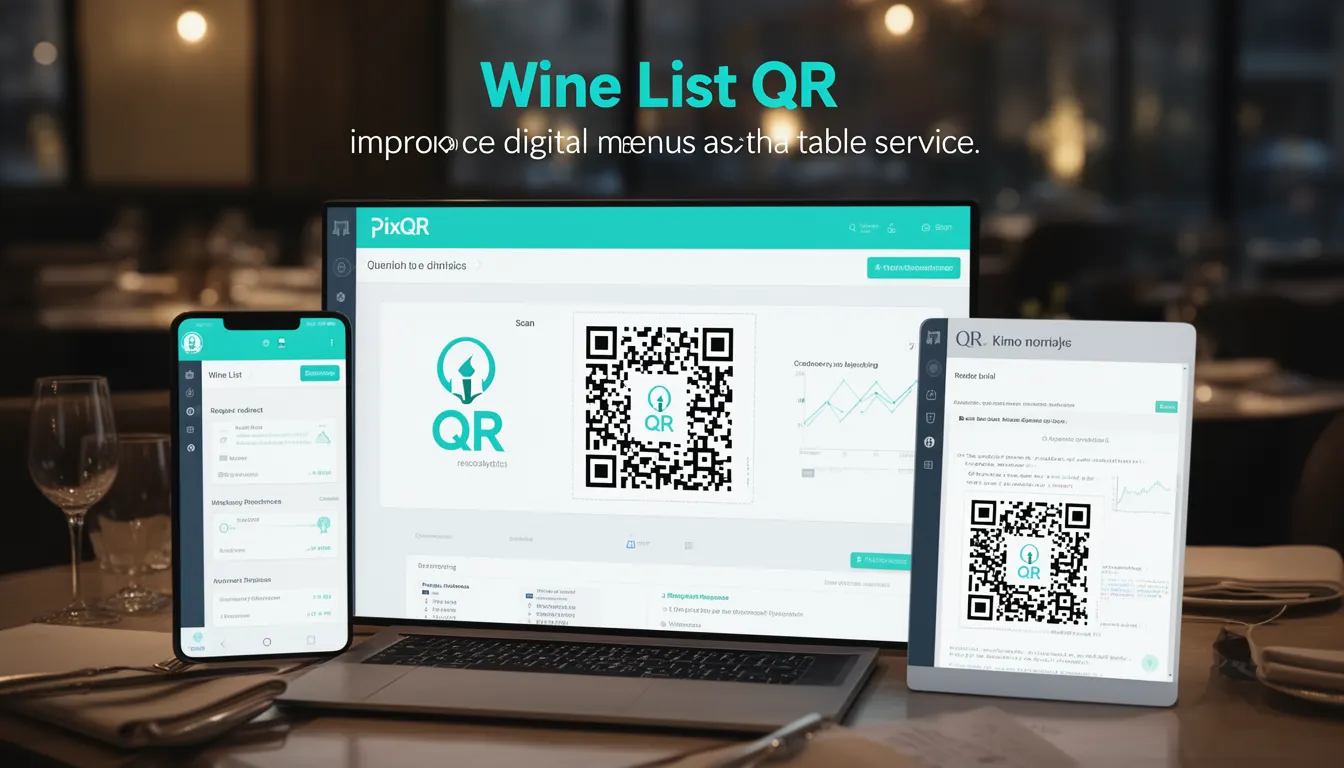
A Wine List QR is a specialized QR code used in restaurant environments to provide customers with instant access to digital wine lists, typically through a mobile device scan. It represents a specific application of dynamic QR code technology, tailored for hospitality and beverage service.
In the context of PixQR, a Wine List QR is generated as part of a broader menu management solution, enabling restaurants to offer interactive wine selection and detailed information without physical printed materials. This implementation supports both static and dynamic content updates, ensuring the wine list remains current without re-printing physical signage.
Why It Matters
For developers, Wine List QRs are important because they integrate multiple backend and frontend systems. The QR code must reliably redirect to a secure endpoint that can serve dynamic wine data, often retrieved from a database or API. It must also support analytics tracking, privacy compliance, and scalability to handle concurrent scans during peak hours.
From a user experience perspective, Wine List QRs enhance accessibility by providing quick access to complex wine information, including vintage, region, grape variety, and tasting notes. For restaurant operators, this reduces the need for printed materials, lowers costs, and enables real-time updates to wine offerings. For developers, it means implementing robust redirect logic, data fetching, and ensuring secure handling of sensitive beverage data.
How It Works
The Wine List QR operates as a dynamic redirect mechanism, where the QR code points to a PixQR-managed endpoint that serves a responsive HTML page or API response. The backend retrieves wine data from a configured source and formats it for display or consumption by the client.
- The QR code is generated with a specific URL structure that includes a unique identifier for the wine list or menu section.
- Upon scan, the QR code triggers a redirect to a secure endpoint, which may include tracking parameters or authentication tokens.
- The endpoint can dynamically load wine data from a database or external API, ensuring the information is up to date.
- Content delivery is optimized for mobile devices, with responsive design and fast-loading assets to support quick access.
- Analytics and tracking are enabled by default, capturing scan events, device types, and geographic data for operational insights.
Quick Reference
| Item | Purpose | Notes |
|---|---|---|
| QR Code URL | Redirects to wine list content | Must support HTTPS and tracking |
| Dynamic Content | Updates wine list in real time | Requires API or DB integration |
| Analytics Tracking | Logs scan events and user behavior | Supports event-based metrics |
| Scan Reliability | Ensures consistent scan success | Includes error handling and fallbacks |
| Privacy Compliance | Protects user and data privacy | Must adhere to GDPR and CCPA |
Basic Example
PixQR Example QR
This QR links directly to this glossary page, so printed notes, onboarding docs, and support material can bring scanners back to the current reference.

This basic example shows how a Wine List QR might be configured to point to a static HTML page with wine details. It demonstrates the core idea of linking a QR code to a content endpoint.
<!-- Example QR redirect configuration -->
<!-- URL: https://pixqr.example.com/wine-list/12345 -->
<!-- Redirects to a secure, responsive wine list page -->
The example illustrates a simplified redirect URL structure. In practice, the URL would include parameters for tracking, authentication, or content versioning.
Production Example
This production-ready example shows how a Wine List QR would be implemented with secure redirect logic, dynamic data loading, and analytics tracking. It includes validation, error handling, and a scalable backend structure.
<!-- Production implementation example -->
<!-- QR Code URL: https://api.pixqr.com/redirect/wine-list/67890?tracking=scan&device=mobile -->
<!-- Backend handles: data fetch, redirect, analytics, error response -->
<!-- Secure endpoint ensures HTTPS, CORS, and content validation -->
This version is more suitable for production because it includes tracking parameters, secure endpoint handling, and a scalable backend structure. It ensures that the QR code reliably delivers updated wine information and logs usage for business insights.
Common Mistakes
- Not validating QR redirect URLs, which can lead to open redirect vulnerabilities and potential misuse.
- Hardcoding wine data in QR code content instead of using dynamic endpoints, making updates difficult and error-prone.
- Ignoring analytics tracking, resulting in missed opportunities for customer behavior insights and menu optimization.
- Using insecure HTTP endpoints, which can expose sensitive data and violate privacy standards.
- Not testing QR code scan reliability across devices and lighting conditions, leading to poor user experience.
Security And Production Notes
- Always use HTTPS for QR redirect endpoints to prevent man-in-the-middle attacks and data exposure.
- Implement input validation on all parameters passed to the redirect endpoint to prevent open redirect exploits.
- Ensure that wine data is sanitized and filtered before being rendered to prevent XSS vulnerabilities.
- Use access controls or authentication tokens to restrict access to sensitive wine list data.
- Regularly audit QR code usage and analytics to detect anomalies or unauthorized access patterns.
Related Concepts
Wine List QRs are closely related to several other QR code and hospitality management concepts. Dynamic QR codes allow for real-time updates, while menu QR codes offer broader menu access. Redirect safety ensures secure link handling, and scan tracking provides operational insights. Additionally, privacy compliance and brand-safe design are essential for maintaining trust and regulatory adherence in hospitality environments.