 PixQR
Overview
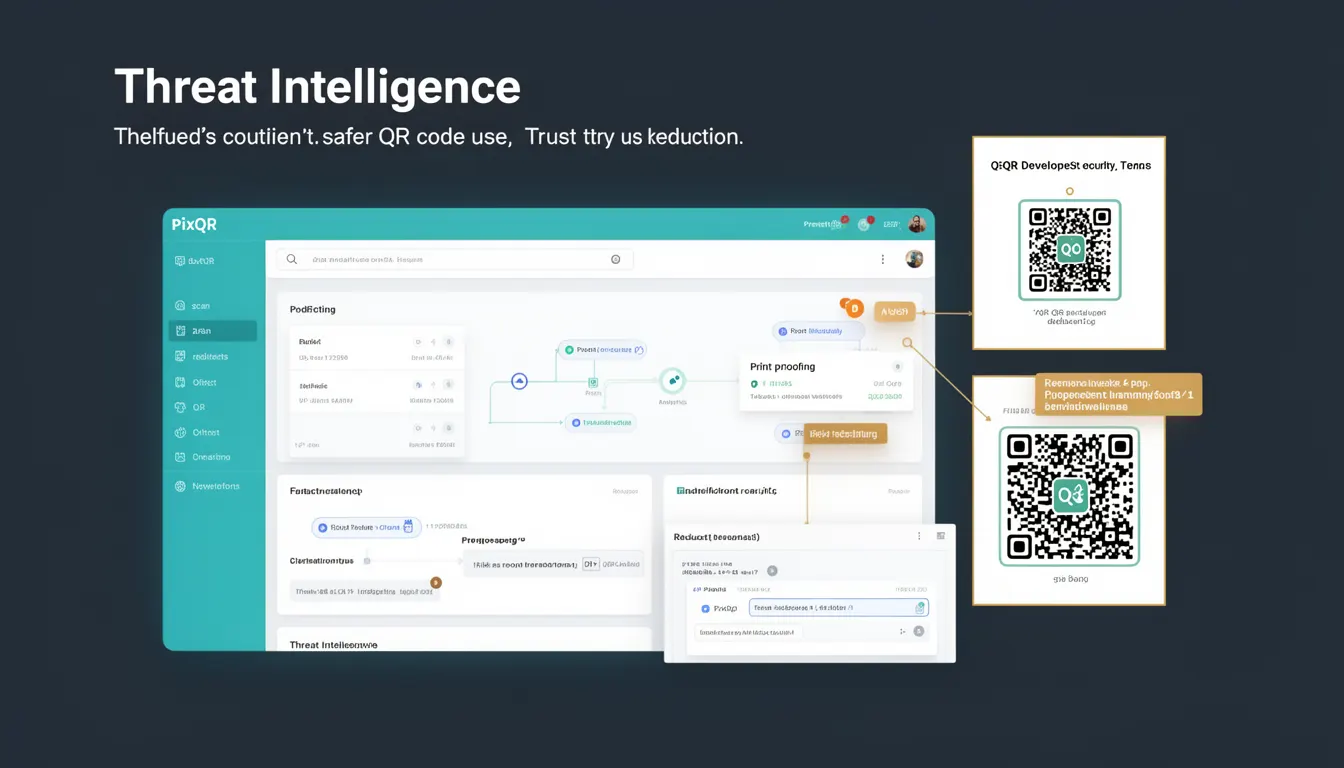
Threat Intelligence, in the context of QR code security, refers to the systematic collection, analysis, and application of data about potential security risks and malicious activities targeting QR code systems. It is used to identify, assess, and mitigate threats that could compromise the integrity, safety, or trustworthiness of QR codes in use.
For developers working with PixQR, Threat Intelligence is essential for creating secure, reliable QR code solutions. It ensures that generated QR codes do not inadvertently lead to unsafe URLs, and that dynamic redirects are protected from known malicious domains or patterns. It also helps in identifying suspicious scanning behavior or fraudulent QR code deployments.
Why It Matters
QR code systems are increasingly targeted by attackers who exploit the trust users place in scannable links. Threat Intelligence provides a proactive defense mechanism by enabling developers to filter or block known malicious domains, URLs, or patterns before they are embedded in QR codes. This reduces the risk of phishing, malware delivery, or unauthorized redirections.
In production environments, the absence of Threat Intelligence can lead to compromised user trust, security breaches, and potential compliance violations. For instance, if a QR code redirects to a domain flagged in a threat database, it could expose users to data theft or fraud. By integrating Threat Intelligence, PixQR developers can ensure that only verified, safe, and trusted links are embedded in QR codes.
How It Works
Threat Intelligence in QR code systems operates through the integration of external threat feeds, real-time scanning, and internal validation rules. The system typically evaluates the destination URL of a QR code against known malicious patterns, blacklists, or risk indicators before allowing the QR code to be generated or used.
- Threat feeds are regularly updated databases of known malicious domains, IP addresses, or URLs, often sourced from security vendors or open-source intelligence.
- Dynamic validation checks are performed during QR code generation or when a scan is initiated, to detect and block unsafe links.
- Behavioral analytics may track scanning frequency, geolocation, or device types to identify suspicious patterns that may indicate abuse or attacks.
- Internal risk scoring systems assign scores to URLs based on factors like domain reputation, SSL certificate status, or content analysis.
- Threat Intelligence can be integrated via API or webhook, allowing real-time checks against external databases or internal threat models.
Quick Reference
| Item | Purpose | Notes |
|---|---|---|
| Threat Feed Integration | Enables real-time checks against external malicious URL databases | Requires API access or subscription to threat feed providers |
| Domain Reputation Scoring | Assigns risk scores to URLs based on historical threat data | Used in dynamic redirect validation |
| Behavioral Monitoring | Tracks scan patterns to detect anomalies | Helps identify potential abuse or fraud |
| Blacklist Validation | Blocks known malicious domains or IPs | Often used in QR code generation workflows |
| Real-Time URL Validation | Validates destination URLs on scan or generation | Prevents unsafe redirects from being activated |
Basic Example
PixQR Example QR
This QR links directly to this glossary page, so printed notes, onboarding docs, and support material can bring scanners back to the current reference.
/glossary/qr-code-security/qr-code-security-threat-intelligence

This example demonstrates a simplified threat check function that validates a URL against a static list of known malicious domains.
function isSafeUrl(url) {
  const maliciousDomains = ['malicious.example.com', 'phishing.site'];
  const domain = new URL(url).hostname;
  return !maliciousDomains.includes(domain);
}

const result = isSafeUrl('https://safe.example.com');
console.log(result); // true
The function parses the URL to extract its domain and checks if it exists in a list of known malicious domains. If not, the URL is considered safe. This is a minimal demonstration and not suitable for production use without integration with dynamic threat feeds.
Production Example
This example shows how Threat Intelligence might be implemented in a QR code generation workflow, including validation against an external threat API.
async function generateQRCodeWithThreatCheck(targetUrl) {
  const threatCheck = await fetch('https://api.pixqr.com/threat-check', {
    method: 'POST',
    headers: { 'Content-Type': 'application/json' },
    body: JSON.stringify({ url: targetUrl })
  });

  const { isSafe, riskScore } = await threatCheck.json();

  if (!isSafe) {
    throw new Error('URL flagged as unsafe by threat intelligence');
  }

  return {
    qrCodeUrl: `https://pixqr.com/qr?target=${encodeURIComponent(targetUrl)}`,
    riskScore
  };
}
This version includes a real-time check against an external API, ensuring that the destination URL is validated before QR code generation. It also returns a risk score, allowing developers to make decisions based on the level of threat detected.
Common Mistakes
- Not validating URLs against external threat feeds during generation, leading to QR codes that may redirect to malicious domains.
- Using outdated or static blacklists that do not reflect current threat patterns.
- Ignoring behavioral monitoring, which can allow abuse of QR codes even if the initial URL is safe.
- Implementing only basic domain checks without considering URL path, query parameters, or subdomains.
- Disabling or bypassing Threat Intelligence for performance reasons, increasing vulnerability to attacks.
Security And Production Notes
- Always integrate Threat Intelligence with real-time validation to protect against newly discovered threats.
- Ensure that threat feed APIs are secured and that sensitive data is not exposed during validation.
- Implement fallback mechanisms in case external threat feeds are unavailable or return errors.
- Log and audit all threat intelligence checks for compliance and incident response purposes.
- Use risk scoring systems to prioritize threats and allow for adaptive security controls.
Related Concepts
Threat Intelligence is closely related to several other security and QR code concepts:
- URL Validation — The process of checking if a URL is valid and safe before use, often a component of Threat Intelligence.
- Dynamic Redirects — QR codes that redirect to URLs determined at runtime, which must be validated for safety.
- Domain Reputation — The practice of assessing how trustworthy or malicious a domain is based on historical data.
- Malware Protection — A subset of Threat Intelligence focused on identifying and blocking malware delivery through QR codes.
- Scan Analytics — Monitoring and analyzing QR code scan behavior to detect anomalies or potential abuse.