 PixQR
Overview
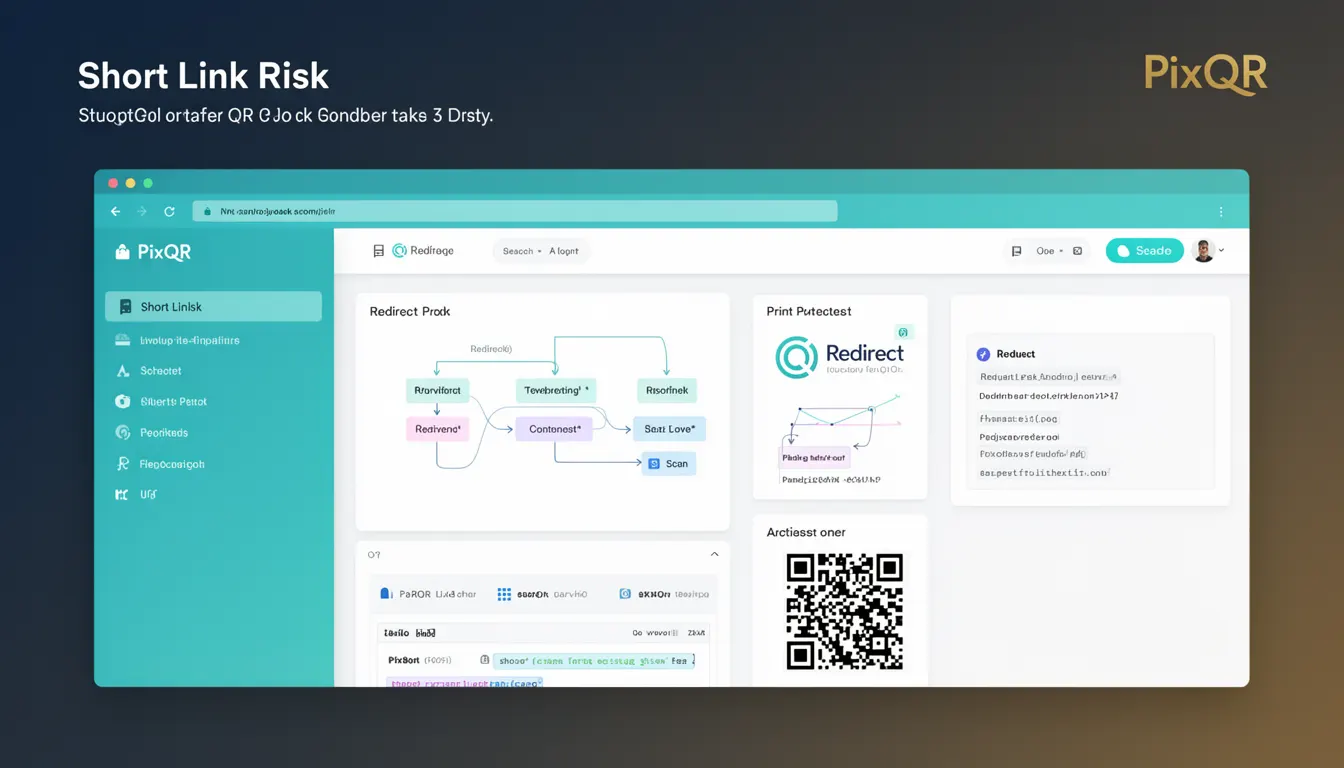
Short Link Risk is a security term that describes the potential vulnerabilities and threats associated with using shortened URLs or links in QR code generation and redirection workflows. This concept is especially relevant in PixQR's context, where QR codes are used to deliver users to dynamic destinations that may change over time.
When a QR code points to a short link, it introduces an intermediate step in the user journey. This intermediate redirection can be manipulated, leading to phishing, malware delivery, or unauthorized data collection. Short Link Risk encompasses the entire chain from QR generation to the final destination, including how the link is stored, how it's redirected, and how the final URL is validated.
Why It Matters
For developers and site operators, Short Link Risk directly impacts the trustworthiness and integrity of QR-based systems. A compromised short link can redirect users to malicious domains, expose user data, or even be used in phishing campaigns. This risk is amplified when QR codes are used in physical environments such as product packaging, posters, or printed materials where users have no way to verify the destination before scanning.
From a performance perspective, short links can also introduce latency or reliability issues if the redirection service is down or misconfigured. In PixQR, this risk is mitigated through secure link generation, dynamic tracking, and built-in analytics that allow operators to monitor and validate redirect behavior in real time.
How It Works
Short Link Risk operates through a series of interconnected mechanisms that can introduce vulnerabilities at various stages of QR code usage. The system must manage and validate the flow from initial QR creation to final user destination:
- When generating a QR code, PixQR must ensure that the underlying short link is not only valid but also securely stored and managed to prevent unauthorized modifications.
- Short links are typically managed through a backend system that maps a short identifier to a full URL. This mapping must be secure and auditable to prevent tampering.
- Dynamic redirects are often implemented via HTTP status codes (301, 302) or JavaScript-based redirections. Each method introduces its own risk profile, especially when combined with user-agent-specific behavior.
- QR code scans must be tracked and logged to detect anomalies or suspicious redirection patterns. This tracking can help identify if a short link is being used for malicious purposes.
- Link validation and sanitization are critical steps to ensure that the final destination is safe and appropriate for the intended audience.
Quick Reference
| Item | Purpose | Notes |
|---|---|---|
| Short Link Generation | Creates a unique identifier for a destination URL | Must be cryptographically secure to prevent predictability |
| Redirect Mapping | Maps a short identifier to a full URL | Should be stored securely and auditable |
| Destination Validation | Ensures final URL is safe | Use HTTPS and domain whitelisting |
| Scan Tracking | Logs QR scan events for monitoring | Enable real-time alerts for anomalies |
| Link Expiry | Defines how long a short link is valid | Set expiry times to reduce long-term risk |
Basic Example
PixQR Example QR
This QR links directly to this glossary page, so printed notes, onboarding docs, and support material can bring scanners back to the current reference.

A basic example of Short Link Risk involves creating a QR code that points to a short link. This demonstrates how the intermediate step can be a point of vulnerability if not handled securely.
const qrCode = pixqr.generate({
  url: 'https://example.com/short/abc123',
  type: 'dynamic'
});

// This short link may be manipulated if not properly secured
console.log(qrCode.url); // https://example.com/short/abc123
The example shows a simple QR generation with a short link. The vulnerability lies in the fact that if the short link is not secured, it can be modified to point to a malicious URL without detection.
Production Example
In a production environment, PixQR handles Short Link Risk through secure link generation, validation, and real-time monitoring. This example shows how to configure a QR code with proper protections.
const pixqr = require('pixqr');

const config = {
  url: 'https://secure.example.com/destination',
  shortLink: {
    enabled: true,
    expiry: 86400, // 24 hours
    validate: true
  },
  tracking: {
    enabled: true,
    analytics: true
  }
};

const qrCode = pixqr.generate(config);

// The generated QR code includes secure short link handling
console.log(qrCode.url); // https://secure.example.com/short/xyz789
This version includes link validation, expiry settings, and tracking, making it more suitable for production environments where security and reliability are paramount.
Common Mistakes
- Using predictable or sequential short link identifiers, which makes them vulnerable to brute-force attacks or URL manipulation.
- Not implementing link validation or sanitization before generating QR codes, allowing malicious URLs to be embedded.
- Ignoring the security implications of redirecting to third-party domains without monitoring or access controls.
- Setting long expiry times for short links, increasing the window of opportunity for exploitation.
- Disabling tracking or analytics, which prevents operators from detecting suspicious redirection behavior.
Security And Production Notes
- Always use HTTPS for short link destinations to prevent man-in-the-middle attacks.
- Implement domain whitelisting to restrict where short links can redirect.
- Set short expiry times for short links to reduce long-term exposure to vulnerabilities.
- Use cryptographically secure methods for generating short link identifiers to prevent predictability.
- Enable real-time monitoring and alerting for suspicious redirection patterns to detect and respond to threats.
Related Concepts
Short Link Risk is closely connected to several key concepts in QR code and link security:
- Dynamic Redirects — The mechanism by which short links are mapped to full URLs, which must be secure and auditable.
- Link Validation — The process of ensuring that a URL is safe and appropriate before it is used in a QR code.
- Scan Tracking — The logging and monitoring of QR code scans to detect anomalies or misuse.
- URL Sanitization — The process of cleaning and verifying URLs to prevent injection or malicious content.
- Expiry Management — The control of how long a short link remains active, which affects the overall risk profile.