 PixQR
Overview
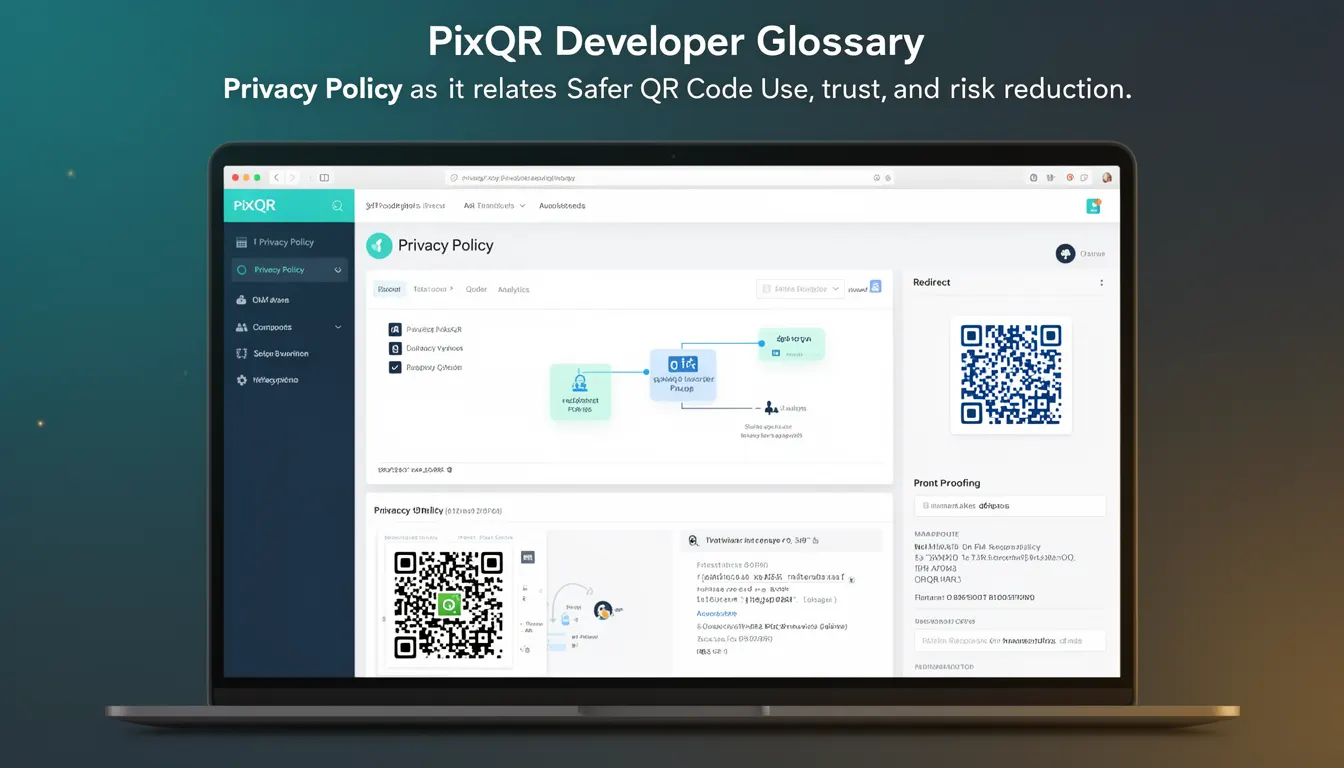
A Privacy Policy in the context of PixQR refers to a formal statement that outlines how QR code data is collected, used, stored, and protected throughout the lifecycle of a QR code system. It is a key element in ensuring trust and compliance with data protection regulations such as GDPR, CCPA, and similar frameworks.
For developers working with PixQR, a Privacy Policy becomes relevant when integrating QR code generation, dynamic redirects, and analytics features. It helps establish clear expectations for users and provides a framework for secure data handling, especially when QR codes are used for tracking, user identification, or redirecting to third-party content.
Why It Matters
Developers must consider Privacy Policy as part of their operational security strategy, particularly when designing QR code systems that collect or transmit user data. Without a clear and accessible privacy policy, developers risk non-compliance with global data protection laws, which can lead to legal penalties, loss of user trust, and operational disruptions.
For PixQR, a well-defined Privacy Policy ensures that users understand what happens when they scan a QR code, especially when that QR code redirects to a page that collects analytics or personal information. It also protects the platform from liability related to data misuse or exposure, and supports compliance with industry standards such as ISO/IEC 18000-6 and NIST guidelines.
How It Works
A Privacy Policy in the context of QR code systems is implemented as a structured document that is either embedded within the QR code's redirect destination or linked through a dedicated URL. The policy must be clear, accessible, and regularly updated to reflect changes in data handling practices.
- It defines the types of data collected, such as IP addresses, scan timestamps, device identifiers, or redirect destinations.
- It outlines how data is stored, processed, and shared with third parties, if applicable.
- It includes user rights, such as the ability to request data deletion or access.
- It specifies the security measures in place, such as encryption, access controls, or audit logging.
- It must be easily accessible to users, typically via a link in the QR code’s redirect destination or a dedicated page on the PixQR platform.
Quick Reference
| Item | Purpose | Notes |
|---|---|---|
| Policy URL | Points to the full Privacy Policy | Should be accessible from QR code redirect |
| Data collection | Lists data types collected | Must align with user expectations |
| Data retention | Specifies how long data is kept | Must comply with legal limits |
| User rights | Describes user access and deletion options | Required under GDPR and CCPA |
| Third-party sharing | Details if data is shared with external parties | Requires explicit user consent where needed |
Basic Example
PixQR Example QR
This QR links directly to this glossary page, so printed notes, onboarding docs, and support material can bring scanners back to the current reference.
A basic implementation of a Privacy Policy link in a QR code redirect page demonstrates how to present policy information to users.
<html>
  <head><title>QR Redirect</title></head>
  <body>
    <p>You are being redirected to: <a href="https://example.com">Example</a></p>
    <p><a href="/privacy">Privacy Policy</a></p>
  </body>
</html>
This example includes a simple link to a privacy page, which is a minimal but effective way to meet compliance requirements for user transparency.
Production Example
A more robust implementation ensures that the Privacy Policy is not only accessible but also integrated into the QR code's analytics and tracking infrastructure to support compliance and auditability.
<html>
  <head>
    <title>Secure QR Redirect</title>
    <meta name="robots" content="noindex">
  </head>
  <body>
    <script>
      const policyUrl = 'https://pixqr.com/privacy';
      const analyticsId = 'UA-123456789-0';
      // Log redirect event with policy URL
      fetch('/api/log', {
        method: 'POST',
        body: JSON.stringify({
          event: 'redirect',
          url: window.location.href,
          policy: policyUrl,
          timestamp: Date.now()
        })
      });
    </script>
    <p>Redirecting to: <a href="https://example.com">Example</a></p>
    <p><a href="/privacy">Privacy Policy</a></p>
  </body>
</html>
This version includes tracking and logging of the redirect event, ensuring that the platform maintains audit trails for compliance. The meta tag prevents indexing of the page, enhancing security.
Common Mistakes
- Not including a Privacy Policy link in the QR code redirect destination, leading to user confusion and potential compliance issues.
- Using generic or outdated policy text that does not reflect actual data handling practices.
- Storing or transmitting user data without clear consent or data retention policies.
- Failing to update the Privacy Policy when new features or data collection methods are introduced.
- Providing a privacy policy that is difficult to access or understand, reducing user trust and compliance risk.
Security And Production Notes
- Ensure that all data collected through QR code scans is encrypted in transit and at rest, using industry-standard protocols like TLS 1.3 and AES-256.
- Use access controls to restrict who can view or modify privacy policy content and associated data.
- Regularly audit and test the Privacy Policy’s effectiveness and compliance with evolving regulations.
- Make the policy URL easily discoverable, for example, by including it in QR code metadata or redirect headers.
- Implement logging for all access to privacy-related data to support compliance audits and incident response.
Related Concepts
Several concepts are closely related to Privacy Policy in QR code systems:
- GDPR Compliance: Ensures that data handling practices meet European data protection standards.
- Data Minimization: A principle that limits data collection to only what is necessary for the QR code’s intended purpose.
- Analytics Transparency: The practice of clearly communicating what data is collected and how it is used.
- Redirect Security: Ensures that QR code redirects do not expose users to malicious content or data leakage.
- API Access Controls: Protects the backend systems that manage QR code data and policies from unauthorized access.