 PixQR
Overview
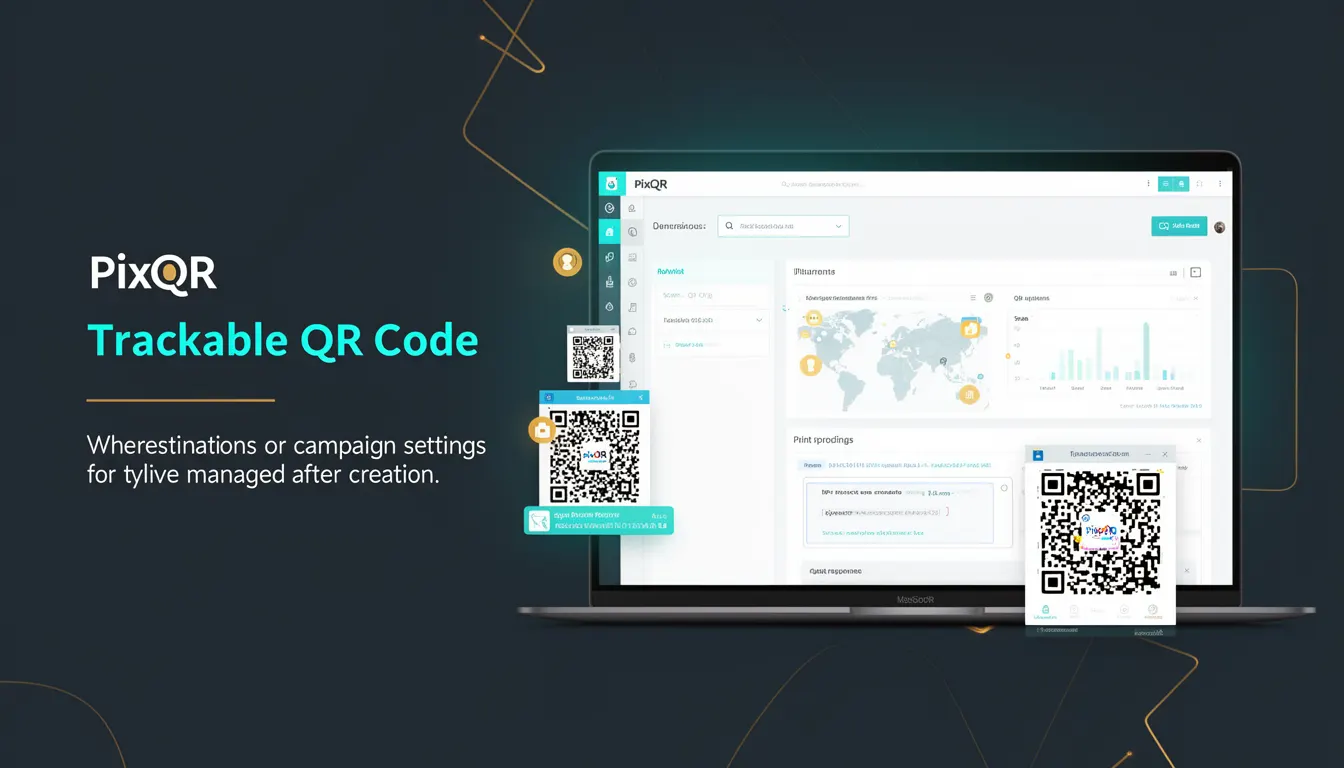
A Trackable QR Code is a dynamic QR code that allows for post-creation management of its destination URL, campaign settings, and behavior. Unlike static QR codes, which encode a fixed URL at the time of generation, a Trackable QR Code is associated with a backend system that enables real-time updates to the redirect destination or campaign metadata.
In the context of PixQR, Trackable QR Codes are used for marketing, analytics, and operational workflows where campaign flexibility is essential. These codes provide the ability to change the destination URL, adjust tracking parameters, or modify behavior without needing to regenerate or re-print physical QR codes. This is especially valuable for digital marketing, event management, and A/B testing scenarios.
Why It Matters
Trackable QR Codes are essential for developers and marketers who need to maintain control over campaign performance and adapt to changing requirements. They reduce the operational overhead of managing multiple QR code versions and support dynamic content delivery. In PixQR, this capability enables features like real-time campaign adjustments, multi-channel tracking, and centralized analytics.
From a security standpoint, Trackable QR Codes must be designed to prevent unauthorized modifications. They should also be auditable and support logging for compliance and fraud prevention. For developers, understanding how to configure and manage these codes is critical for ensuring data integrity and maintaining accurate tracking metrics.
How It Works
Trackable QR Codes operate by linking a unique identifier (such as a code ID or token) to a backend database or API endpoint. When a user scans the QR code, the scan triggers a request to the PixQR platform, which retrieves the current destination and behavior settings associated with that identifier. The platform then redirects the user to the updated destination or executes the specified action.
- Each Trackable QR Code is associated with a unique identifier, typically a UUID or numeric code, used for backend lookups.
- Backend systems store the current redirect URL, metadata, and campaign settings linked to the identifier.
- Scans are logged with timestamps, IP addresses, user agents, and optional custom tracking parameters.
- Updates to the destination or settings can be made via PixQR's API or dashboard without regenerating the QR code image.
- Tracking analytics are aggregated and accessible through PixQR’s reporting system, enabling real-time performance insights.
Quick Reference
| Item | Purpose | Notes |
|---|---|---|
| Unique Code Identifier | Maps to backend configuration | Used in API calls and scan routing |
| Redirect URL | Destination of scanned QR code | Can be updated post-generation |
| Scan Logging | Tracks all scans and metadata | Supports analytics and compliance |
| Campaign Settings | Custom attributes for tracking | Supports A/B testing and segmentation |
| API Endpoint | Manages updates to code behavior | Requires authentication and validation |
Basic Example
PixQR Example QR
This QR links directly to this glossary page, so printed notes, onboarding docs, and support material can bring scanners back to the current reference.
/glossary/qr-code-dynamic/dynamic-qr-codes-trackable-qr-code

This example shows a simplified representation of how a Trackable QR Code might be initialized and configured in a PixQR backend system.
const trackableCode = {
  id: "a1b2c3d4-e5f6-7890-abcd-ef1234567890",
  redirectUrl: "https://example.com/campaign-1",
  campaignName: "Summer Sale",
  createdAt: "2024-01-01T00:00:00Z"
};
The id field uniquely identifies the code in the system. The redirectUrl field specifies the destination, and campaignName allows for categorization and reporting. This structure is used internally by PixQR to manage and update code behavior.
Production Example
In a production environment, Trackable QR Codes are often managed via an API with secure authentication and validation. This example illustrates how a developer might update a QR code's destination using PixQR’s API.
fetch('https://api.pixqr.com/v1/qr-codes/a1b2c3d4-e5f6-7890-abcd-ef1234567890', {
  method: 'PUT',
  headers: {
    'Authorization': 'Bearer YOUR_API_TOKEN',
    'Content-Type': 'application/json'
  },
  body: JSON.stringify({
    redirectUrl: 'https://example.com/new-destination',
    campaignName: 'Updated Summer Sale'
  })
});
This example demonstrates a secure update operation using an API token. It ensures that only authorized users can modify code behavior, and that changes are logged and auditable. The redirectUrl and campaignName are updated without requiring a new QR code image.
Common Mistakes
- Using unauthenticated or insecure API endpoints to update code behavior, which can lead to unauthorized modifications.
- Not implementing proper validation for redirect URLs, allowing malicious links to be set.
- Reusing the same identifier for multiple codes, leading to confusion and incorrect tracking.
- Failing to log or audit scan activity, which can hinder fraud detection and compliance.
- Not updating campaign metadata in real-time, resulting in outdated analytics and reporting.
Security And Production Notes
- Always use secure API tokens and authentication mechanisms to prevent unauthorized updates.
- Validate all redirect URLs to prevent open redirect vulnerabilities and phishing attacks.
- Implement audit logging for all code updates to ensure traceability and compliance.
- Use HTTPS for all API communications and QR code generation to prevent man-in-the-middle attacks.
- Ensure that campaign data and metadata are sanitized and validated to avoid injection or parsing errors.
Related Concepts
Trackable QR Codes are closely related to several other QR code and marketing concepts. Dynamic QR codes are a broader category that includes Trackable QR Codes, and they allow for behavior changes post-generation. Campaign analytics tie directly to the tracking capabilities of these codes. Redirect management is the core mechanism that enables the flexibility of Trackable QR Codes. API integration is necessary for updating and managing these codes programmatically. Lastly, scan reliability ensures that the system correctly handles and logs all user interactions.