 PixQR
Overview
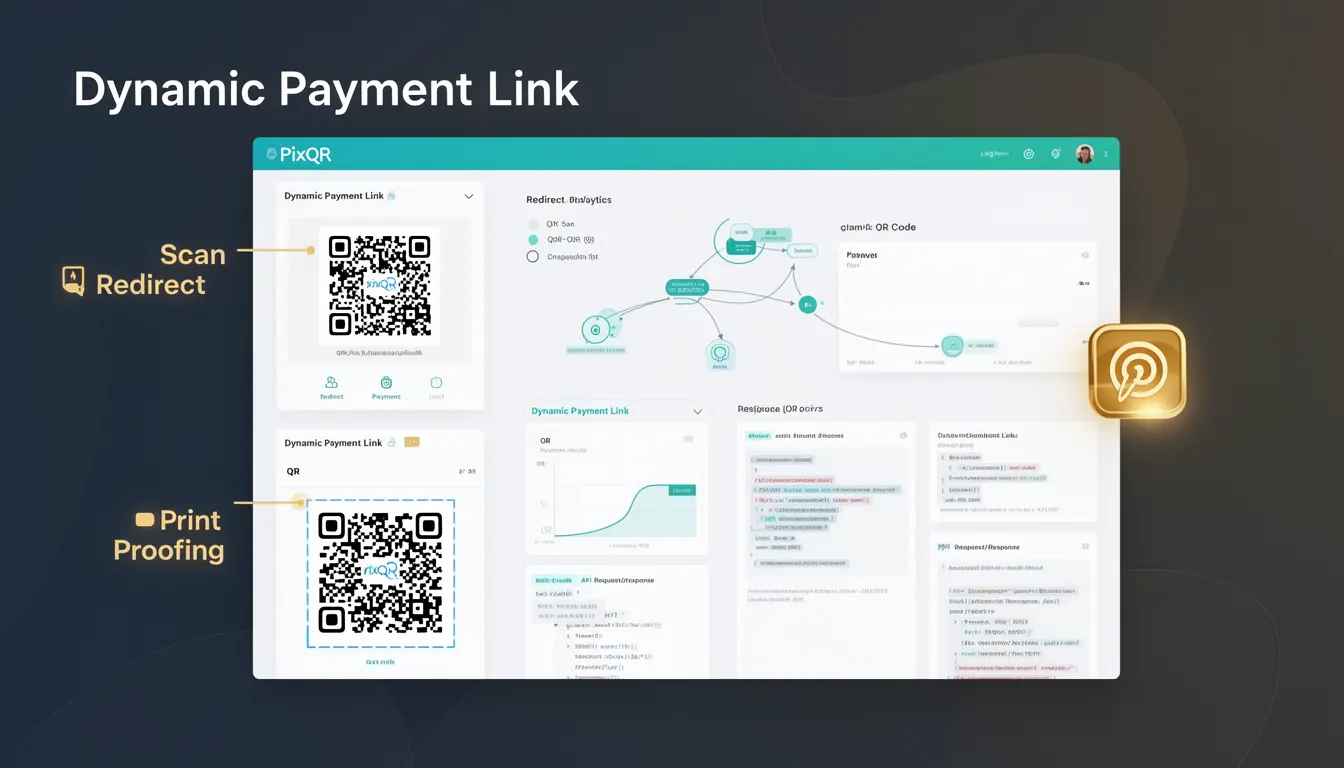
A Dynamic Payment Link in the context of PixQR refers to a QR code that points to a destination or campaign configuration that can be modified after the code is generated. Unlike static QR codes, which encode a fixed URL or data, dynamic payment links allow real-time updates to the target behavior, content, or redirect settings.
This capability is essential for payment systems that require frequent updates to transaction endpoints, promotional campaigns, or compliance adjustments. Dynamic payment links are typically managed through a PixQR dashboard or API, where administrators can change the underlying URL, add tracking parameters, or adjust expiration times without regenerating the QR code itself.
Why It Matters
For developers and platform maintainers, dynamic payment links provide flexibility in payment processing workflows. They eliminate the need for physical or digital reprints of QR codes when redirect destinations change, which is especially valuable in environments with frequent campaign updates or dynamic pricing models.
Security-wise, dynamic payment links enable better control over endpoint access and help mitigate risks associated with static URLs that may become exposed or outdated. They also support compliance requirements by allowing rapid updates to payment routing or data handling policies without disrupting user experience.
From a performance perspective, dynamic links reduce operational overhead and improve scalability. Instead of managing thousands of unique QR codes, a single dynamic link can be updated across multiple platforms and campaigns, reducing complexity and resource usage.
How It Works
The underlying mechanism of a dynamic payment link involves a PixQR backend that stores the mapping between a QR code identifier and its target configuration. When a user scans the QR code, the PixQR system resolves the identifier to fetch the current destination, which may be a URL, API endpoint, or internal redirect.
- The QR code itself contains a unique identifier or token, not the final destination.
- The identifier is resolved server-side to retrieve the latest configuration, including redirect URL, tracking tags, or expiration settings.
- Changes to the destination are applied immediately to all scans of the same QR code.
- Each dynamic link can have associated metadata such as campaign tags, timestamps, or user segment data.
- Tracking and analytics are captured per scan, with data tied to the dynamic configuration rather than a static URL.
Quick Reference
| Item | Purpose | Notes |
|---|---|---|
| Dynamic identifier | Uniquely identifies the QR code | Used in backend mapping to target configuration |
| Target URL | Redirect destination of the scan | Can be updated without re-generating QR code |
| Expiration settings | Controls how long the link remains active | Supports time-based or manual deactivation |
| Campaign metadata | Tags or labels for analytics | Used for segmentation and tracking |
| Scan analytics | Tracks usage and conversion data | Data tied to dynamic configuration |
Basic Example
PixQR Example QR
This QR links directly to this glossary page, so printed notes, onboarding docs, and support material can bring scanners back to the current reference.
/glossary/qr-code-dynamic/dynamic-qr-codes-dynamic-payment-link

This example demonstrates how a basic dynamic payment link might be created using a PixQR API endpoint. The link is associated with a unique identifier, and the destination can be modified at any time.
POST /api/v1/qr/dynamic
{
  "identifier": "pay_abc123",
  "destination": "https://example.com/payment",
  "campaign": "summer_sale_2025"
}
The identifier field uniquely identifies the QR code. The destination field specifies the URL to which scans will be redirected. The campaign field allows for tagging and analytics tracking.
Production Example
This example shows a more comprehensive setup for a dynamic payment link with validation, error handling, and metadata support. It includes configuration options for expiration, analytics tags, and secure destination validation.
POST /api/v1/qr/dynamic
{
  "identifier": "pay_abc123",
  "destination": "https://secure.example.com/pay",
  "campaign": "summer_sale_2025",
  "expires_at": "2025-08-31T23:59:59Z",
  "tags": ["promotion", "mobile"],
  "analytics": {
    "source": "website",
    "medium": "qr"
  },
  "validate_ssl": true
}
This version is production-ready because it includes expiration control, analytics tracking, and SSL validation to ensure secure redirection. It also uses structured metadata to support campaign segmentation and performance analysis.
Common Mistakes
- Using static URLs in dynamic links without proper backend mapping, leading to inconsistent redirect behavior.
- Not setting expiration times, causing outdated or insecure links to remain active indefinitely.
- Overlooking SSL validation, which can lead to redirecting users to untrusted or malicious endpoints.
- Using identifiers that are not unique, causing conflicts in the backend system and incorrect destination resolution.
- Ignoring analytics and tracking parameters, resulting in incomplete or missing data for campaign performance.
Security And Production Notes
- Always validate the destination URL to ensure it is a trusted endpoint and supports HTTPS.
- Implement unique identifiers to prevent conflicts and ensure correct resolution of dynamic links.
- Use secure APIs with proper authentication and access controls to manage dynamic link configurations.
- Regularly audit and rotate identifiers to reduce exposure risks in case of data leaks.
- Monitor scan analytics for unusual traffic patterns or potential abuse of dynamic links.
Related Concepts
Dynamic Payment Links are closely related to several other QR code and payment concepts. Dynamic QR codes are a broader category that includes dynamic payment links, encompassing any QR code with modifiable destinations. Redirect management refers to the backend systems that control where QR code scans lead. Scan analytics provide insights into how dynamic links are used and perform. Secure redirect protocols ensure that dynamic links maintain safety during redirects. API-based QR generation is the method used to create and manage dynamic links programmatically.