 PixQR
Overview
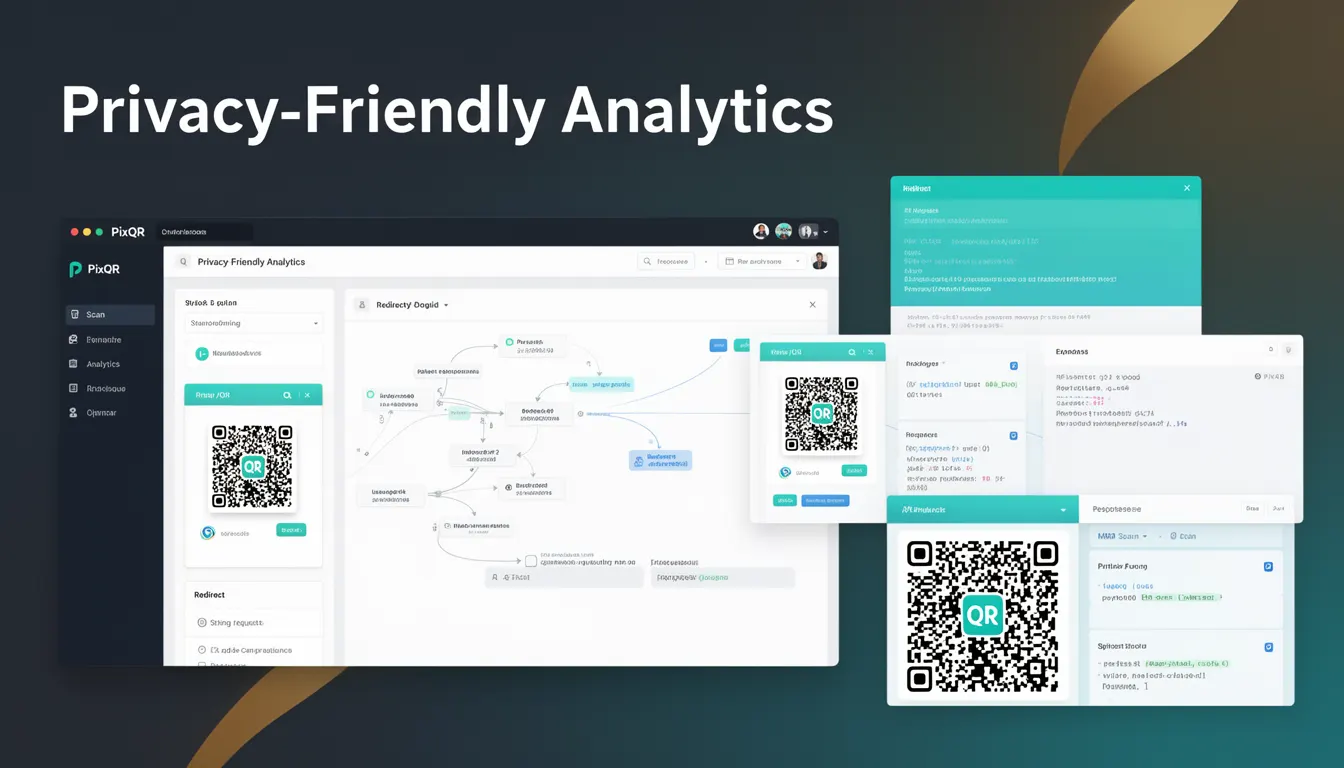
Privacy-Friendly Analytics refers to a set of tracking and measurement practices designed to gather user behavior data while minimizing privacy risks and respecting user consent. In the context of PixQR, this approach is applied to QR code campaigns, where the goal is to understand how users interact with generated QR codes without compromising personal data or violating privacy regulations like GDPR, CCPA, or PIPEDA.
For developers working with PixQR, Privacy-Friendly Analytics is essential when configuring tracking parameters, managing user data collection, and ensuring that analytics systems comply with legal and ethical standards. It is used in scenarios such as tracking scan frequency, redirect paths, and user engagement, all while avoiding the collection of personally identifiable information (PII) or sensitive data.
Why It Matters
Developers must prioritize Privacy-Friendly Analytics to meet compliance requirements and build trust with users. When analytics systems collect data in a privacy-respecting manner, they reduce legal exposure, enhance user confidence, and align with global data protection laws. In PixQR, this is particularly important for campaigns that involve dynamic redirects or user journey tracking, where the platform must balance usability with data integrity.
Failure to implement Privacy-Friendly Analytics can lead to regulatory penalties, user distrust, and platform limitations. For instance, if a PixQR campaign inadvertently tracks IP addresses or device fingerprints, it could breach privacy laws, especially when used in regions with strict data governance policies. This approach ensures that developers can still extract valuable insights from QR code usage without compromising user privacy.
How It Works
Privacy-Friendly Analytics in PixQR relies on anonymized data collection techniques, such as aggregating metrics, using hashed identifiers, and avoiding PII in tracking parameters. The system operates by:
- Using unique but non-identifiable tokens for tracking QR code scans and redirects.
- Applying data masking or obfuscation to IP addresses and user agents before logging.
- Limiting the scope of data collected to essential metrics like scan count, timestamp, and geographic region.
- Ensuring all tracking data is processed through secure, encrypted channels.
- Providing opt-in or opt-out mechanisms for users who wish to disable tracking.
These practices ensure that while PixQR can analyze campaign performance and user behavior, it does not store or transmit sensitive user data. The analytics engine within PixQR filters and processes data at the point of collection, reducing the risk of data exposure and maintaining compliance with privacy frameworks.
Quick Reference
| Item | Purpose | Notes |
|---|---|---|
| Anonymous token | Identifies a QR code scan without linking to a user | Generated per scan and not stored in logs |
| Data obfuscation | Masking or hashing sensitive data | Applied to IP addresses and device identifiers |
| Aggregated metrics | Summarized data for analysis | Prevents individual-level tracking |
| Secure transport | Encrypts data in transit | Uses HTTPS for all analytics data |
| User consent | Controls whether tracking is enabled | Can be configured per campaign |
Basic Example
PixQR Example QR
This QR links directly to this glossary page, so printed notes, onboarding docs, and support material can bring scanners back to the current reference.
/glossary/qr-code-tracking-and-analytics/qr-code-tracking-and-analytics-privacy-friendly-analytics

This basic example demonstrates how a PixQR analytics endpoint might be configured to avoid collecting personal data:
GET /api/analytics/track?token=abc123&campaign_id=qr_campaign_001×tamp=1678886400The URL includes a token to identify the scan, a campaign identifier, and a timestamp. No user-specific data is present, ensuring that the endpoint does not inadvertently collect PII.
Production Example
In a production environment, PixQR analytics systems may include additional validation and obfuscation:
POST /api/analytics/track
Content-Type: application/json
{
  "scan_id": "hash_abc123",
  "campaign_id": "qr_campaign_001",
  "timestamp": "2023-03-15T10:00:00Z",
  "location": {
    "country": "US",
    "region": "CA"
  },
  "device": {
    "type": "mobile",
    "os": "iOS"
  }
}
This version includes structured data with obfuscated identifiers and limited metadata. It avoids collecting full IP addresses or device identifiers, aligning with privacy guidelines and reducing data storage requirements.
Common Mistakes
- Collecting IP addresses or device fingerprints in analytics logs, which can expose users to privacy risks.
- Using non-anonymous tokens that can be reverse-engineered to identify users.
- Storing raw user data in analytics systems without applying data masking or encryption.
- Forgetting to implement user consent mechanisms, leading to unintentional data collection.
- Using tracking parameters that are not sanitized, allowing potential injection of malicious data.
Security And Production Notes
- Always sanitize and validate input parameters to prevent injection attacks in analytics endpoints.
- Use HTTPS for all analytics data transmission to prevent eavesdropping or data tampering.
- Implement token-based authentication for analytics endpoints to prevent unauthorized access.
- Regularly audit analytics data to ensure no PII is being collected or stored.
- Ensure that analytics systems support user opt-out and provide clear privacy notices.
Related Concepts
Privacy-Friendly Analytics is closely related to several other tracking and data management practices:
- GDPR Compliance: Ensures that analytics systems meet European data protection standards.
- Cookieless Tracking: Techniques for user behavior tracking without cookies or persistent identifiers.
- Data Minimization: Collecting only the data necessary for analytics purposes.
- Consent Management: Mechanisms for obtaining and recording user consent for data collection.
- Secure Data Handling: Practices for encrypting and storing data securely to prevent breaches.