 PixQR
Overview
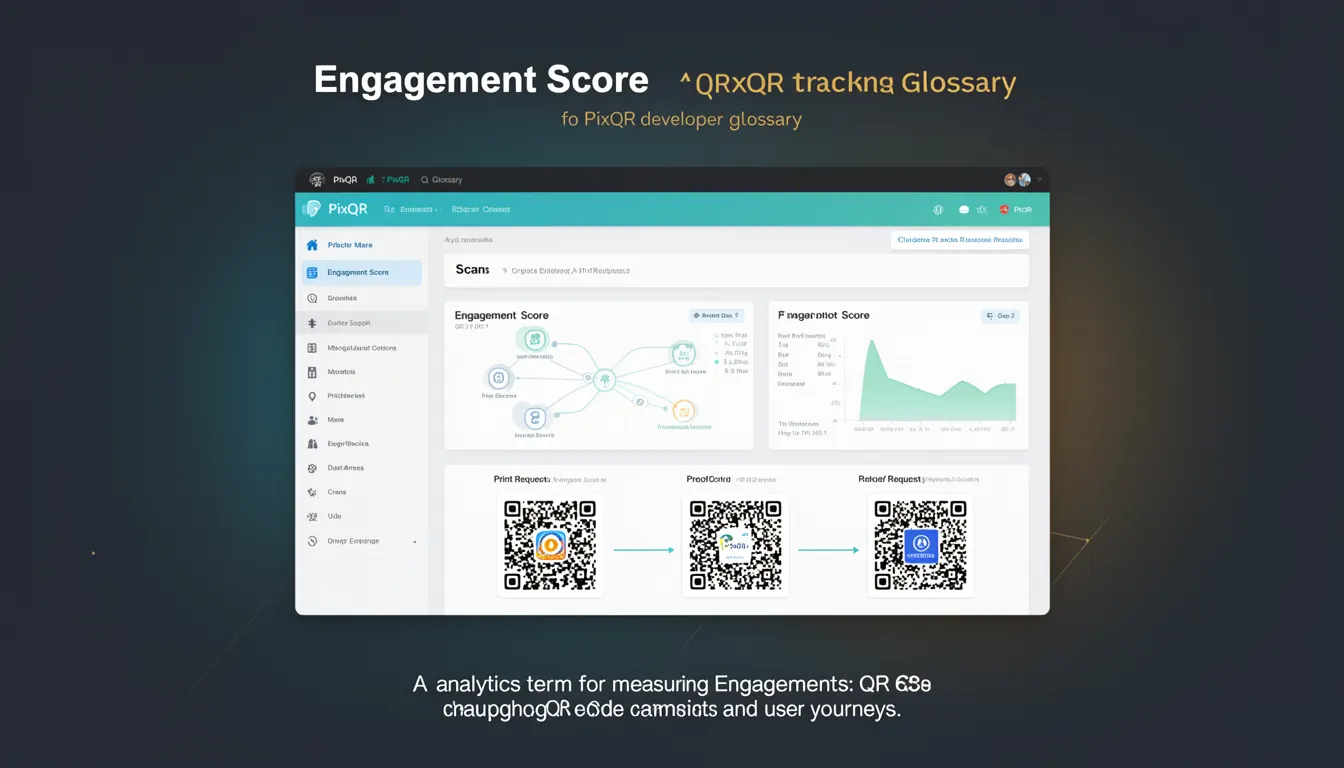
Engagement Score in the PixQR platform is a quantitative metric used to evaluate how effectively a QR code campaign drives user interaction and achieves intended outcomes. It combines multiple data points from scan tracking, user journeys, and campaign analytics to provide a single, actionable score.
Developers and marketers using PixQR rely on Engagement Score to understand campaign performance, optimize QR code placement, and determine which redirects or content are resonating with users. It is especially valuable for dynamic QR codes that change content or redirect paths based on user behavior or time.
Why It Matters
For developers, Engagement Score serves as a key performance indicator that bridges QR code functionality with user behavior analytics. It helps determine whether QR code campaigns are achieving their intended goals, such as increasing website traffic, driving app downloads, or collecting user data.
From a product and operational perspective, this score is critical for campaign optimization, budget allocation, and strategic planning. It allows teams to prioritize high-performing QR codes and identify underperforming assets for improvement. For security and privacy-conscious platforms, Engagement Score can also be used to detect anomalies in scan patterns that may indicate fraudulent activity or system abuse.
How It Works
The Engagement Score is calculated based on a combination of metrics that PixQR tracks during a QR code's lifecycle. The system evaluates the quality and relevance of user interactions with the QR code and assigns a normalized score between 0 and 100.
- Scan frequency and time distribution provide insight into user interest and engagement timing.
- Redirect success rates and destination page metrics (e.g., bounce rate, session duration) are factored in.
- Geolocation data and device information help determine whether the audience aligns with campaign objectives.
- Behavioral tracking within the destination page (e.g., form submissions, video views) enhances the score's accuracy.
- Engagement Score can be adjusted dynamically for dynamic QR codes based on real-time performance feedback.
The score is updated in real time as scans occur and user data is processed. It is available through PixQR's API and dashboard, enabling developers to integrate the score into internal analytics dashboards or automated campaign management systems.
Quick Reference
| Item | Purpose | Notes |
|---|---|---|
| Scan count | Counts total QR code scans | Base metric for engagement |
| Redirect success rate | Measures successful destination loads | Higher rates improve score |
| Page engagement duration | Tracks time spent on destination | Longer sessions increase score |
| Geolocation match | Compares scan location to campaign target | Matches improve relevance |
| Behavioral conversion | Tracks user actions after scan | Form submissions or downloads boost score |
Basic Example
PixQR Example QR
This QR links directly to this glossary page, so printed notes, onboarding docs, and support material can bring scanners back to the current reference.
/glossary/qr-code-tracking-and-analytics/qr-code-tracking-and-analytics-engagement-score

This basic example shows how to fetch an Engagement Score for a QR code using PixQR's API. It demonstrates the structure of the response and how to access the score.
const response = await fetch('https://api.pixqr.com/v1/qr/abc123/analytics');
const data = await response.json();
console.log('Engagement Score:', data.engagement_score);
The example fetches analytics data for a QR code with ID 'abc123' and logs the engagement score. This score is normalized and reflects the overall performance of the QR code.
Production Example
In a production environment, developers may need to validate the score and integrate it into campaign dashboards or automated workflows. This example includes error handling, score validation, and structured logging.
async function getQRCodeEngagementScore(qrId) {
  try {
    const response = await fetch(`https://api.pixqr.com/v1/qr/${qrId}/analytics`);
    if (!response.ok) throw new Error('Failed to fetch analytics');
    const data = await response.json();
    if (data.engagement_score === undefined) {
      console.warn('No engagement score available for QR code:', qrId);
      return null;
    }
    return data.engagement_score;
  } catch (error) {
    console.error('Error fetching engagement score:', error.message);
    return null;
  }
}

const score = await getQRCodeEngagementScore('xyz789');
This version ensures proper error handling, checks for valid data, and provides structured logging. It is suitable for integration into larger systems where reliability and data integrity are critical.
Common Mistakes
- Assuming that a high Engagement Score guarantees campaign success. The score reflects engagement but not necessarily business outcomes like conversions.
- Ignoring scan data quality. Scans from bots or invalid devices can skew the score.
- Using the score in isolation without comparing it to benchmarks or historical data.
- Overlooking geolocation or device-specific factors that can influence the score.
- Not validating API responses before using the score in decision-making logic.
Security And Production Notes
- Engagement Score data should be treated as sensitive and protected in compliance with privacy regulations like GDPR or CCPA.
- API access to analytics should be rate-limited and authenticated to prevent abuse.
- Scans from suspicious or high-risk devices should be flagged and excluded from score calculations.
- Engagement Score should not be used to infer user identity or personal attributes without explicit consent.
- Implement caching or batch processing for high-volume analytics queries to maintain performance.
Related Concepts
Engagement Score is closely related to several other QR code and analytics concepts. Understanding these connections helps developers use the metric effectively in broader systems:
- Scan Analytics — The raw data points used to compute the score, including scan frequency, device type, and geographic location.
- Dynamic Redirects — QR codes that change behavior based on user input or time, which can affect the score over time.
- Conversion Tracking — Metrics that measure actual user actions after scanning, which are used to enhance score accuracy.
- Privacy Controls — Features that ensure user data used in scoring is handled securely and in compliance with regulations.
- QR Code Lifecycle — The full process from creation to analytics, where Engagement Score is one of the final metrics.