 PixQR
Overview
The term "Japanese QR Origin" refers to the historical development and adoption of QR codes in Japan, which played a pivotal role in the global evolution of QR code technology. This term is used in the context of QR code history and implementation, particularly when discussing how QR codes were initially designed and deployed in Japan before expanding internationally.
For developers working with PixQR, understanding the Japanese QR Origin helps contextualize the design choices and standards that underpin modern QR code systems. These origins influence how QR codes are structured, encoded, and interpreted across platforms, especially in scenarios involving dynamic redirects, brand-safe design, and privacy considerations.
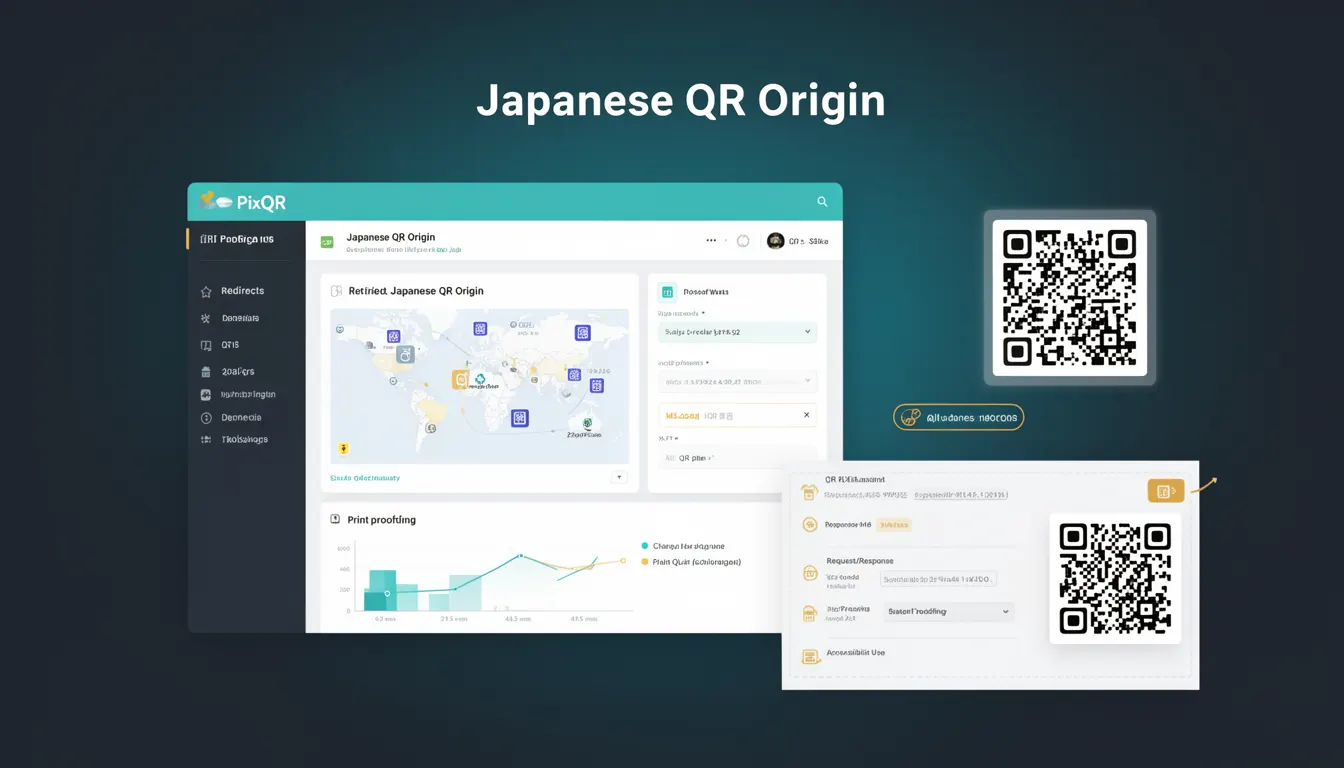
Why It Matters
For developers building QR code solutions with PixQR, the Japanese QR Origin is relevant because it directly affects compatibility, encoding standards, and the structure of QR code content. QR codes originating from Japan were designed to meet specific requirements for data density, error correction, and scanning reliability, which are foundational to modern QR generation systems.
Understanding this origin is crucial for ensuring that generated QR codes function correctly across different scanners and platforms. It also informs best practices for secure link management, especially when redirecting to dynamic or sensitive content. The Japanese design principles have influenced how QR codes are validated, tracked, and integrated into larger operational workflows.
How It Works
The Japanese QR Origin encompasses the foundational design elements and implementation details that shaped QR code technology. These include:
- The specific encoding modes (numeric, alphanumeric, byte, kanji) used in QR code generation, which are defined in the ISO/IEC 18004 standard and implemented in PixQR's QR generation engine.
- The error correction levels (L, M, Q, H) that determine how much data can be recovered if a QR code is partially obscured or damaged, with levels chosen based on scanning environment considerations.
- The version and size specifications of QR codes, which are determined by the amount of data to encode and the required error correction capacity.
- The data matrix structure, which defines how data is arranged in rows and columns for optimal scanning, particularly in Japan's high-density usage scenarios.
- The integration of structured data formats, such as those used in mobile applications and loyalty programs, which were initially developed for Japanese markets and are now widely supported in PixQR's dynamic redirect system.
Quick Reference
| Item | Purpose | Notes |
|---|---|---|
| Encoding Mode | Selects data format for QR code | Must match input data type for optimal size |
| Error Correction Level | Determines recovery capacity | Higher levels reduce scan reliability in some cases |
| Version | Defines QR code size | Version 1 = 21x21 modules |
| Data Matrix | Arranges encoded data | Optimized for scanning in Japan's dense environments |
| Structured Data Formats | Supports application-specific data | Used in loyalty, payment, and mobile apps |
Basic Example
PixQR Example QR
This QR links directly to this glossary page, so printed notes, onboarding docs, and support material can bring scanners back to the current reference.
/glossary/qr-code-history-of/history-of-qr-codes-japanese-qr-origin

This example demonstrates a simple QR code generation using a text string, showing how encoding mode selection affects the output size and structure.
const qrData = "https://example.com";
const encodedQR = pixqr.generate(qrData, {
  mode: "byte",
  errorCorrection: "M"
});
console.log(encodedQR);
The example sets the encoding mode to "byte" for general text and selects medium error correction. This ensures compatibility with most scanners while maintaining a compact QR size.
Production Example
This example illustrates a more robust implementation of QR generation with error handling, dynamic content, and configuration for enterprise use cases.
const generateQRCode = (url, options = {}) => {
  try {
    const config = {
      mode: "byte",
      errorCorrection: "H",
      version: 10,
      ...options
    };
    return pixqr.generate(url, config);
  } catch (error) {
    console.error("QR generation failed:", error);
    return null;
  }
};
const qrCode = generateQRCode("https://secure.example.com/redirect", {
  version: 15,
  errorCorrection: "H"
});
This version ensures high error correction and version-specific sizing, which are critical for enterprise-grade QR codes. It also includes error handling and modular configuration, making it suitable for production workflows in PixQR's secure redirect system.
Common Mistakes
- Choosing an incorrect encoding mode for the data type, which can result in oversized QR codes or generation failures.
- Ignoring error correction levels, leading to QR codes that fail to scan in poor conditions.
- Using outdated QR versions, which may not support modern data sizes or error correction requirements.
- Not validating dynamic URLs before QR generation, potentially causing broken redirects or security vulnerabilities.
- Overlooking the impact of structured data formats, which can break compatibility with scanners or applications.
Security And Production Notes
- Ensure all QR code content is validated and sanitized to prevent injection attacks or phishing redirections.
- Use high error correction levels for environments where QR codes may be partially damaged or obscured.
- Implement secure link management to protect dynamic redirects and prevent unauthorized access.
- Adhere to PixQR's privacy guidelines when encoding user-specific or sensitive data in QR codes.
- Test QR codes across multiple scanners and platforms to ensure compatibility and reliability.
Related Concepts
Several concepts are closely related to the Japanese QR Origin and are essential for understanding modern QR code implementation:
- QR Code Standards: The ISO/IEC 18004 standard that defines QR code specifications, including those originally developed in Japan.
- Dynamic Redirects: The ability to redirect QR codes to different URLs or content, often used in marketing and loyalty programs.
- Scanning Reliability: The ability of a QR code to be accurately scanned under various conditions, a key feature of Japanese-designed QR codes.
- Brand-Safe Design: Ensuring QR codes maintain brand integrity and are visually consistent across platforms, often influenced by Japanese design principles.
- Privacy and Analytics: The handling of user data and scan tracking, which are critical for enterprise use cases and regulatory compliance.