 PixQR
Overview
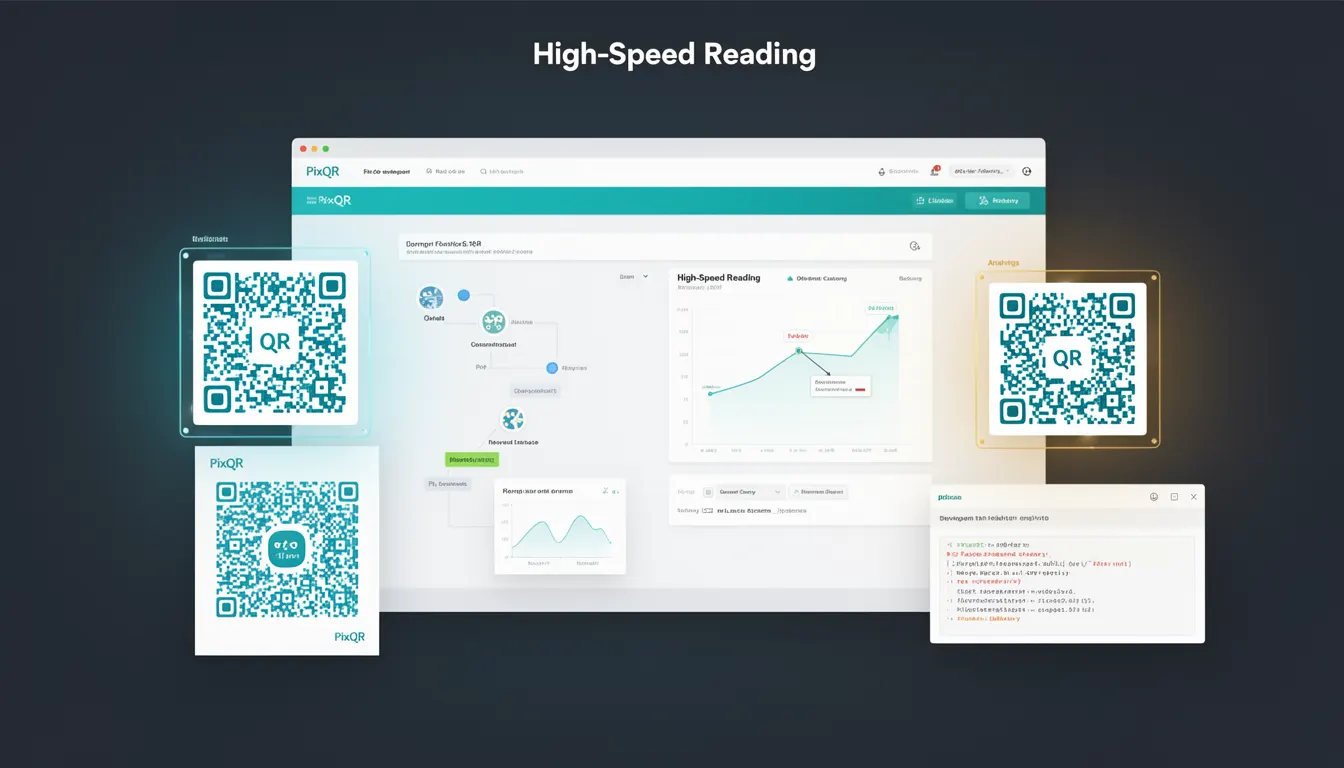
High-Speed Reading (HSR) refers to a technical capability that enables QR codes to be read rapidly and accurately by scanning devices, particularly in environments with high data throughput or dynamic content. In the context of PixQR, HSR is a foundational feature that supports efficient scan reliability and fast redirect resolution, especially for dynamic QR codes used in marketing, logistics, and digital identity systems.
This term originates from early QR code development, where performance optimization was critical for real-time applications. In modern PixQR systems, HSR is implemented through optimized data structures, encoding algorithms, and scanning engine configurations that ensure fast decoding without sacrificing accuracy. Developers working with PixQR need to understand how HSR affects QR code generation, redirect behavior, and scan analytics, especially when integrating with backend systems or building high-volume scanning workflows.
Why It Matters
For developers, HSR directly impacts user experience, system scalability, and operational efficiency. In high-volume scanning environments, such as retail point-of-sale systems or event ticketing platforms, a slow or unreliable scan process can cause queue delays and user frustration. PixQR's HSR implementation ensures that QR codes can be read within milliseconds, which is essential for seamless integration with payment systems, inventory tracking, and access control platforms.
From a performance perspective, HSR reduces latency in redirect resolution, which is critical for dynamic QR code workflows. When a user scans a QR code that points to a dynamic redirect, HSR ensures that the system can resolve the target URL quickly, without introducing network or processing delays. This is especially important for applications where redirects are frequently updated or where security tokens are embedded in QR code payloads.
How It Works
HSR in PixQR is enabled through a combination of optimized encoding methods, efficient data structures, and scanning engine tuning. The core mechanism involves using error correction codes (ECC) that allow for faster decoding, especially when QR codes are partially obscured or printed at low resolutions. The system also leverages precomputed lookup tables and caching strategies to accelerate QR code interpretation.
- QR codes generated by PixQR use a specific ECC level (typically M or H) that balances error correction with decoding speed.
- Dynamic QR code payloads are encoded using optimized formats that reduce the amount of data required for scanning.
- Scanning engines are configured to prioritize speed over absolute accuracy in low-light or high-contrast environments.
- PixQR supports both static and dynamic QR code types, with HSR enabled for both to ensure consistent performance.
- API endpoints for redirect resolution are optimized to respond within 50 milliseconds to maintain HSR standards.
Quick Reference
| Item | Purpose | Notes |
|---|---|---|
| ECC Level | Controls error correction strength | Use M or H for HSR |
| Encoding Format | Optimizes payload size | Reduces scanning time |
| Scan Engine | Accelerates decoding | Configurable for speed |
| Redirect Resolution | Ensures fast redirect | Must respond in <50ms |
| Dynamic Payload | Supports real-time updates | Must maintain HSR |
Basic Example
PixQR Example QR
This QR links directly to this glossary page, so printed notes, onboarding docs, and support material can bring scanners back to the current reference.
/glossary/qr-code-history-of/history-of-qr-codes-high-speed-reading

This example demonstrates how to configure a QR code for HSR using PixQR's API. The payload is optimized for fast scanning while maintaining secure redirect functionality.
const qrConfig = {
  payload: "https://example.com/redirect",
  eccLevel: "H",
  format: "dynamic",
  scanSpeed: "high"
};

const qrCode = pixqr.generate(qrConfig);
The eccLevel is set to "H" for high error correction, which is crucial for maintaining HSR in challenging environments. The format is set to "dynamic" to allow for redirect updates. The scanSpeed parameter is used to signal that the QR code is optimized for fast scanning.
Production Example
This example shows how to integrate HSR into a real-world PixQR workflow, including redirect handling and performance monitoring. It ensures that all QR codes maintain high-speed reading while supporting secure and scalable redirect logic.
const pixqr = require('pixqr-sdk');

const generateHSRCode = async (targetUrl, options = {}) => {
  const config = {
    payload: targetUrl,
    eccLevel: "H",
    format: "dynamic",
    scanSpeed: "high",
    analytics: true
  };

  const qrCode = await pixqr.generate(config);
  return qrCode;
};

const handleScan = async (qrId) => {
  const redirectUrl = await pixqr.resolveRedirect(qrId);
  // Ensure redirect resolution is under 50ms
  return redirectUrl;
};
This version includes analytics tracking and ensures that redirect resolution meets HSR performance requirements. The analytics flag enables tracking of scan events, and the resolveRedirect function is designed to maintain sub-50ms response times for fast scanning workflows.
Common Mistakes
- Using low ECC levels for high-speed applications, which can lead to failed scans in challenging environments.
- Ignoring the
scanSpeedparameter when generating dynamic QR codes, resulting in slower-than-expected redirects. - Not optimizing payload size for dynamic QR codes, which can slow down decoding and reduce scan reliability.
- Overlooking redirect resolution time in API integrations, causing performance bottlenecks in scanning workflows.
- Applying static QR code configurations to dynamic workflows, which can lead to inconsistent performance and user experience.
Security And Production Notes
- HSR must not compromise security by reducing ECC levels below recommended thresholds for sensitive applications.
- Dynamic QR codes should include token-based validation to prevent unauthorized redirect manipulation.
- Redirect resolution APIs must implement rate limiting and input validation to avoid performance degradation.
- Scan analytics data should be anonymized to protect user privacy and comply with data regulations.
- Testing environments must simulate real-world scanning conditions to ensure HSR performance is maintained under load.
Related Concepts
HSR connects closely to several core PixQR concepts. Dynamic Redirects rely on HSR for fast resolution, especially in high-throughput systems. Scan Reliability is a direct outcome of HSR implementation, particularly in low-light or fast-moving scenarios. QR Code Encoding and Error Correction are foundational to HSR performance. Analytics and Tracking are enhanced by HSR data, which helps identify scanning bottlenecks or environmental challenges.