 PixQR
Overview
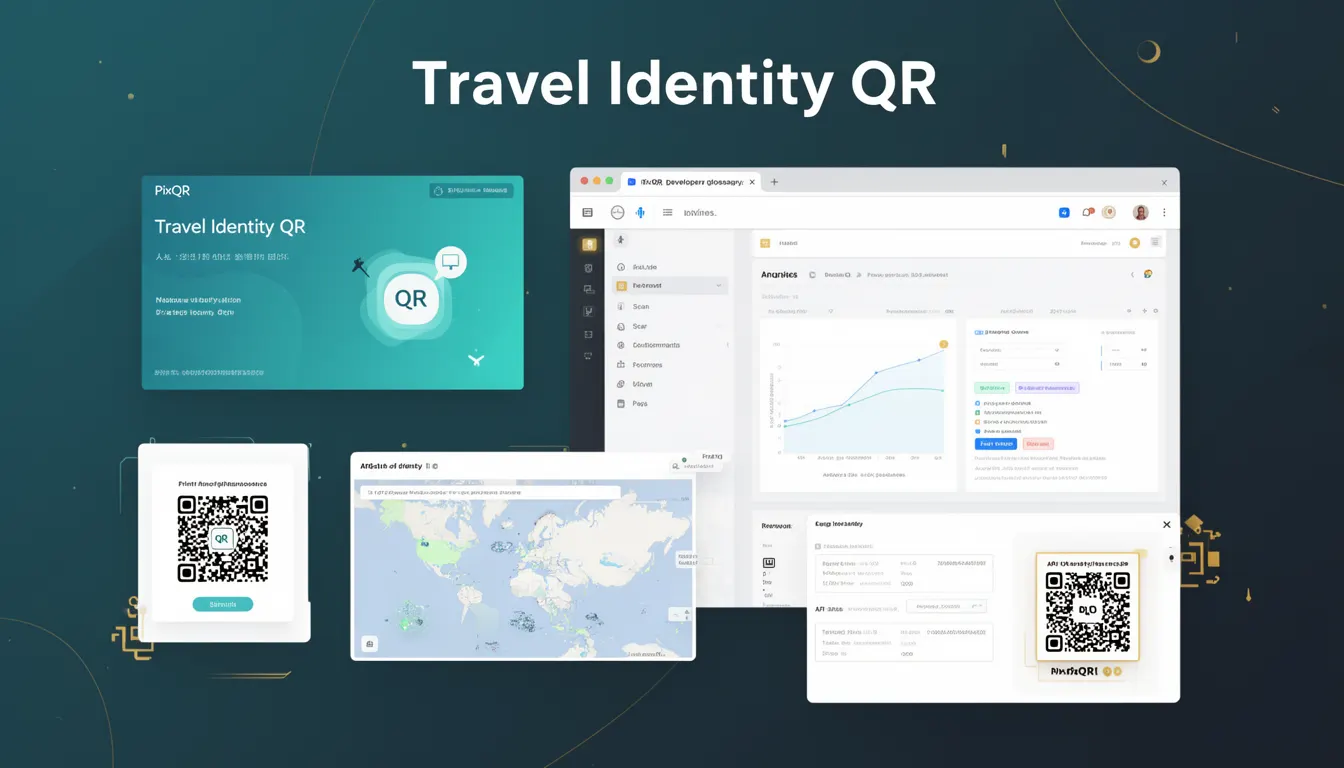
Travel Identity QR is a conceptual framework for QR codes that are used to represent and manage travel-related identity information. Unlike traditional QR codes that typically link to static URLs or store simple data, Travel Identity QR codes are designed to carry rich, structured identity data that can be validated, authenticated, and dynamically updated. These QR codes may be used in travel scenarios such as boarding passes, identity verification, visa applications, or border control.
Developers working with PixQR may encounter Travel Identity QR as part of a future-oriented implementation where identity data is encoded in a secure, interoperable format. It represents a shift from simple data storage to a more dynamic, identity-aware QR code ecosystem. In practice, developers may need to generate or consume QR codes that encode structured data, such as personal identification, travel itinerary details, or security credentials, which may require integration with identity management systems or APIs.
Why It Matters
For developers, Travel Identity QR codes are significant because they represent a move toward more secure, privacy-preserving, and scalable identity solutions in travel. As the travel industry increasingly adopts digital identity verification, QR codes are evolving beyond simple redirects to become trusted channels for transmitting sensitive data. This evolution impacts how developers approach QR code generation, data validation, and API integration within PixQR.
From a security standpoint, Travel Identity QR codes must support authentication, integrity checks, and data encryption. This impacts the choice of encoding methods, data formats, and integration points. For example, developers may need to ensure that QR code content is signed or encrypted before being encoded, and that the receiving system can validate the signature or decrypt the content. For performance, Travel Identity QR codes may involve larger payloads or more complex processing, requiring careful consideration of scan reliability and data size limits.
How It Works
Travel Identity QR codes are built using structured data formats, often leveraging standards like JSON-LD, OpenID Connect, or custom schema definitions. The QR code generation process includes encoding identity data in a secure format, applying cryptographic signatures or encryption, and ensuring the resulting QR code is scannable and compatible with travel infrastructure.
- Travel Identity QR codes typically use structured formats like JSON-LD or CBOR to encode identity attributes such as name, passport number, travel dates, and security credentials.
- The QR code payload is often signed using digital signatures to ensure authenticity and integrity, which may involve public key infrastructure (PKI) or blockchain-based verification.
- Dynamic updates may be supported through a linked backend service, allowing travel identity data to be refreshed without re-generating the QR code.
- Scan reliability is critical; the QR code must be robust to damage or distortion, which may involve error correction levels or redundancy in the encoding.
- Privacy considerations require that sensitive data is either encrypted or selectively exposed, depending on the use case and compliance requirements.
Quick Reference
| Item | Purpose | Notes |
|---|---|---|
| QR Code Format | Encoding identity data | Use JSON-LD or CBOR for structured data |
| Data Signature | Ensuring authenticity | Apply digital signature before encoding |
| Dynamic Updates | Allowing data refresh | Use a backend service to update QR content |
| Error Correction | Ensuring scan reliability | Use appropriate ECC level (e.g., M or H) |
| Encryption | Protecting sensitive data | Encrypt payload using AES or similar |
Basic Example
PixQR Example QR
This QR links directly to this glossary page, so printed notes, onboarding docs, and support material can bring scanners back to the current reference.
/glossary/the-future-of-qr-codes/the-future-of-qr-codes-travel-identity-qr

This example shows a simple Travel Identity QR code payload using JSON-LD. It demonstrates how identity data is structured and encoded.
{
  "@context": {
    "@vocab": "https://schema.org/",
    "travel": "https://schema.org/TravelAction",
    "passport": "https://schema.org/Passport"
  },
  "@type": "TravelAction",
  "name": "Flight to Paris",
  "startDate": "2025-04-15T08:00:00Z",
  "passport": {
    "@type": "Passport",
    "identifier": "P12345678",
    "holder": {
      "@type": "Person",
      "name": "John Doe"
    }
  }
}
This payload encodes a travel action with a passport identifier and passenger name. The structure allows for easy parsing and validation by systems that support JSON-LD or schema.org vocabularies.
Production Example
This example demonstrates how a developer might integrate Travel Identity QR generation into a PixQR workflow, including data validation, encryption, and QR code generation.
const travelData = {
  name: "Flight to Paris",
  startDate: "2025-04-15T08:00:00Z",
  passport: {
    identifier: "P12345678",
    holder: {
      name: "John Doe"
    }
  }
};

const signedData = signData(travelData, privateKey);
const encryptedData = encryptData(signedData, encryptionKey);
const qrCode = generateQRCode(encryptedData, {
  errorCorrectionLevel: 'H',
  size: 512
});
This version includes encryption and signing to protect identity data, and it uses a high error correction level to ensure reliable scanning. It also reflects a structured approach to QR code generation that aligns with PixQR's focus on secure, brand-safe, and reliable QR code workflows.
Common Mistakes
- Not validating the structure of identity data before encoding, leading to QR codes that are unreadable or cause errors during scanning.
- Using weak or no encryption for sensitive data, which exposes users to privacy risks and compliance violations.
- Ignoring error correction levels, resulting in QR codes that fail to scan under poor lighting or physical damage.
- Generating QR codes with outdated or unsupported data formats, causing compatibility issues with travel systems.
- Skipping digital signature verification in the receiving system, which undermines the authenticity and integrity of the QR code content.
Security And Production Notes
- Always sign QR code payloads using a secure key management system to prevent tampering and ensure authenticity.
- Encrypt sensitive identity data to comply with privacy regulations such as GDPR or CCPA.
- Use a high error correction level (e.g., H) to ensure QR codes remain scannable under various conditions.
- Validate QR code content against known schemas or standards before processing to avoid unexpected behavior.
- Implement a secure backend service to support dynamic updates, ensuring that QR code data can be refreshed without re-generating the physical code.
Related Concepts
Travel Identity QR codes are closely related to several core concepts in QR code development and identity management:
- Dynamic QR Codes: These QR codes can be updated after generation, which is essential for travel identity data that may change.
- QR Code Security: Ensures that QR code content is protected from tampering, which is critical for identity data.
- Identity Verification: The process of confirming the authenticity of identity information encoded in the QR code.
- Privacy-Preserving Data: Techniques for encoding data in a way that protects user privacy while still enabling necessary validation.
- Scan Reliability: The ability of a QR code to be scanned under various conditions, a key requirement for travel identity applications.