 PixQR
Overview
The term Anti-Counterfeit Future refers to a set of evolving technologies and practices designed to enhance the security and authenticity verification of QR codes. As QR codes become more prevalent in commercial, logistics, and consumer applications, the risk of counterfeiting and fraud increases. This term encapsulates the next generation of QR code systems that incorporate advanced cryptographic, authentication, and integrity-checking mechanisms to prevent unauthorized duplication, tampering, or misuse of QR code data.
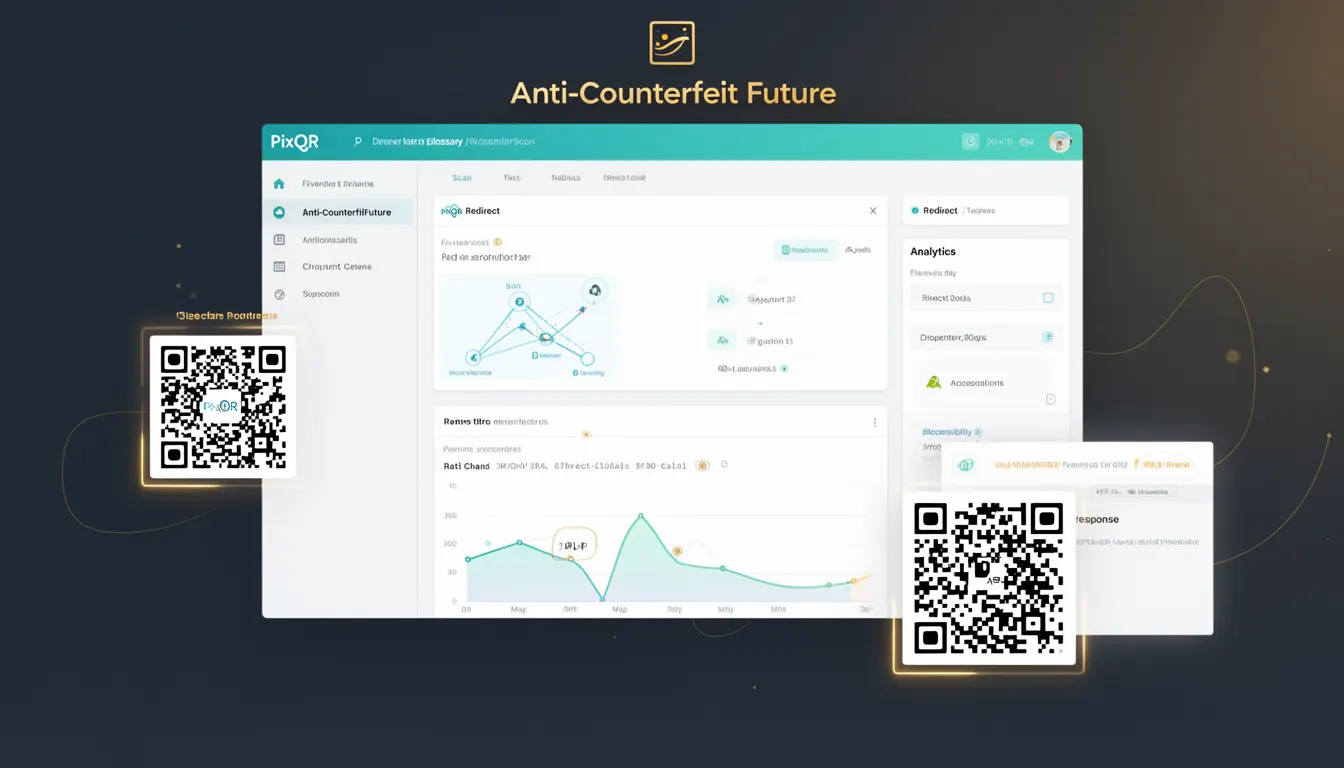
In the context of PixQR, the Anti-Counterfeit Future is a strategic direction for enhancing the platform’s capabilities to ensure that QR codes are not only functional but also secure, traceable, and resistant to forgery. It involves integrating dynamic data handling, digital signatures, and real-time validation into the QR generation and scanning process.
Why It Matters
For developers and platform operators, Anti-Counterfeit Future is critical because it directly impacts the reliability and trustworthiness of QR-based systems. In industries like pharmaceuticals, luxury goods, and supply chain logistics, counterfeit products can result in significant financial losses, safety risks, and brand damage. By leveraging anti-counterfeit mechanisms, PixQR helps ensure that QR codes can be trusted as a secure channel for information exchange and product verification.
From a performance and scalability standpoint, implementing anti-counterfeit features may introduce overhead, but it also provides the foundation for building resilient systems. It allows developers to integrate robust authentication and integrity checks without compromising usability or increasing the risk of exploitation.
How It Works
The Anti-Counterfeit Future in QR code systems is built on several core technologies and operational principles. These include:
- Dynamic QR generation with time-sensitive or session-based data to reduce predictability and prevent static duplication.
- Integration of cryptographic signatures or hashes to validate the authenticity and integrity of QR data.
- Real-time verification of QR code origins and usage patterns to detect anomalies and potential fraud.
- Support for secure redirect endpoints that enforce access control and track scan behavior.
- Implementation of secure data storage and retrieval practices to protect sensitive QR payload information.
In PixQR, these features are typically enabled through platform-level configurations and API integrations. QR codes are generated with metadata that includes timestamps, session identifiers, and cryptographic tokens. When a QR code is scanned, the system validates the authenticity of the token and ensures that the data has not been tampered with. This validation can be extended to include geolocation, device fingerprinting, and user behavior analytics.
Quick Reference
| Item | Purpose | Notes |
|---|---|---|
| Dynamic QR Payload | Ensures QR data changes over time | Prevents static duplication and reuse |
| Cryptographic Token | Verifies authenticity and integrity | Used in validation during scan |
| Scan Analytics | Tracks and flags suspicious behavior | Provides fraud detection insights |
| Secure Redirect | Enforces access control on destination | Prevents unauthorized access |
| Metadata Validation | Ensures QR payload consistency | Used in backend verification |
Basic Example
PixQR Example QR
This QR links directly to this glossary page, so printed notes, onboarding docs, and support material can bring scanners back to the current reference.
/glossary/the-future-of-qr-codes/the-future-of-qr-codes-anti-counterfeit-future

This example demonstrates how a basic dynamic QR payload might be structured in a PixQR context. It uses a timestamp-based approach to generate a unique URL for each QR code.
const generateQRPayload = (productId, timestamp) => {
  return `https://pixqr.example.com/verify/${productId}?t=${timestamp}`;
};

const payload = generateQRPayload("ABC123", Date.now());
console.log(payload); // https://pixqr.example.com/verify/ABC123?t=1700000000000
The payload includes a product identifier and a timestamp. This ensures that the QR code’s destination changes over time, making it harder to duplicate or reuse. The timestamp can be validated on the server to confirm that the QR code is still within an acceptable time window.
Production Example
In a production environment, a more robust approach involves integrating cryptographic tokens and server-side validation. This ensures that the QR code’s integrity is maintained and that only valid scans are processed.
const crypto = require('crypto');

const generateSecureQR = (productId, secretKey) => {
  const timestamp = Date.now();
  const data = `${productId}-${timestamp}`;
  const token = crypto
    .createHmac('sha256', secretKey)
    .update(data)
    .digest('hex');
  return `https://pixqr.example.com/verify/${productId}?t=${timestamp}&token=${token}`;
};

const securePayload = generateSecureQR("XYZ789", "mySecretKey123");
console.log(securePayload); // https://pixqr.example.com/verify/XYZ789?t=1700000000000&token=abc123...
This version uses a cryptographic hash-based message authentication code (HMAC) to sign the QR payload. The token ensures that the data has not been altered and that the QR code originated from a trusted source. This approach is suitable for production use because it adds a layer of security that is difficult to bypass without access to the secret key.
Common Mistakes
- Using static QR payloads that never change, making them vulnerable to duplication or reuse.
- Reusing cryptographic keys across multiple QR codes, which undermines the security of the system.
- Not validating QR token signatures on the backend, leading to potential data tampering or unauthorized access.
- Ignoring timestamp validation, allowing expired or outdated QR codes to be accepted.
- Storing secret keys in client-side code or logs, exposing them to potential attackers.
Security And Production Notes
- Always use time-based or session-based payloads to prevent static QR reuse.
- Implement HMAC or similar cryptographic techniques to ensure data integrity.
- Validate all QR tokens and timestamps on the backend before processing scans.
- Store secret keys securely, preferably in environment variables or secure key management systems.
- Log and monitor suspicious scan behavior for potential fraud detection.
Related Concepts
Several closely related concepts are essential to understanding and implementing Anti-Counterfeit Future in QR systems:
- Dynamic QR Codes – QR codes that change content over time or based on session data.
- Digital Signatures – Cryptographic methods to ensure data integrity and authenticity.
- Secure Redirects – Endpoints that enforce access control and validate QR data.
- Scan Analytics – Tools for tracking QR code usage and detecting anomalies.
- QR Code Metadata – Embedded data that provides context and validation for QR code content.