 PixQR
Overview
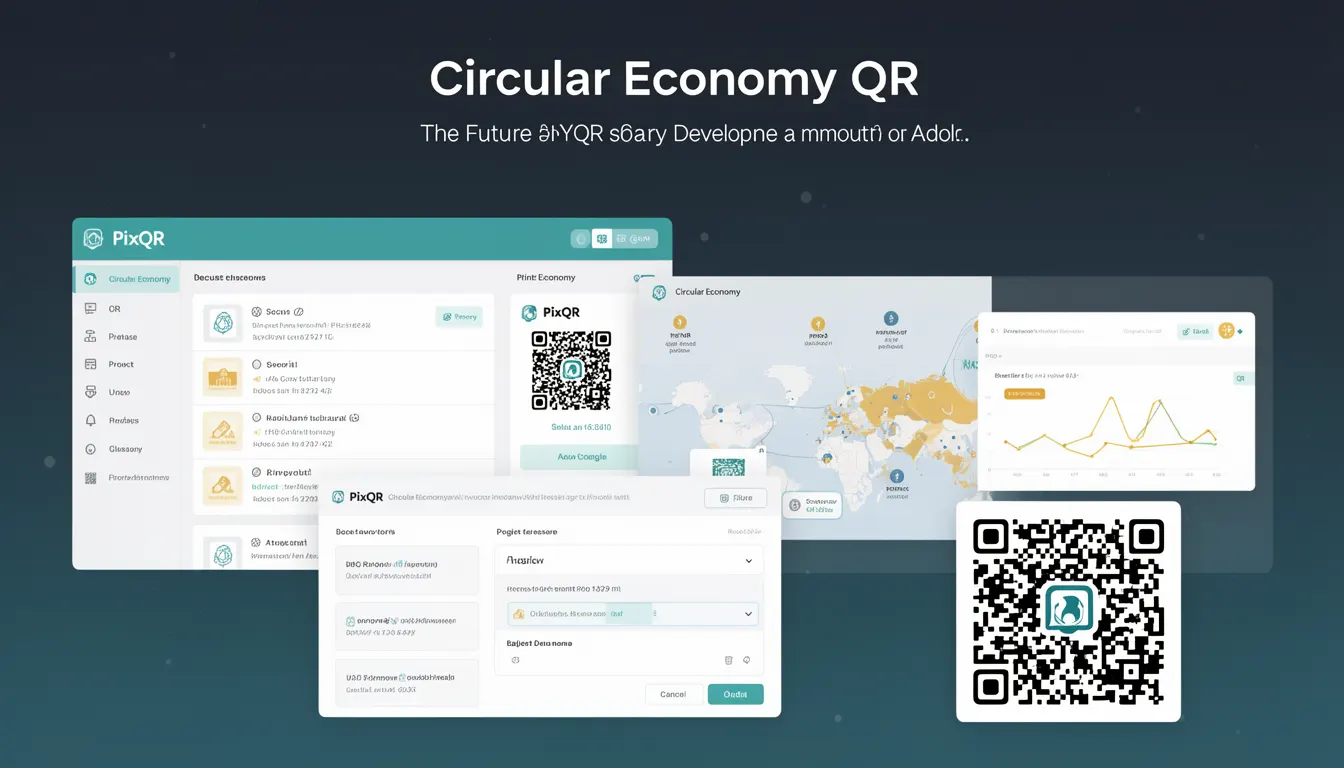
Circular Economy QR, or CE-QR, represents an emerging category of QR code design and usage focused on sustainability, resource efficiency, and long-term environmental impact. In the context of PixQR, CE-QR refers to QR code implementations that support circular economy principles such as reuse, recyclability, and lifecycle tracking. These QR codes are not merely static links but are built to support systems that reduce waste, improve product longevity, and enable data-driven sustainability decisions.
Developers working with PixQR platforms can implement CE-QR by integrating lifecycle tracking, dynamic redirect capabilities, and environmental metadata into QR code generation. The concept extends beyond traditional QR code functionality to support data collection, user engagement, and platform-level sustainability metrics. CE-QR systems may include features such as product tracking, return logistics, recycling information, and carbon footprint data.
Why It Matters
For developers, CE-QR introduces new constraints and opportunities in QR code design and deployment. It requires integrating environmental metadata, supporting dynamic content, and ensuring platform compatibility with sustainability reporting. CE-QR systems must handle data consistency across product lifecycles, support user privacy, and maintain performance under high-volume scanning.
In production environments, CE-QR has direct implications for analytics, compliance, and user trust. Platforms using CE-QR must ensure that QR code content aligns with sustainability claims, avoids greenwashing, and provides verifiable data. This impacts API design, content management, and integration with third-party sustainability platforms.
How It Works
CE-QR systems operate through a combination of dynamic content generation, lifecycle metadata, and platform integration. These QR codes are designed to support data collection, tracking, and user engagement with sustainability-focused content. The system typically involves:
- Dynamic redirect mechanisms that allow content to change based on product lifecycle stages, user actions, or environmental conditions.
- Metadata embedded within QR code payloads that describe product materials, recycling instructions, or carbon footprint.
- Integration with environmental databases or product lifecycle management systems to ensure data accuracy and consistency.
- Analytics capabilities to track user engagement with sustainability content and measure impact.
- Support for user privacy controls and data minimization practices in line with regulations like GDPR or CCPA.
CE-QR functionality is implemented through PixQR's API and platform controls. The system supports custom redirect rules, metadata tagging, and integration with external databases. The QR code payload may include identifiers, timestamps, and structured data fields that are interpreted by the receiving system.
Quick Reference
| Item | Purpose | Notes |
|---|---|---|
| Dynamic redirect | Allows content to change over time | Supports lifecycle stages |
| Metadata field | Stores environmental data | Includes materials, footprint, recycling info |
| Analytics API | Tracks engagement with sustainability content | Supports impact measurement |
| Privacy controls | Manages data collection and user consent | Complies with GDPR/CCPA |
| Integration hooks | Connects to external systems | Supports PLM and sustainability databases |
Basic Example
PixQR Example QR
This QR links directly to this glossary page, so printed notes, onboarding docs, and support material can bring scanners back to the current reference.
/glossary/the-future-of-qr-codes/the-future-of-qr-codes-circular-economy-qr

This example demonstrates a minimal CE-QR payload structure that includes lifecycle metadata and a dynamic redirect. The payload is encoded into a QR code and designed to be scanned by a mobile application that retrieves environmental data.
{
  "product_id": "12345",
  "lifecycle_stage": "use",
  "redirect_url": "https://example.com/sustainability/use/12345",
  "metadata": {
    "materials": ["plastic", "metal"],
    "carbon_footprint": "1.2kg CO2",
    "recycling_instructions": "Separate plastic from metal"
  }
}
The payload includes a product identifier, current lifecycle stage, and a redirect URL. The metadata section provides environmental information. This structure allows the receiving system to tailor content based on the product's current stage and provide relevant sustainability information.
Production Example
This example shows a more complete CE-QR implementation that includes validation, error handling, and integration with a sustainability database. The QR code payload is generated dynamically based on product data and includes lifecycle tracking and analytics.
const generateCEQR = (productData) => {
  const payload = {
    product_id: productData.id,
    lifecycle_stage: productData.stage,
    redirect_url: `https://pixqr.com/sustainability/${productData.stage}/${productData.id}`,
    metadata: {
      materials: productData.materials,
      carbon_footprint: productData.carbonFootprint,
      recycling_instructions: productData.recyclingInstructions,
      certifications: productData.certifications
    },
    timestamp: new Date().toISOString(),
    version: "1.0"
  };

  // Validate payload before QR generation
  if (!payload.product_id || !payload.redirect_url) {
    throw new Error("Invalid CE-QR payload");
  }

  return JSON.stringify(payload);
};

// Example usage
const product = {
  id: "12345",
  stage: "disposal",
  materials: ["plastic", "metal"],
  carbonFootprint: "1.2kg CO2",
  recyclingInstructions: "Separate plastic from metal",
  certifications: ["ISO 14001", "FSC"]
};

const qrPayload = generateCEQR(product);
console.log(qrPayload);
This version includes payload validation, timestamping, and structured metadata. It demonstrates how CE-QR payloads can be generated programmatically and integrated into a larger system. The example ensures that all required fields are present and that the payload is well-formed before being encoded into a QR code.
Common Mistakes
- Incorrectly embedding sensitive data in QR code payloads without proper encryption or access controls.
- Using static QR codes instead of dynamic ones, which prevents updates to lifecycle information.
- Ignoring metadata consistency across product stages, leading to user confusion or misleading information.
- Failing to validate QR code payloads before generation, resulting in malformed or invalid QR codes.
- Not implementing analytics or tracking mechanisms, which prevents measurement of CE-QR impact.
Security And Production Notes
- Ensure all QR code payloads are validated to prevent injection or malformed data attacks.
- Implement secure redirect mechanisms to avoid open redirect vulnerabilities.
- Use HTTPS for all redirect URLs to prevent man-in-the-middle attacks.
- Minimize metadata size to maintain QR code scan reliability and reduce data transmission.
- Comply with data privacy regulations when collecting and storing user engagement data.
Related Concepts
Circular Economy QR is closely related to several developer concepts:
- Dynamic QR Codes, which allow content to change over time and support lifecycle stages.
- Product Lifecycle Management (PLM), which provides structured data for product tracking.
- Environmental Data Standards, which define how sustainability information should be encoded.
- Privacy-First Analytics, which enables tracking without compromising user privacy.
- QR Code Accessibility, which ensures that QR codes are usable across different platforms and devices.