 PixQR
Overview
Supply Chain Transparency, in the context of QR code development and platform operations, refers to the ability to trace and verify the journey of a QR code from its creation through its use in real-world applications. This concept becomes increasingly relevant as QR codes are embedded in physical products, marketing campaigns, and digital workflows that demand verifiable origin, authenticity, and auditability.
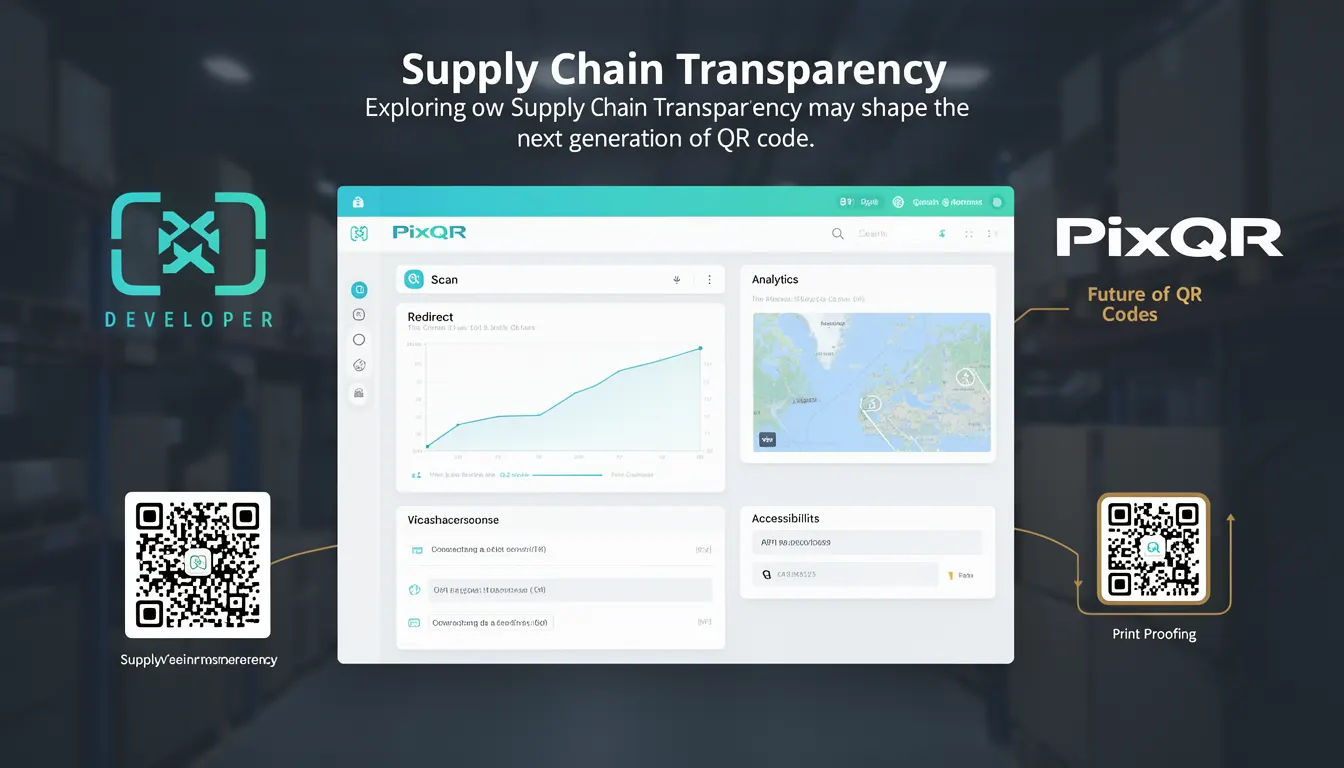
For developers working with PixQR, Supply Chain Transparency means implementing systems that ensure QR codes can be tracked and validated at every stage of their lifecycle. This includes generating codes with embedded metadata, maintaining logs of redirects and scans, and providing audit trails that allow for verification of legitimacy and origin.
Why It Matters
Supply Chain Transparency in QR code platforms directly impacts trust, compliance, and fraud prevention. In industries like pharmaceuticals, luxury goods, and food safety, QR codes must be traceable to prevent counterfeiting, ensure regulatory compliance, and provide end-users with verified product information.
From a developer standpoint, implementing transparency mechanisms helps avoid costly recalls, legal liabilities, and brand reputation damage. PixQR's platform supports this by enabling code creators to embed verification tokens, associate metadata with QR codes, and monitor usage patterns through its analytics dashboard.
How It Works
Supply Chain Transparency in QR code systems relies on a combination of metadata embedding, tracking mechanisms, and access controls. The core components include:
- Metadata tagging during QR code generation, including product identifiers, timestamps, and source information.
- Secure redirect routing that logs each scan event with IP, device, and location data.
- API endpoints that allow verification of a QR code's authenticity and history.
- Integration with external systems such as product databases, blockchain ledgers, or ERP platforms.
- Support for dynamic QR code updates that can modify content or redirect behavior without re-printing physical labels.
Each QR code generated through PixQR can carry embedded attributes such as source_id, product_batch, and verification_token. These values are stored in the platform’s backend and can be retrieved via secure API calls. Redirects are logged with detailed tracking, including timestamps, geolocation, and device fingerprints, enabling full auditability.
Quick Reference
| Item | Purpose | Notes |
|---|---|---|
| source_id | Identifies the originating system or campaign | Used for internal tracking and analytics |
| product_batch | Tracks batch or lot information | Essential for recall and compliance |
| verification_token | Allows external systems to validate QR code legitimacy | Used in API verification flows |
| redirect_logs | Stores scan and redirect history | Accessible via dashboard or API |
| dynamic_updates | Enables real-time content modification | Supports supply chain flexibility |
Basic Example
PixQR Example QR
This QR links directly to this glossary page, so printed notes, onboarding docs, and support material can bring scanners back to the current reference.
/glossary/the-future-of-qr-codes/the-future-of-qr-codes-supply-chain-transparency

This example shows how to generate a QR code with basic metadata using PixQR's API. It demonstrates embedding a product identifier and a timestamp.
{
  "content": "https://example.com/product/12345",
  "metadata": {
    "source_id": "campaign_001",
    "product_batch": "BATCH-2024-001",
    "timestamp": "2024-04-01T10:00:00Z"
  }
}
The source_id identifies the campaign, the product_batch links to inventory, and the timestamp ensures temporal context. These fields are stored in the platform and used to generate audit logs.
Production Example
In a production environment, a QR code generator might include additional validation, error handling, and logging. This example includes a more complete configuration with verification token generation and API response handling.
{
  "content": "https://api.pixqr.com/redirect/abc123",
  "metadata": {
    "source_id": "retail_campaign_2024",
    "product_batch": "LOT-45678",
    "verification_token": "v1.0-xyz789",
    "timestamp": "2024-04-01T10:00:00Z"
  },
  "options": {
    "track_scans": true,
    "redirect_type": "dynamic",
    "secure_redirect": true
  }
}
This version includes a secure redirect setting, dynamic update capability, and explicit scan tracking. These options ensure that the QR code meets production-grade transparency requirements, and the verification_token allows downstream systems to confirm the code’s authenticity.
Common Mistakes
- Not embedding metadata during QR code creation, leading to untraceable codes in audits.
- Using hardcoded values instead of dynamic identifiers, causing batch-level issues during recalls.
- Disabling scan tracking or redirect logging, which undermines transparency.
- Reusing verification tokens across multiple codes, creating a single point of failure.
- Ignoring geolocation and device fingerprinting, reducing the ability to detect fraudulent scans.
Security And Production Notes
- Always use secure, randomized tokens for verification to prevent token reuse or guessing attacks.
- Implement strict access controls for metadata and redirect logs to prevent unauthorized inspection.
- Log all redirect and scan events with full IP, timestamp, and device context for forensic analysis.
- Validate all incoming metadata to prevent injection or tampering during QR code generation.
- Support for dynamic updates must be secured with API keys or signed tokens to avoid unauthorized changes.
Related Concepts
Supply Chain Transparency is closely connected to several core developer concepts:
- QR Code Lifecycle Management – The stages from creation to retirement, including tracking and updates.
- Dynamic Redirects – The ability to change QR code content without re-printing physical labels.
- Scan Analytics – The collection and interpretation of data from QR code scans.
- API Security – Protecting access to QR code data and redirect endpoints.
- Product Authentication – Verifying that a QR code corresponds to a legitimate product or service.