 PixQR
Overview
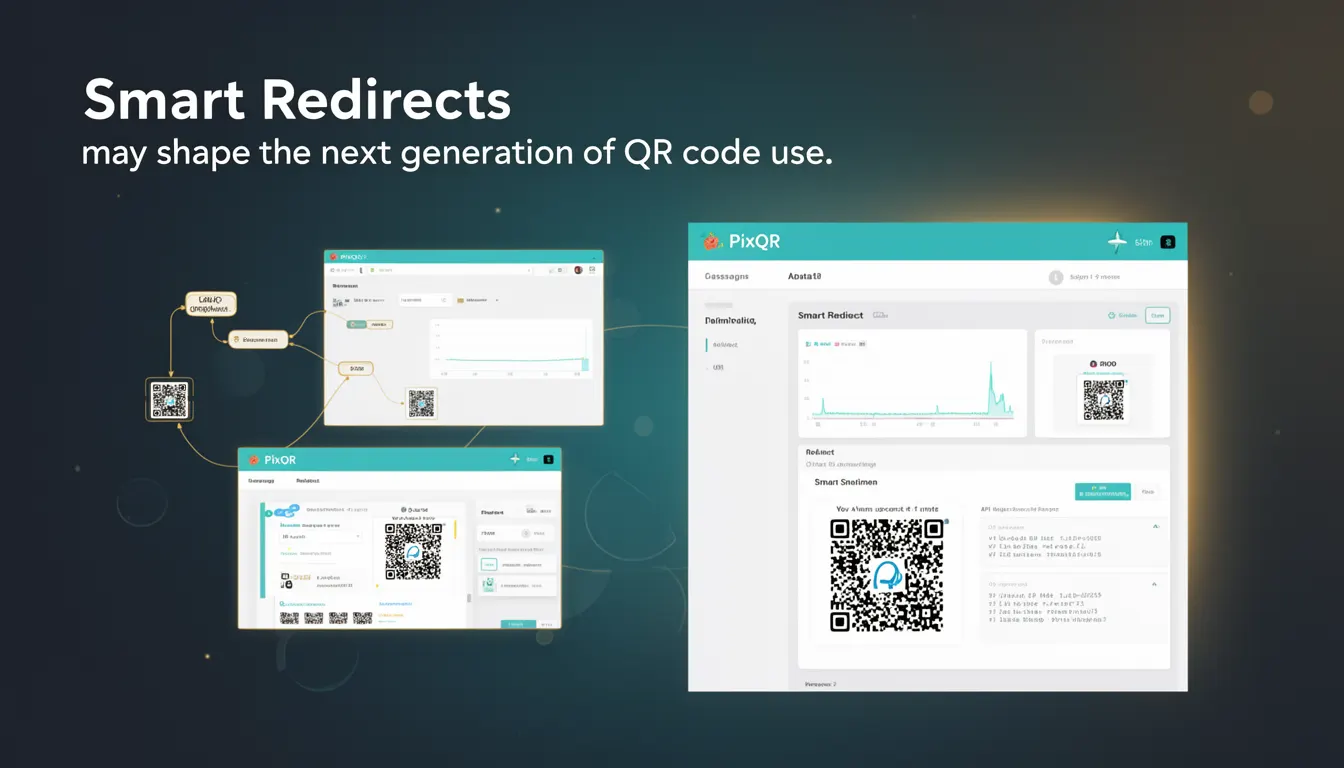
Smart Redirects represent an evolution in how QR codes function beyond static links. Instead of pointing to a single destination, Smart Redirects dynamically route users based on contextual data, such as geographic location, device type, user behavior, or campaign performance. In the context of PixQR, Smart Redirects are implemented through a dynamic redirect system that allows developers to configure multiple target URLs with specific routing rules.
These redirects are not only responsive to user data but also support analytics and tracking, enabling real-time adjustments to campaign performance. This makes Smart Redirects a core feature for advanced QR code platforms that aim to support adaptive marketing, personalized user experiences, and scalable content delivery.
Why It Matters
For developers working with PixQR, Smart Redirects offer a way to create more intelligent and responsive QR code campaigns. Rather than a fixed link, Smart Redirects allow a single QR code to adapt its behavior based on runtime conditions, which can dramatically improve user engagement, conversion rates, and campaign effectiveness.
From a performance perspective, Smart Redirects can reduce the need for multiple QR codes, thereby simplifying content management. From a security standpoint, they allow for better control over where users are directed, enabling dynamic blacklisting or redirection to safe fallbacks in case of target link issues. This also supports compliance with privacy regulations by allowing for granular control over tracking and data collection.
How It Works
Smart Redirects in PixQR are configured through a backend system that evaluates user data or campaign parameters before determining the final destination. The system supports a set of routing rules that can be defined via an API or dashboard.
- Routing rules can be based on device type, browser, geographic region, or user behavior.
- Each rule can define a target URL, a priority level, and optional conditions such as time-based or campaign-specific triggers.
- Smart Redirects support fallback mechanisms, ensuring that if a primary destination is unavailable, the system can redirect to a backup URL.
- Tracking and analytics are embedded within the redirect system, allowing developers to monitor performance in real time.
- The system supports secure redirect protocols, including HTTPS, and can enforce redirect policies to prevent malicious redirection.
Quick Reference
| Item | Purpose | Notes |
|---|---|---|
| Redirect Rule | Defines routing logic for a Smart Redirect | Can include conditions and fallback URLs |
| Target URL | The destination for the redirect | Must be HTTPS for security |
| Priority Level | Determines which rule is applied first | Higher numbers are processed first |
| Fallback URL | Alternative destination if primary fails | Should be a safe, static URL |
| Analytics | Tracks redirect performance | Includes scan counts, user behavior, and geo data |
Basic Example
PixQR Example QR
This QR links directly to this glossary page, so printed notes, onboarding docs, and support material can bring scanners back to the current reference.
/glossary/the-future-of-qr-codes/the-future-of-qr-codes-smart-redirects

This example demonstrates how a Smart Redirect might be defined using a simplified API call to PixQR. It sets up a rule to direct mobile users to a mobile-optimized page and desktop users to a standard page.
{
  "redirect_rules": [
    {
      "condition": "device_type",
      "value": "mobile",
      "target_url": "https://example.com/mobile",
      "priority": 1
    },
    {
      "condition": "device_type",
      "value": "desktop",
      "target_url": "https://example.com/desktop",
      "priority": 2
    }
  ],
  "fallback_url": "https://example.com/default"
}
The key lines define the routing conditions and target URLs. The priority ensures that desktop users are matched before mobile users, if both conditions could apply.
Production Example
This example shows how a developer might implement Smart Redirects in a production environment, including validation, error handling, and analytics.
{
  "redirect_rules": [
    {
      "condition": "geo_region",
      "value": "US",
      "target_url": "https://example.com/us",
      "priority": 1,
      "enabled": true
    },
    {
      "condition": "geo_region",
      "value": "EU",
      "target_url": "https://example.com/eu",
      "priority": 2,
      "enabled": true
    }
  ],
  "fallback_url": "https://example.com/global",
  "analytics_enabled": true,
  "tracking_params": ["utm_source", "utm_medium"]
}
This version includes enabled flags for rules, analytics tracking, and a list of parameters to be tracked. It ensures that the system is production-ready and can handle multiple regions with appropriate fallbacks.
Common Mistakes
- Not defining fallback URLs, leading to broken links when primary targets are unreachable.
- Using overlapping conditions without proper priority levels, causing unpredictable routing.
- Not validating URLs for HTTPS, which can lead to insecure redirects and browser warnings.
- Ignoring analytics setup, resulting in inability to track campaign performance.
- Hardcoding values in redirect rules instead of using dynamic parameters, reducing flexibility.
Security And Production Notes
- All target URLs must use HTTPS to prevent man-in-the-middle attacks and ensure secure redirection.
- Implement strict validation of incoming redirect parameters to prevent open redirect vulnerabilities.
- Use access control to restrict who can modify Smart Redirect rules to prevent unauthorized changes.
- Ensure that fallback URLs are static and not dynamically generated to avoid injection risks.
- Log all redirect events for audit and security monitoring purposes.
Related Concepts
Smart Redirects are closely related to several core concepts in QR code and link management systems. Dynamic QR codes, which update content without changing the physical code, are a foundational concept that supports Smart Redirects. Campaign analytics and user behavior tracking are essential for defining effective routing rules. Redirect security, including the prevention of open redirects and phishing, is a critical concern. Content personalization, which uses user data to tailor content, is a natural extension of Smart Redirects. Finally, API-based workflows, where systems interact programmatically to manage redirects, are essential for scalable implementations.