 PixQR
Overview
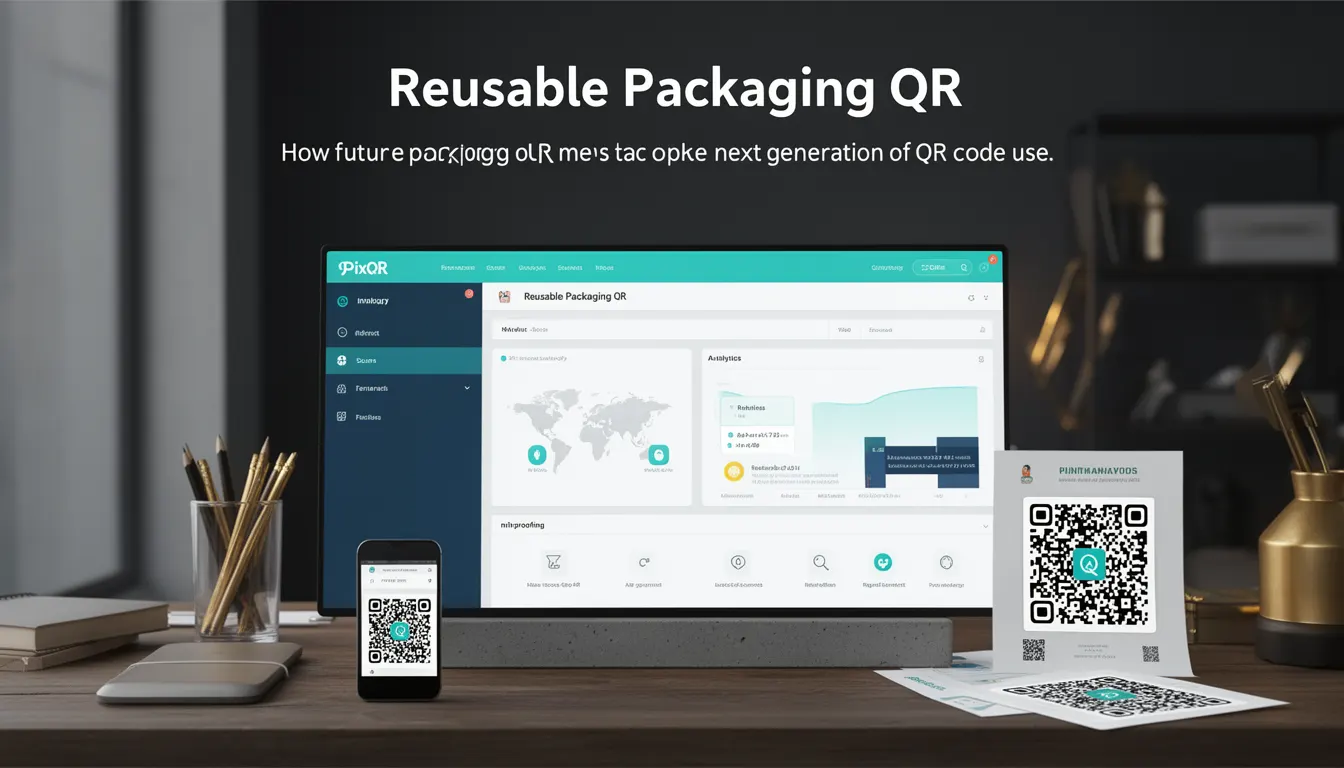
The term Reusable Packaging QR refers to a future-facing QR code implementation designed to support long-term product lifecycle tracking, recycling, and sustainability initiatives. It is a concept that extends beyond simple product identification or marketing redirects to encompass environmental compliance, circular economy principles, and operational data retention.
For developers working within PixQR’s ecosystem, a Reusable Packaging QR is a dynamic, persistent QR code structure that can be reused across multiple product lifecycles, enabling companies to maintain accurate, traceable, and secure data links for packaging that is intended to be reused or repurposed. This term is particularly relevant in industries such as consumer goods, retail, and logistics, where sustainable packaging practices are increasingly mandated by regulations and consumer expectations.
Why It Matters
Reusable Packaging QR codes are critical for developers building platforms that support compliance, sustainability, and data transparency. These QR codes must remain functional and secure over extended periods, often years, to ensure that tracking data remains valid and accessible. In PixQR’s context, this means that the QR code infrastructure must support persistent redirects, long-term analytics, and data integrity, even when the original product information or URL changes.
From a security standpoint, Reusable Packaging QRs must resist tampering and maintain consistent link integrity. For operational workflows, they must integrate with inventory systems, recycling platforms, and traceability tools. Developers implementing these QR codes must consider how data is stored, how access is controlled, and how changes are logged to ensure that the system remains compliant with industry standards such as ISO 14001 or EU packaging regulations.
How It Works
A Reusable Packaging QR code is not a static identifier but a dynamic, managed entity that supports multiple product lifecycle events. The system must be capable of handling long-term data retention, secure redirect management, and audit trails. The core mechanisms include:
- Dynamic link management that allows redirects to be updated or reconfigured without altering the physical QR code.
- Secure API endpoints that support access control, data validation, and analytics logging.
- State tracking that maintains lifecycle events such as reuse, repair, or recycling.
- Integration with external systems such as inventory management, traceability platforms, or recycling databases.
- Support for brand-safe design and scan reliability, ensuring consistent performance across different devices and environments.
When implemented correctly, a Reusable Packaging QR can carry metadata such as product origin, material composition, reuse history, and environmental impact. The system must also support performance optimizations, such as caching and CDN integration, to ensure rapid scan response times.
Quick Reference
| Item | Purpose | Notes |
|---|---|---|
| Dynamic Redirect | Supports updates to target URL without changing QR code | Use PixQR’s API to modify redirect targets |
| Lifecycle Tracking | Records reuse, repair, or recycling events | Integrate with backend event logging |
| Analytics | Provides scan and usage data | Use PixQR analytics for historical tracking |
| Security | Ensures data integrity and access control | Implement HTTPS and token-based access |
| Design | Supports brand-safe, high-resolution QR codes | Use PixQR’s design tools for compliance |
Basic Example
PixQR Example QR
This QR links directly to this glossary page, so printed notes, onboarding docs, and support material can bring scanners back to the current reference.
/glossary/the-future-of-qr-codes/the-future-of-qr-codes-reusable-packaging-qr

This basic example demonstrates how a Reusable Packaging QR might be initialized in a system using PixQR's API. It sets up a QR code with a dynamic redirect and lifecycle tracking enabled.
const qrConfig = {
  url: 'https://example.com/product/12345',
  label: 'Reusable Packaging QR',
  tracking: true,
  lifecycle: {
    status: 'active',
    events: []
  }
};
The url property defines the initial target. The tracking flag enables analytics, and the lifecycle object allows for event logging. This configuration is suitable for a simple prototype or early-stage development.
Production Example
In a production environment, a Reusable Packaging QR must be robust, secure, and scalable. This example shows how to implement a QR code with lifecycle tracking, access control, and analytics logging.
const qrData = {
  id: 'pkg-qr-98765',
  targetUrl: 'https://api.pixqr.com/reusable/98765',
  metadata: {
    product: 'EcoPack 2.0',
    material: 'Recycled HDPE',
    origin: 'EU',
    reuseCount: 0
  },
  accessControl: {
    token: 'secure-token-12345',
    permissions: ['read', 'update']
  },
  analytics: {
    enabled: true,
    retentionDays: 365
  }
};
This version includes a unique identifier, metadata, access control, and analytics settings. It is suitable for integration with backend systems and ensures compliance with data retention and access policies.
Common Mistakes
- Using static QR codes instead of dynamic ones, which prevents updates to the target URL or metadata.
- Ignoring access control, leading to unauthorized modifications or data breaches.
- Failing to implement lifecycle tracking, which makes it difficult to monitor reuse or recycling events.
- Not setting up analytics or retention policies, resulting in loss of valuable usage data.
- Designing QR codes without brand-safe constraints, causing issues in print or scan reliability.
- Not validating QR code integrity after updates, which can lead to broken links or incorrect redirects.
Security And Production Notes
- Always use HTTPS for redirect targets to prevent man-in-the-middle attacks.
- Implement token-based access control to restrict modifications to QR code configurations.
- Ensure that lifecycle events are logged with timestamps and user identifiers for auditability.
- Validate QR code integrity before deployment to prevent scan failures or incorrect data routing.
- Use PixQR’s CDN and caching mechanisms to ensure consistent performance and reduce latency.
Related Concepts
Reusable Packaging QR is closely related to several developer concepts:
- Dynamic QR Codes: These are QR codes that can be updated post-generation, a core requirement for Reusable Packaging QRs.
- Link Management: The system must support long-term URL management and redirect updates.
- Scan Analytics: Tracking how often and where QR codes are scanned is essential for understanding usage patterns.
- Operational Workflows: Integration with inventory, logistics, and compliance systems is required for full functionality.
- Privacy Compliance: Ensuring that QR code data collection aligns with regulations like GDPR or CCPA is crucial.