 PixQR
Overview
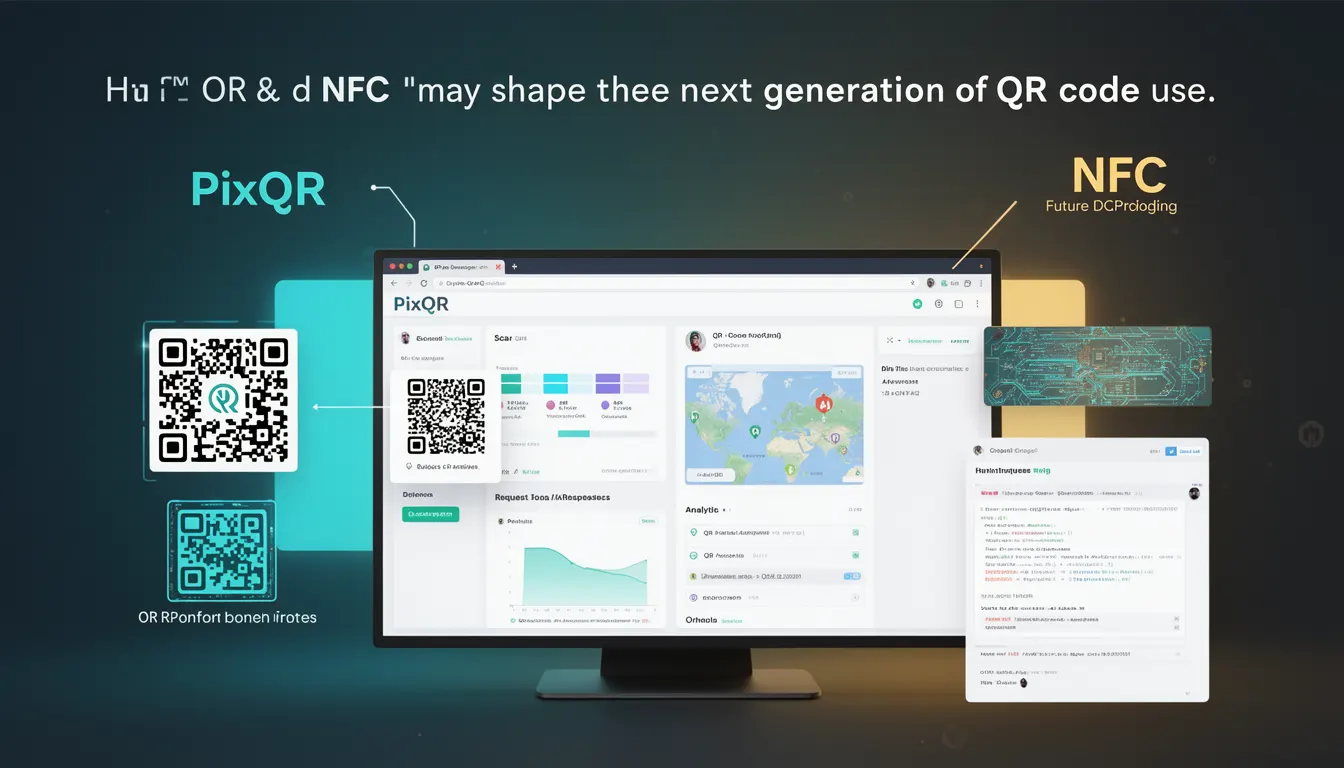
QR and NFC represent two technologies that are increasingly converging in modern digital interaction platforms, particularly within the context of QR code systems like PixQR. While QR codes are two-dimensional barcodes that encode data in a grid of black and white squares, NFC (Near Field Communication) is a short-range wireless technology enabling data exchange between devices when brought into close proximity. In the context of PixQR, both technologies are leveraged to create seamless, secure, and scalable solutions for dynamic redirects, brand-safe design, and user engagement.
These technologies are particularly relevant in scenarios where user experience and data reliability are paramount. For example, PixQR enables developers to generate QR codes that can redirect to dynamic URLs, while also supporting NFC-based interactions for mobile apps, payment systems, and IoT integrations. This dual approach allows for both traditional scanning and contactless interaction, enhancing flexibility in how digital content is accessed and consumed.
Why It Matters
For developers working with PixQR, understanding the integration of QR and NFC technologies is essential for designing secure, scalable, and future-proof systems. QR codes are widely supported across devices and platforms, making them ideal for marketing, logistics, and user onboarding. NFC, on the other hand, provides a more secure and frictionless interaction for high-value transactions or environments where physical proximity is required.
From a production standpoint, combining both technologies allows developers to meet diverse user needs while maintaining compliance with privacy regulations, reducing fraud risks, and enhancing analytics. For example, a PixQR implementation can use QR codes for general tracking and NFC for secure payment processing, ensuring that each interaction is appropriately managed and logged.
How It Works
The integration of QR and NFC in platforms like PixQR involves distinct yet complementary mechanisms. QR codes are generated using encoding standards such as QR Code Model 2, which supports various data types including URLs, text, and binary data. NFC, meanwhile, relies on standardized protocols like NFC Forum Type 1, Type 2, and Type 4, which define how data is stored and retrieved from NFC tags.
- QR codes are generated with a fixed size and error correction level, allowing for reliable scanning even under adverse conditions such as low light or partial damage.
- NFC tags are typically embedded in physical objects or devices, enabling interactions when a compatible device is brought within 4 centimeters.
- Both technologies support dynamic content through APIs that allow for real-time updates, such as changing redirect URLs or updating promotional messages.
- PixQR supports both static and dynamic QR generation, with the ability to track scans and analytics for each code, whether it's accessed via QR or NFC.
- Security is enhanced through PixQR's implementation of tokenized links and secure redirect mechanisms, preventing unauthorized access or redirection to malicious content.
Quick Reference
| Item | Purpose | Notes |
|---|---|---|
| QR Code Generation | Creates a scannable code with encoded data | Supports error correction and dynamic updates |
| NFC Tag Configuration | Stores data in NFC tags for proximity-based access | Uses NFC Forum standards for compatibility |
| Dynamic Redirects | Allows real-time URL changes | Powered by PixQR’s API for secure updates |
| Scan Tracking | Logs and analyzes interaction data | Supports analytics for both QR and NFC |
| Secure Link Handling | Prevents malicious redirects | Uses tokenization and validation |
Basic Example
PixQR Example QR
This QR links directly to this glossary page, so printed notes, onboarding docs, and support material can bring scanners back to the current reference.
/glossary/the-future-of-qr-codes/the-future-of-qr-codes-qr-and-nfc

This example demonstrates how a QR code can be generated to redirect to a specific URL, a core feature of PixQR. It uses a simple HTTP request to generate a QR code for a given destination.
const qrCodeUrl = 'https://api.pixqr.com/generate?text=https://example.com&size=200';The text parameter specifies the destination URL, and size defines the output dimensions. This is a foundational step for developers building QR-based systems.
Production Example
This more comprehensive example illustrates how to generate a secure, dynamic QR code with tracking capabilities and integrate NFC functionality for enhanced user experience.
const pixqrApi = 'https://api.pixqr.com';
const payload = {
  "url": "https://secure.example.com/pay",
  "type": "dynamic",
  "analytics": true,
  "nfc": true
};
const response = await fetch(`${pixqrApi}/generate`, {
  method: 'POST',
  headers: { 'Content-Type': 'application/json' },
  body: JSON.stringify(payload)
});
const qrData = await response.json();
This version includes dynamic URL handling, analytics, and NFC support, making it suitable for production use in secure, scalable environments.
Common Mistakes
- Using static QR codes for dynamic content without proper API integration, leading to outdated links and user frustration.
- Ignoring NFC tag compatibility when designing for proximity-based interactions, resulting in failed or inconsistent scans.
- Not implementing secure redirect validation, which opens up vulnerabilities to phishing or malicious redirection.
- Overlooking error handling in QR or NFC generation, causing system failures during high-traffic periods.
- Using unsupported QR code formats or sizes, which can lead to scanning failures or poor print quality.
Security And Production Notes
- Always validate URLs and data before generating QR or NFC content to prevent injection attacks.
- Use tokenized links to ensure that dynamic QRs cannot be easily manipulated or hijacked.
- Implement rate limiting and analytics to detect suspicious scanning or redirect behavior.
- Ensure NFC tags are configured with appropriate access controls to prevent unauthorized modification.
- Regularly audit QR and NFC implementations to maintain compliance with privacy and data protection regulations.
Related Concepts
Several closely related technologies and practices are essential for understanding QR and NFC in the context of PixQR:
- Dynamic Redirects – Allows URLs to be updated in real time, enabling flexible content delivery.
- QR Code Generation APIs – Core tools for creating and customizing QR codes for specific use cases.
- Scan Analytics – Provides insights into how QR and NFC interactions are being used.
- Secure Link Management – Ensures that generated links are safe and cannot be exploited.
- Print Reliability – Ensures QR codes remain scannable under various conditions, including print quality and lighting.