 PixQR
Overview
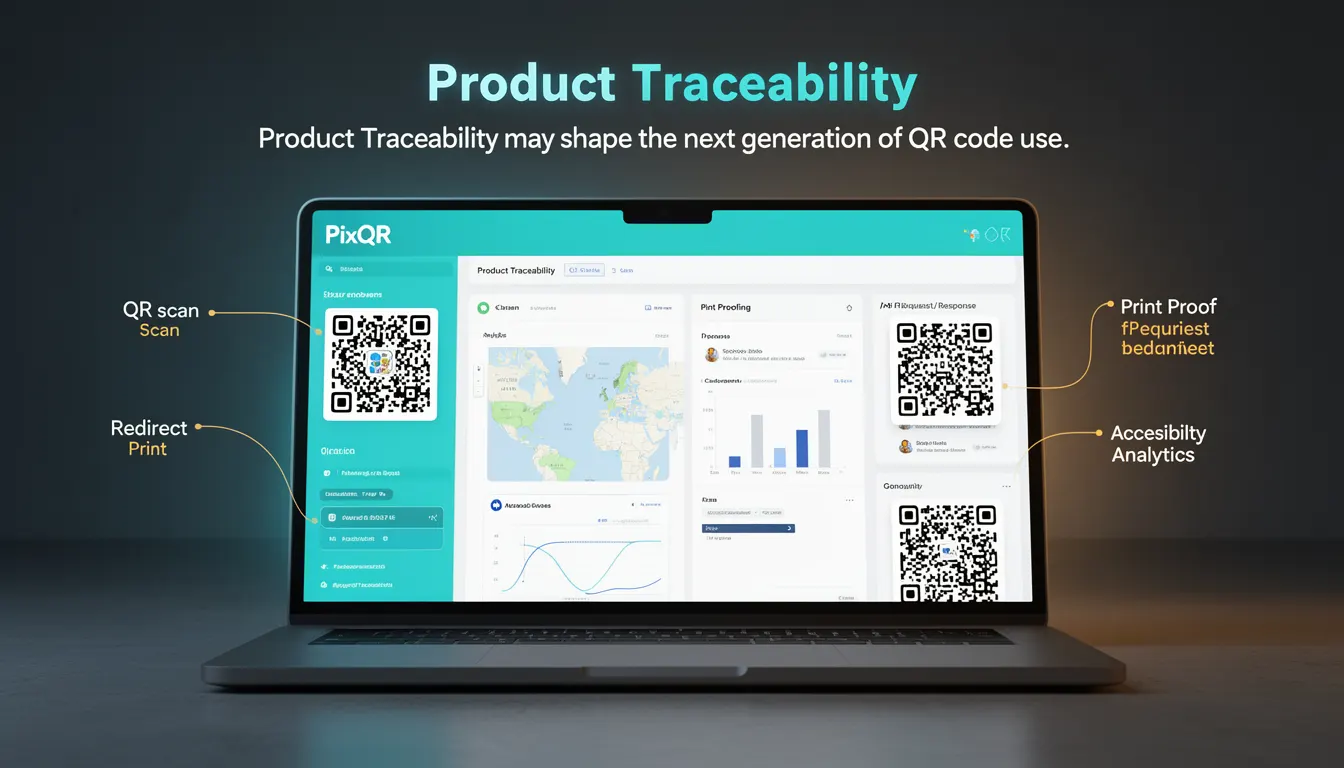
Product Traceability refers to the ability to track and verify the lifecycle of a product from its origin through to its final point of sale or use. In the context of PixQR, this concept is increasingly relevant as QR codes become more than simple links—they evolve into smart data conduits that carry detailed product information, origin details, compliance data, and tracking identifiers. This enables brands and retailers to provide end-users with rich, actionable information through a single scan.
For developers working with PixQR, Product Traceability involves integrating QR codes with backend systems that support structured data, dynamic content delivery, and secure data handling. It allows for the creation of QR codes that can return not just a redirect, but a rich dataset about a product's journey, including manufacturing, transport, storage, and distribution stages. This is particularly important in industries such as pharmaceuticals, food safety, luxury goods, and electronics, where authenticity and transparency are paramount.
Why It Matters
For developers, Product Traceability is significant because it shifts QR code use from a static link delivery mechanism to a dynamic data platform. This transition introduces new challenges and capabilities in API design, data validation, and content management. PixQR's platform supports this evolution by offering secure, scalable QR generation and redirection workflows that can accommodate structured data payloads, such as JSON, and integrate with external databases or APIs.
From a product and operational standpoint, Product Traceability helps reduce fraud, improve supply chain transparency, and meet regulatory compliance requirements. It also enhances user trust by providing access to verified product information. For developers, this means building systems that are robust, maintainable, and scalable, while ensuring that QR code payloads are secure and that user privacy is protected. In PixQR, this involves supporting both static and dynamic QR configurations, and enabling integration with enterprise systems that manage product lifecycle data.
How It Works
Product Traceability in the context of PixQR involves a combination of QR code generation, backend data integration, and secure content delivery. The mechanism works by encoding structured data into the QR code, which can then be decoded and interpreted by a client application or a backend system to retrieve relevant product information.
- QR codes are generated with a payload that includes identifiers such as product ID, batch number, or serial number.
- These identifiers are used to query backend systems or APIs that store product lifecycle data.
- The QR code redirect can be dynamic, allowing the payload to change based on context, time, or user role.
- Data returned from the backend can include product specifications, certifications, origin details, and compliance status.
- PixQR supports secure tokenization of data to ensure that sensitive product information is only accessible through authenticated access.
Implementation typically involves a combination of PixQR's API endpoints for QR generation and a backend system that handles product metadata. The QR code itself may carry a short URL that redirects to a secure endpoint, where product data is retrieved and returned in a structured format. This approach supports scalability, as the QR code remains static while the underlying data is dynamic and can be updated in real time.
Quick Reference
| Item | Purpose | Notes |
|---|---|---|
| Product ID | Unique identifier for a product | Used to query backend systems |
| Batch Number | Identifies production batch | Essential for recall and traceability |
| Dynamic Redirect | Allows payload to change based on context | Supports real-time data updates |
| Secure Tokenization | Protects sensitive data in QR payloads | Prevents unauthorized access |
| Metadata API | Retrieves product lifecycle data | Integrates with external systems |
Basic Example
PixQR Example QR
This QR links directly to this glossary page, so printed notes, onboarding docs, and support material can bring scanners back to the current reference.
/glossary/the-future-of-qr-codes/the-future-of-qr-codes-product-traceability

This basic example demonstrates how a QR code can be configured to carry a product identifier that links to a metadata endpoint.
const productQR = {
  "qr_code_id": "prod-12345",
  "redirect_url": "https://api.pixqr.com/product/12345",
  "payload": {
    "product_id": "12345",
    "batch": "BATCH-001",
    "origin": "Factory-A"
  }
};
The payload includes the product ID and batch information, which can be used by a backend system to fetch detailed product data. The redirect URL points to a secure API endpoint that retrieves and returns structured product information.
Production Example
In a production environment, Product Traceability requires robust error handling, secure data validation, and integration with existing product management systems. This example shows how a QR code configuration might be structured to support traceability while ensuring secure access to data.
const traceableQR = {
  "qr_code_id": "prod-12345",
  "redirect_url": "https://api.pixqr.com/product/12345",
  "secure_token": "a1b2c3d4e5f6",
  "metadata": {
    "product_id": "12345",
    "batch_number": "BATCH-001",
    "manufacturing_date": "2024-05-10",
    "certifications": ["ISO-9001", "FDA-Approved"],
    "origin": "Factory-A"
  },
  "access_control": {
    "allowed_domains": ["trusted.example.com"],
    "token_expiration": "2024-06-10T00:00:00Z"
  }
};
This configuration includes a secure token, access control settings, and a structured metadata payload. It ensures that only authorized domains can access the product data, and that the token expires after a set time. This approach supports both traceability and security, making it suitable for enterprise-grade implementations.
Common Mistakes
- Using static QR codes without dynamic payload support limits traceability and data update capabilities.
- Not validating product identifiers before querying backend systems can lead to errors or unauthorized access.
- Hardcoding sensitive data directly into QR payloads increases the risk of exposure and reduces flexibility.
- Ignoring access control settings can allow unauthorized parties to retrieve product data.
- Not implementing token expiration or refresh mechanisms can lead to long-term exposure of sensitive product information.
Security And Production Notes
- Always use secure tokens in QR code payloads to prevent unauthorized access to product data.
- Implement strict access control policies to ensure that only trusted domains or users can retrieve metadata.
- Validate all product identifiers before querying backend systems to prevent injection or error-based attacks.
- Use HTTPS for all redirect URLs and API endpoints to ensure data integrity and confidentiality.
- Regularly audit QR code configurations and access logs to detect anomalies or unauthorized access attempts.
Related Concepts
Product Traceability is closely connected to several core concepts in QR code development and digital product management:
- Dynamic QR Codes—Enable QR codes to change content without physical modification, supporting real-time data updates.
- API Integration—Facilitates data exchange between QR systems and product databases or enterprise platforms.
- Secure Redirects—Ensure that QR code redirections are safe and cannot be manipulated to lead to malicious sites.
- Link Management—Involves organizing and controlling QR code links for scalability and performance.
- Data Privacy—Ensures that sensitive product information is handled in compliance with data protection regulations.