 PixQR
Overview
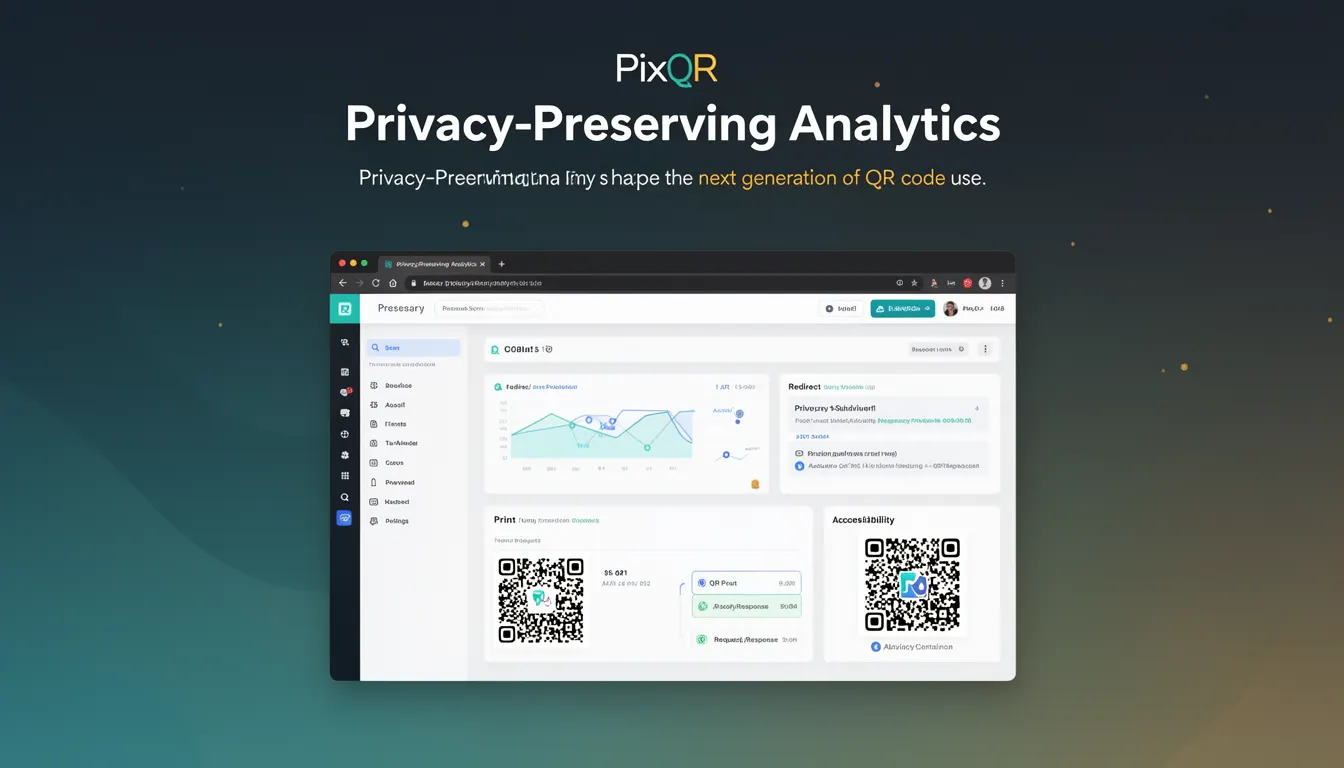
Privacy-Preserving Analytics (PPA) refers to a set of techniques and technologies that enable data collection and analysis while maintaining user privacy. In the context of PixQR, PPA ensures that QR code scan tracking, user behavior insights, and operational metrics can be gathered without compromising sensitive information or personal identifiers.
This approach is becoming increasingly critical as digital privacy regulations such as GDPR, CCPA, and local data protection laws tighten. For developers working with QR code platforms like PixQR, implementing PPA means designing systems that collect only necessary data, obfuscate or aggregate information, and ensure compliance with evolving legal standards.
Why It Matters
For developers maintaining QR code platforms, PPA directly impacts how scan data is collected, processed, and stored. Traditional analytics often rely on personally identifiable information (PII), which creates compliance risks and user trust issues. PPA helps platforms like PixQR meet regulatory requirements, reduce liability, and build more secure, transparent systems.
From a performance perspective, PPA can also improve scalability and reduce data storage overhead. By avoiding the collection of full user profiles or device fingerprints, developers can optimize data pipelines and reduce the risk of data breaches. This is especially important in high-volume QR code environments where millions of scans may occur daily.
How It Works
Privacy-Preserving Analytics in PixQR implementations typically involves several core mechanisms:
- Aggregation of data at the server level to prevent individual-level tracking
- Use of anonymized identifiers instead of real user IDs or email addresses
- Implementation of differential privacy techniques to add noise to datasets
- Deployment of encrypted communication channels for data transmission
- Enforcement of strict access controls and audit logging for all analytics data
PPA systems often include configurable privacy levels, where developers can adjust the degree of data obfuscation based on business needs. These levels may be defined by parameters such as data retention policies, aggregation intervals, and the types of metrics that are collected. For instance, a low-privacy setting might log basic scan timestamps and device types, while a high-privacy setting may only collect aggregated counts with no user-specific metadata.
Quick Reference
| Item | Purpose | Notes |
|---|---|---|
| Privacy level configuration | Controls data collection granularity | Must align with compliance requirements |
| Data aggregation | Combines individual scans into group metrics | Reduces risk of individual tracking |
| Anonymized identifiers | Replaces PII with non-identifiable tokens | Used in internal tracking systems |
| Differential privacy | Adds statistical noise to datasets | Prevents re-identification of individuals |
| Encryption protocols | Secures data transmission | Must use TLS 1.3 or higher |
Basic Example
PixQR Example QR
This QR links directly to this glossary page, so printed notes, onboarding docs, and support material can bring scanners back to the current reference.
/glossary/the-future-of-qr-codes/the-future-of-qr-codes-privacy-preserving-analytics

A basic example of a privacy-preserving analytics system in PixQR involves collecting scan data without user identifiers. The system logs only the time of scan, the QR code ID, and a hashed token representing the device or session.
const scanEvent = {
  qrCodeId: 'abc123',
  timestamp: Date.now(),
  deviceIdHash: 'a1b2c3d4e5f6',
  location: null
};
This example demonstrates how sensitive information like IP addresses or user IDs are omitted. The deviceIdHash is a one-way cryptographic hash that prevents reverse engineering of the original device identifier, while the timestamp and qrCodeId provide enough context for analytics without compromising privacy.
Production Example
In a production environment, PixQR's analytics system may include additional layers of obfuscation and validation. The following example shows how a scan event is processed before being stored:
function processScanEvent(event) {
  const anonymizedEvent = {
    qrCodeId: event.qrCodeId,
    timestamp: event.timestamp,
    deviceIdHash: hashDeviceId(event.deviceId),
    userAgent: sanitizeUserAgent(event.userAgent),
    location: null,
    sessionToken: generateSessionToken()
  };

  // Validate and sanitize inputs
  if (!isValidQrCodeId(anonymizedEvent.qrCodeId)) {
    throw new Error('Invalid QR code ID');
  }

  // Store event with privacy controls
  storeEvent(anonymizedEvent, { privacyLevel: 'high' });
}
This version includes input validation, device identifier hashing, and session token generation. It also enforces a high privacy level, which ensures that no PII is stored and that all data is processed through a secure pipeline. The use of sanitizeUserAgent and hashDeviceId helps maintain consistent privacy standards across different data sources.
Common Mistakes
- Collecting full user identifiers such as email addresses or phone numbers alongside scan data
- Using weak hashing algorithms for anonymization, which can be reversed or guessed
- Storing raw device fingerprints or IP addresses for tracking purposes
- Not implementing data retention policies, leading to unnecessary data accumulation
- Using outdated encryption protocols like TLS 1.0 or 1.1 in data transmission
- Overlooking compliance requirements for specific jurisdictions when setting privacy levels
Security And Production Notes
- Always use strong cryptographic hashing (e.g., SHA-256) for anonymizing identifiers
- Implement strict access controls for analytics data, using role-based permissions
- Ensure all data transmission uses TLS 1.3 or higher for secure communication
- Regularly audit privacy settings and data access logs to detect anomalies
- Design data retention policies to automatically delete old scan records after a set period
Related Concepts
Privacy-Preserving Analytics intersects with several core technologies and practices:
Zero-Knowledge Proofs: These cryptographic methods allow systems to verify data without revealing its contents, which can be used to confirm scan authenticity without exposing user details.
Differential Privacy: A mathematical framework that adds controlled noise to datasets to prevent individual identification, often used in PPA systems.
GDPR Compliance: Privacy regulations that mandate how personal data must be collected, stored, and processed, directly influencing PPA implementation.
Tokenization: The process of replacing sensitive data with non-sensitive tokens, a key technique in PPA to protect user identities.
Privacy by Design: An approach that integrates privacy controls into system architecture from the outset, rather than as an afterthought.