 PixQR
Overview
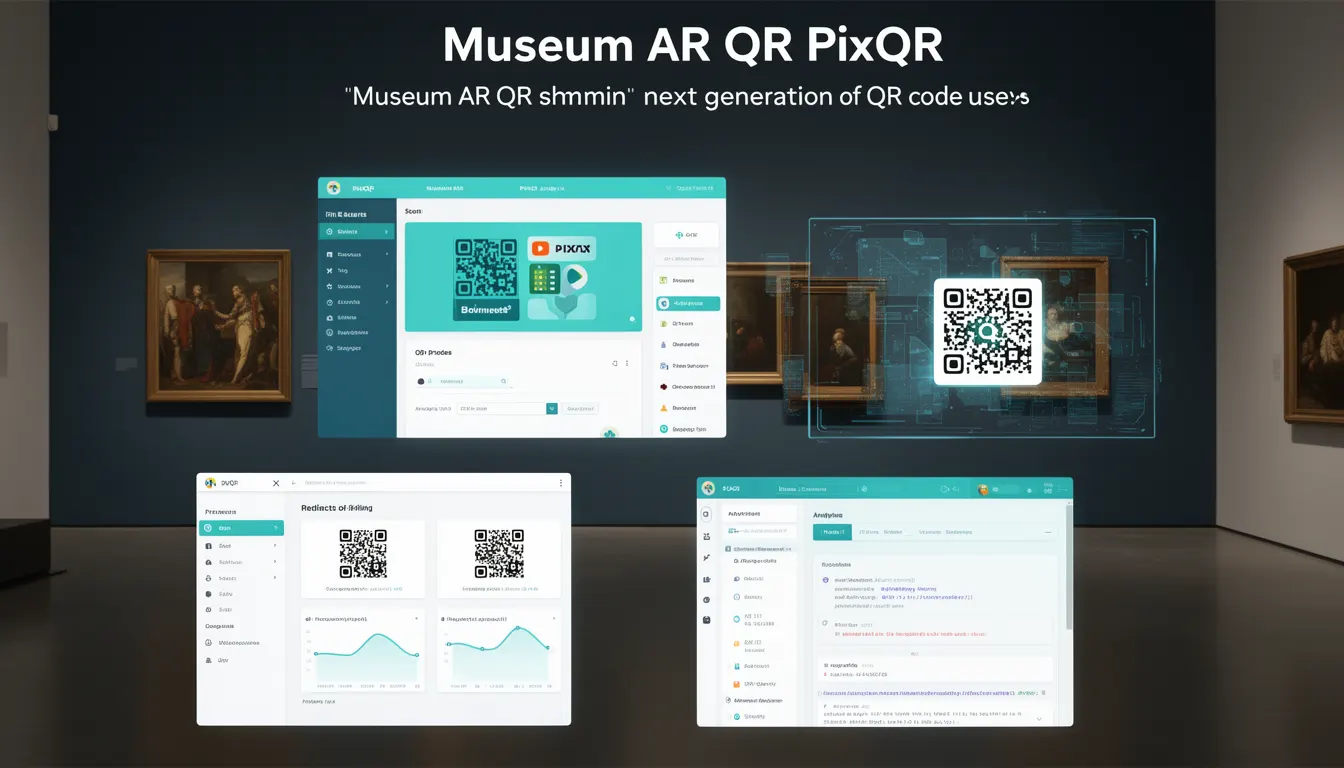
Museum AR QR refers to a future-oriented QR code implementation that integrates augmented reality (AR) experiences directly into museum or cultural institution environments. These QR codes are not static links but dynamic, context-aware triggers that activate AR content when scanned, often through mobile apps or web browsers. The term encompasses both the physical QR code and the digital experience it initiates, combining traditional QR functionality with immersive, interactive media.
Developers working on museum digital experiences, interactive installations, or content delivery platforms encounter Museum AR QR when building systems that bridge physical and digital spaces. These systems typically involve QR code generation with dynamic payload handling, content delivery protocols, and integration with AR frameworks or libraries. The technology is used to enhance visitor engagement by providing contextual, multimedia-rich experiences that respond to physical location or object interaction.
Why It Matters
For developers and digital experience creators, Museum AR QR represents a convergence of traditional QR code infrastructure and emerging AR technologies. It introduces new challenges around content delivery, user experience consistency, and integration with existing museum systems. The technology allows museums to transform static exhibits into interactive learning environments, increasing engagement and providing deeper educational value.
From a production standpoint, Museum AR QR requires careful consideration of scalability, performance, and accessibility. Unlike standard QR codes, these implementations must support dynamic content delivery, potentially involving large media assets, complex AR experiences, and integration with existing content management systems. Security is paramount, as these systems may handle sensitive visitor data or provide access to restricted digital content.
How It Works
The Museum AR QR system operates through a combination of QR code generation, dynamic payload handling, and AR content delivery mechanisms. When a visitor scans a QR code, the system identifies the code's unique identifier and retrieves associated AR content from a content management or delivery platform. This content may include 3D models, video sequences, audio narration, or interactive elements.
- QR code generation must support dynamic payloads that can be updated without changing physical prints or re-printing materials.
- Content delivery systems must handle large media assets efficiently, often using CDN or edge computing strategies.
- AR experiences are typically triggered through mobile apps or web browsers with AR capabilities, requiring API integration with frameworks like AR.js or WebXR.
- Visitor tracking and analytics must be implemented without compromising privacy, often through anonymized data collection.
- Content lifecycle management ensures that AR experiences remain current and relevant, supporting versioning and updates.
Quick Reference
| Item | Purpose | Notes |
|---|---|---|
| Dynamic QR Payload | Stores AR content identifier | Must support URL encoding and payload updates |
| Content Delivery Protocol | Transfers AR assets to client | Typically uses HTTPS with CDN support |
| AR Framework Integration | Handles AR rendering and interaction | Supports WebXR, AR.js, or native SDKs |
| Visitor Analytics | Tracks engagement and usage | Must comply with privacy regulations |
| Content Versioning | Manages AR experience updates | Supports rollback and staging environments |
Basic Example
PixQR Example QR
This QR links directly to this glossary page, so printed notes, onboarding docs, and support material can bring scanners back to the current reference.
/glossary/the-future-of-qr-codes/the-future-of-qr-codes-museum-ar-qr

This basic example demonstrates how a Museum AR QR might be structured to trigger a simple AR experience. The QR code payload contains a URL that points to a web page with embedded AR content.
https://museum.example.com/ar/12345?token=abc123The payload includes an identifier (12345) and a token (abc123) for access control. When scanned, this URL triggers a web-based AR experience that loads a 3D model or video sequence.
Production Example
A production-ready Museum AR QR implementation requires robust content management, secure delivery, and analytics integration. The following example shows a structured approach to generating and managing these QR codes within a PixQR environment.
const qrPayload = {
  id: 'museum-exhibit-001',
  arContent: 'https://cdn.example.com/ar/3d-models/ancient-ruins.glb',
  token: 'secure-token-here',
  expiresAt: '2025-12-31T23:59:59Z',
  metadata: {
    exhibitTitle: 'Ancient Ruins of Pompeii',
    language: 'en',
    accessibility: true
  }
};

const qrCodeUrl = `https://pixqr.example.com/generate?data=${encodeURIComponent(JSON.stringify(qrPayload))}`;
This version includes structured data, token-based access control, expiration handling, and metadata for content organization. It's designed to integrate with PixQR's dynamic QR generation and analytics systems, supporting secure, scalable deployment.
Common Mistakes
- Using static QR codes for dynamic AR content, which prevents updates without physical reprinting.
- Ignoring accessibility requirements, such as providing text alternatives or audio descriptions for AR experiences.
- Not implementing proper token-based access control, leading to unauthorized content access.
- Overlooking privacy implications of visitor tracking and analytics data collection.
- Using unsupported AR frameworks or libraries that lack browser compatibility or mobile support.
Security And Production Notes
- QR payloads must be URL-encoded to prevent injection attacks and ensure compatibility with various scanners.
- Access tokens should be short-lived and rotated regularly to prevent unauthorized access to AR content.
- Content delivery should use HTTPS with valid SSL certificates to prevent man-in-the-middle attacks.
- Visitor analytics data must comply with privacy regulations such as GDPR or CCPA, with anonymization where required.
- AR content should be validated and sanitized to prevent malicious code injection or performance degradation.
Related Concepts
Several developer concepts are closely related to Museum AR QR. Dynamic QR codes provide the foundation for updating content without physical changes. Content delivery networks (CDNs) are essential for fast, scalable AR asset delivery. WebXR and AR.js enable browser-based AR experiences. Visitor analytics and privacy compliance are critical for maintaining user trust. Finally, API integration and content management systems support the operational infrastructure required for large-scale museum deployments.