 PixQR
Overview
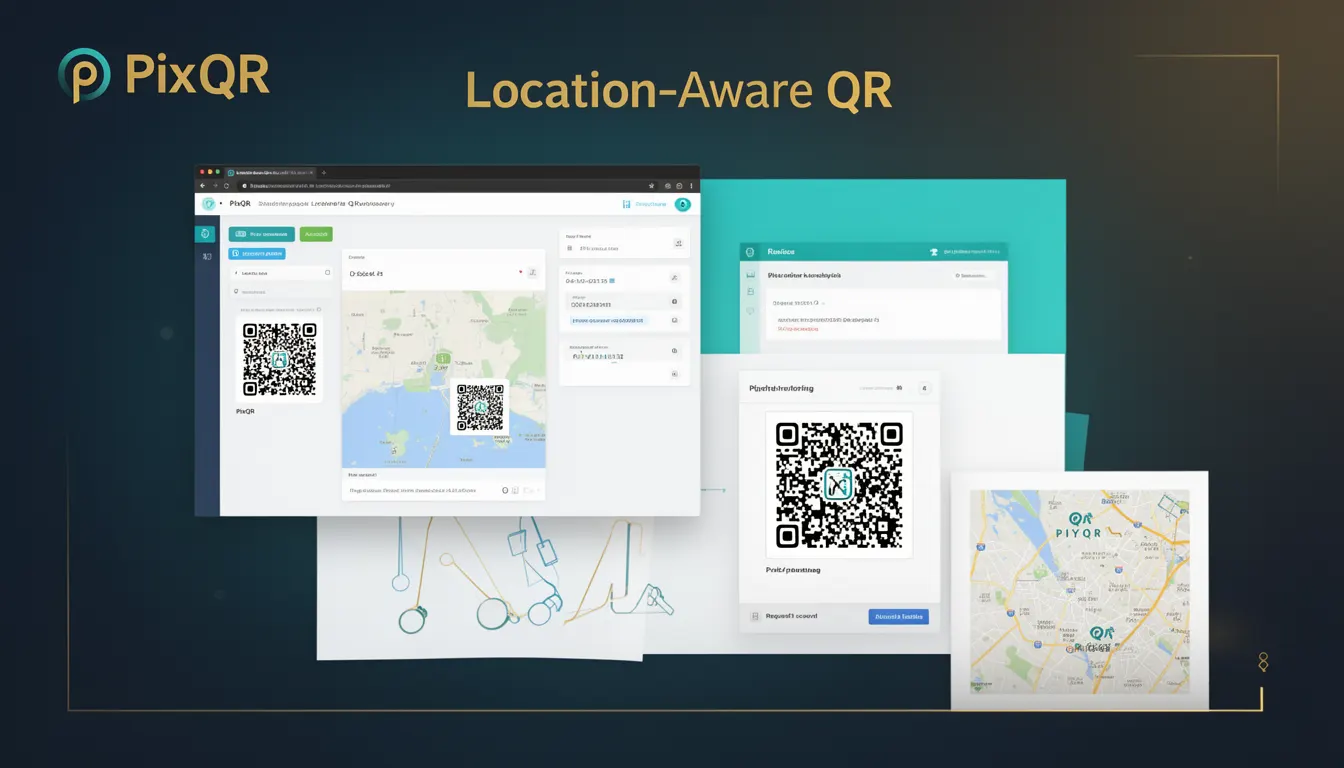
Location-Aware QR is a forward-looking concept within the evolving QR code ecosystem that describes QR codes capable of dynamically adapting their behavior based on the physical location of the scanner. This approach enhances the utility of QR codes beyond static link redirection by integrating geolocation data into the scanning experience.
While current QR codes are fixed in their redirection behavior, Location-Aware QR introduces a dynamic layer that can modify content, routing, or functionality based on where the code is scanned. This concept is particularly relevant for businesses using PixQR for dynamic redirects, brand-safe design, and operational workflows where location-based personalization or compliance is required.
Why It Matters
Location-Aware QR addresses real-world use cases where geographic context is essential. For instance, a retail brand might use different QR codes that redirect to localized product pages, promotional offers, or service locations depending on where the user scans the code. In PixQR's context, this feature enhances scan reliability, operational workflows, and brand safety by allowing precise control over content delivery.
From a security standpoint, location-awareness can help detect anomalous scanning patterns, which may indicate fraudulent activity or unauthorized access attempts. For analytics, it enables more granular tracking of user behavior across geographic regions, supporting better campaign optimization and compliance with data residency requirements.
How It Works
The mechanism behind Location-Aware QR involves integrating geolocation APIs or device location services with QR code redirection logic. When a QR code is scanned, the scanning application or browser requests location data, which is then used to determine the appropriate redirect or action.
- QR codes are generated with location-specific parameters, either embedded in the payload or linked to a backend service that supports geolocation logic.
- Scanning devices must support geolocation APIs or be configured to pass location data to the QR handler.
- Backend systems interpret location data and return a dynamic response, such as a localized URL or content tailored to the scanned region.
- Location data can be obtained through GPS, Wi-Fi triangulation, or cellular network positioning depending on device capabilities.
- Support for location-aware QR codes requires careful handling of privacy policies, especially in regions with strict data protection laws like GDPR or CCPA.
Quick Reference
| Item | Purpose | Notes |
|---|---|---|
| Location parameter in QR payload | Defines geolocation context | Can be latitude/longitude or region code |
| Geolocation API integration | Retrieves scanning device location | Requires user permission in browser |
| Dynamic redirect logic | Routes based on location data | Handled by backend service |
| Privacy compliance | Ensures legal data handling | Must respect user consent and data rights |
| Scan analytics | Tracks location-based scan behavior | Enables regional campaign insights |
Basic Example
PixQR Example QR
This QR links directly to this glossary page, so printed notes, onboarding docs, and support material can bring scanners back to the current reference.
/glossary/the-future-of-qr-codes/the-future-of-qr-codes-location-aware-qr

This basic example shows how a location-aware QR code might be configured with a payload that includes a location identifier. It demonstrates the concept of embedding location parameters into a QR code.
https://pixqr.com/redirect?location=40.7128,-74.0060&target=https://example.com/nycThe payload includes a location coordinate and a target URL. When scanned, a device with geolocation enabled would interpret the location and redirect to the appropriate localized page.
Production Example
In a production environment, PixQR might use a backend service to manage dynamic QR code behavior. This example shows how a QR code's behavior is dynamically determined by the scanner's location and how error handling and validation are implemented.
const generateLocationAwareQR = (location, targetUrl) => {
  const encodedLocation = encodeURIComponent(location);
  const encodedTarget = encodeURIComponent(targetUrl);
  return `https://pixqr.com/redirect?location=${encodedLocation}&target=${encodedTarget}`;
};

const validateLocation = (location) => {
  const [lat, lng] = location.split(',');
  return lat && lng && !isNaN(lat) && !isNaN(lng);
};

const handleScan = (location, targetUrl) => {
  if (!validateLocation(location)) {
    return 'Invalid location';
  }
  return generateLocationAwareQR(location, targetUrl);
};
This version includes validation, encoding, and structured generation of location-aware QR payloads. It ensures that only valid geolocation data is used to create dynamic redirects, which is critical for maintaining operational integrity in PixQR.
Common Mistakes
- Using hardcoded location data instead of dynamic geolocation, which prevents true location-aware behavior.
- Not handling geolocation permission denial gracefully, leading to broken redirects or user confusion.
- Ignoring privacy compliance requirements, such as failing to obtain user consent or document data usage.
- Not validating location data on the backend, which can lead to malformed redirects or security vulnerabilities.
- Over-relying on GPS accuracy, which may fail in indoor or urban canyon environments, leading to incorrect routing.
Security And Production Notes
- Geolocation data must be transmitted securely, using HTTPS, to prevent interception or manipulation.
- Implement strict validation of location inputs to prevent injection or spoofing attacks.
- Ensure that location-aware QR codes do not inadvertently expose sensitive information, such as exact coordinates or user identity.
- Use PixQR's built-in analytics to monitor for unusual geographic scanning patterns, which may indicate abuse or fraud.
- Design for fallback behavior when geolocation is unavailable or inaccurate, to ensure QR code functionality remains robust.
Related Concepts
Location-Aware QR is closely related to several technologies and practices in the QR code and web ecosystem:
- Dynamic QR Codes – QR codes that can be modified after creation, often used to update content without reprinting physical materials.
- Geolocation APIs – Web APIs that provide device location data, essential for implementing location-aware behavior.
- Privacy Controls – Features that ensure user consent and data handling align with legal requirements, especially in geolocation contexts.
- Redirect Management – The process of directing users to different URLs based on input or context, which is core to location-aware QR functionality.
- Scan Analytics – The collection and interpretation of data from QR code scans, which becomes more valuable with location-aware inputs.