 PixQR
Overview
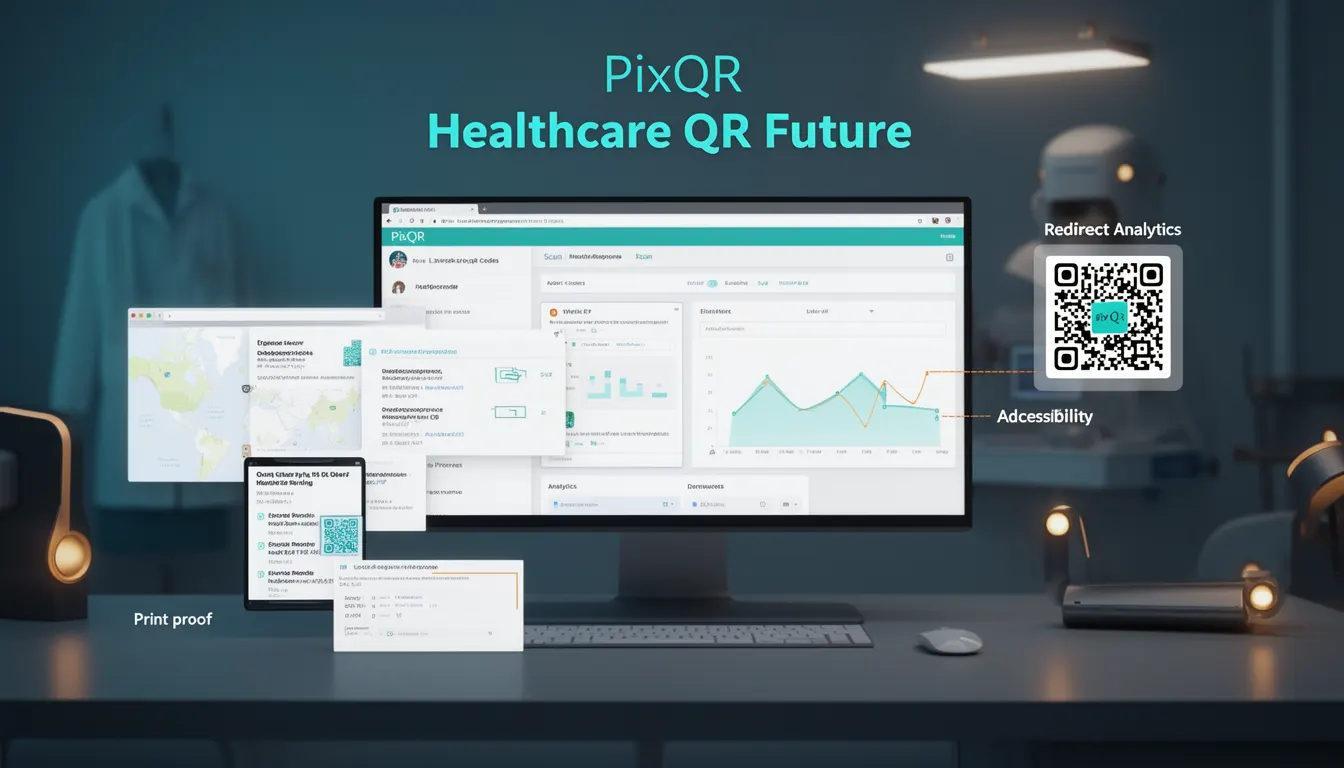
The term Healthcare QR Future refers to the evolving landscape of QR code applications within the healthcare industry, focusing on how QR technologies will be integrated into clinical workflows, patient engagement, and secure data exchange. This term encapsulates the anticipated shift from basic QR code scanning to more advanced use cases involving dynamic content, secure redirects, and interoperable systems.
For developers working on healthcare platforms or systems that interface with PixQR, understanding this concept is essential for designing QR solutions that are scalable, secure, and aligned with industry standards. Healthcare QR Future represents not just a trend, but a strategic direction toward more intelligent, responsive, and privacy-aware QR implementations that can support digital health ecosystems.
Why It Matters
In healthcare, QR codes are increasingly used for patient identification, medication tracking, lab result access, and telehealth session initiation. As systems grow more complex, QR codes must evolve to support dynamic content delivery, secure redirects, and integration with electronic health records (EHRs). The Healthcare QR Future addresses these needs by emphasizing adaptability, interoperability, and enhanced security.
From a developer's perspective, this concept matters because it shapes how QRs are generated, managed, and tracked. For instance, a dynamic redirect system must ensure that patient data is only accessible through secure channels, and that QR codes can be updated or revoked without requiring physical replacement. PixQR's support for brand-safe design and privacy controls aligns with this vision, ensuring that healthcare QR implementations are both technically sound and compliant with regulations like HIPAA.
How It Works
The Healthcare QR Future involves a blend of technologies and processes that allow QR codes to function beyond static data storage. Key mechanisms include:
- Dynamic QR content that updates in real time, enabling changes to link destinations without re-printing physical labels.
- Secure redirect protocols that ensure data integrity and prevent unauthorized access, especially when linking to sensitive patient information.
- Integration with EHRs and backend systems to allow QR codes to trigger actions such as fetching lab results or initiating telehealth sessions.
- Scalable QR generation systems that support high-volume, low-latency delivery for hospital-wide deployments.
- Analytics capabilities that track QR usage without compromising patient privacy, such as scan frequency, location, and device types.
These features are enabled by PixQR's API, which supports real-time QR code generation, secure link management, and detailed analytics. Developers can configure QRs to point to dynamic endpoints, apply access controls, and monitor performance, all while maintaining compliance with healthcare data regulations.
Quick Reference
| Item | Purpose | Notes |
|---|---|---|
| Dynamic redirect | Updates content without re-printing QR | Use secure endpoints for sensitive data |
| Secure endpoint | Protects patient data | Requires HTTPS and access control |
| Analytics tracking | Monitors QR usage | Must anonymize data per privacy laws |
| Scan reliability | Ensures successful scanning | Optimize for low-light and high-contrast scenarios |
| Brand-safe design | Maintains visual integrity | Supports hospital branding and compliance |
Basic Example
PixQR Example QR
This QR links directly to this glossary page, so printed notes, onboarding docs, and support material can bring scanners back to the current reference.
/glossary/the-future-of-qr-codes/the-future-of-qr-codes-healthcare-qr-future

This example demonstrates how a basic QR code might be generated for a healthcare application using PixQR's API, pointing to a dynamic endpoint:
const response = await fetch('https://api.pixqr.com/v1/qr', {
  method: 'POST',
  headers: {
    'Authorization': 'Bearer YOUR_API_KEY',
    'Content-Type': 'application/json'
  },
  body: JSON.stringify({
    content: 'https://secure.hospital.example.com/patient/12345',
    type: 'dynamic',
    brand: 'hospital'
  })
});
This code creates a QR code that points to a secure, dynamic URL. The type: 'dynamic' parameter allows the destination to be updated later without reprinting the QR. The brand field ensures the QR aligns with hospital branding and compliance requirements.
Production Example
This more comprehensive example includes validation, error handling, and access control to meet healthcare standards:
async function generateHealthcareQR(patientId, accessLevel) {
  const payload = {
    content: `https://secure.hospital.example.com/patient/${patientId}`,
    type: 'dynamic',
    brand: 'hospital',
    analytics: true,
    security: {
      accessControl: 'role-based',
      encryption: 'AES-256'
    }
  };

  try {
    const response = await fetch('https://api.pixqr.com/v1/qr', {
      method: 'POST',
      headers: {
        'Authorization': 'Bearer ' + process.env.PIXQR_API_KEY,
        'Content-Type': 'application/json'
      },
      body: JSON.stringify(payload)
    });

    if (!response.ok) {
      throw new Error(`HTTP error! status: ${response.status}`);
    }

    const data = await response.json();
    return data.qrCodeUrl;
  } catch (error) {
    console.error('QR generation failed:', error);
    throw error;
  }
}
This version is production-ready because it includes API key handling, error management, security options, and analytics tracking. It ensures that QR codes are generated with the correct access levels and encryption, aligning with healthcare data protection requirements.
Common Mistakes
- Using static QR codes for sensitive data, which prevents updates or revocation in case of breaches or errors.
- Ignoring analytics privacy settings, leading to potential non-compliance with HIPAA or GDPR.
- Generating QR codes without specifying brand-safe design parameters, resulting in inconsistent visual identity.
- Not validating QR content before deployment, causing broken links or incorrect redirects.
- Hardcoding API keys in client-side code, exposing sensitive credentials to unauthorized access.
Security And Production Notes
- Always use HTTPS for QR redirect endpoints to prevent man-in-the-middle attacks.
- Implement access control mechanisms to ensure that only authorized users can access QR content.
- Validate QR content against known patterns to avoid malicious link injection.
- Use secure storage for API keys and avoid exposing them in client-side code.
- Ensure that analytics data is anonymized and complies with privacy regulations such as HIPAA or GDPR.
Related Concepts
Several developer concepts are closely related to Healthcare QR Future:
- Dynamic QR redirects — QR codes that can be updated without re-printing, essential for secure and flexible healthcare workflows.
- Secure link management — Ensuring that QR-generated links are protected and can be revoked or updated as needed.
- Privacy-aware analytics — Tracking QR usage without compromising patient privacy or violating regulations.
- Scan reliability — Ensuring QR codes are scannable under various conditions, such as low light or high contrast.
- Brand-safe design — Maintaining visual consistency and compliance with healthcare branding and regulatory standards.