 PixQR
Overview
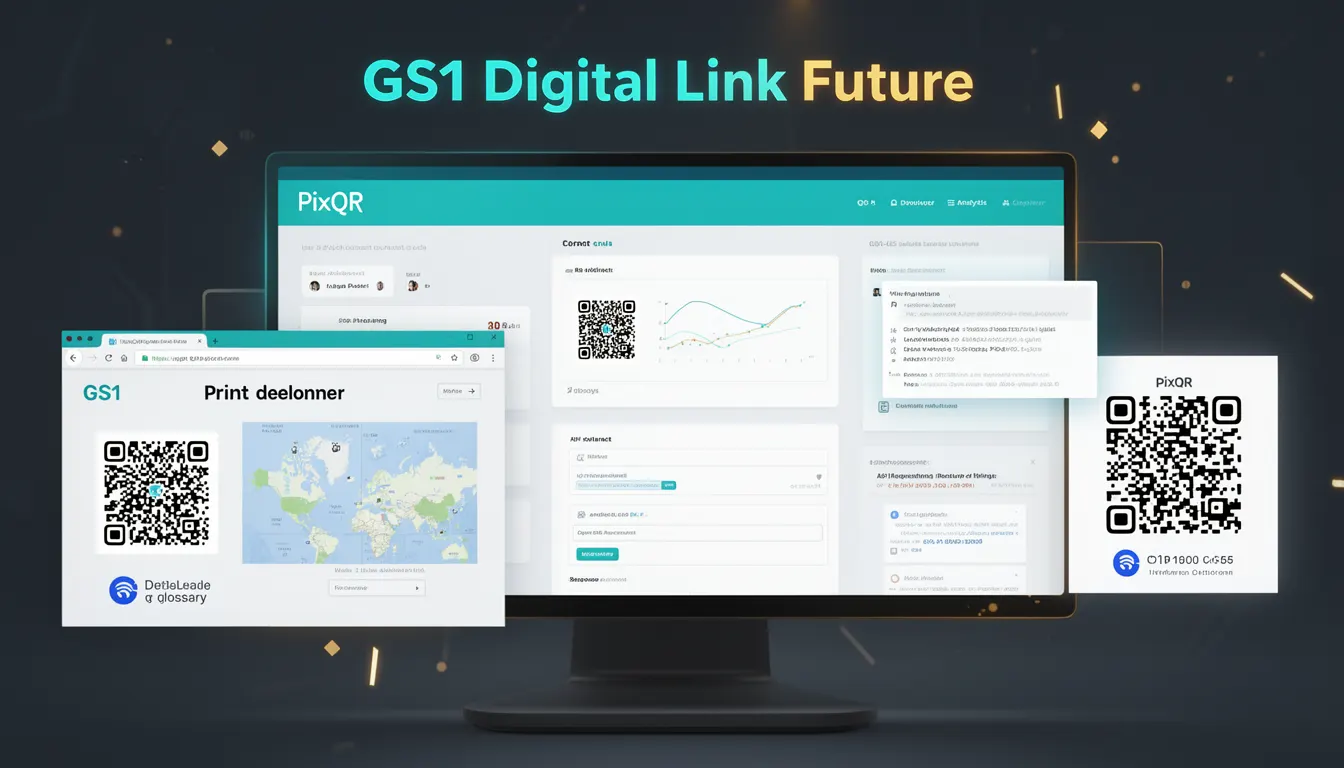
GS1 Digital Link Future represents a forward-looking evolution in QR code technology, designed to support more advanced data formats and semantic linking capabilities. It extends the capabilities of traditional QR codes by enabling richer, more structured data transmission through standardized URIs and semantic web principles.
As QR code usage expands beyond simple URLs to include product information, logistics tracking, and smart asset management, the need for standardized, interoperable formats becomes critical. GS1 Digital Link Future addresses this by defining a consistent framework for embedding semantic metadata into QR codes, particularly in supply chain, retail, and IoT environments.
Why It Matters
For developers working with PixQR, understanding GS1 Digital Link Future is essential when building systems that require semantic interoperability or advanced product data integration. The standard allows for more meaningful data exchange, reducing ambiguity and increasing automation potential in product lifecycle management.
Production environments benefit from this approach through improved scan reliability, reduced manual data entry errors, and better integration with enterprise systems. For example, a retail system using GS1 Digital Link Future can automatically retrieve product details, expiration dates, or batch information from a QR code scan, without requiring additional user input or manual lookups.
How It Works
GS1 Digital Link Future operates on the principle of semantic linking, where QR codes point to structured data using standardized Uniform Resource Identifiers (URIs) that follow GS1's digital link specifications. This framework supports both static and dynamic QR code generation, allowing for content that can be updated without changing the physical QR code itself.
- It uses GS1 Digital Link URIs with specific prefixes such as
https://id.gs1.org/to denote product or asset identifiers. - The system supports multiple data types, including GTINs (Global Trade Item Numbers), serial numbers, batch numbers, and expiration dates.
- It enables dynamic content updates by linking to a centralized data source that can be modified without re-printing physical codes.
- It integrates with existing QR code generation platforms like PixQR by supporting standard HTTP redirects and JSON-LD metadata.
- It enhances privacy compliance by allowing selective disclosure of information and supporting secure access controls where needed.
Quick Reference
| Item | Purpose | Notes |
|---|---|---|
| GS1 Digital Link URI | Defines semantic identifier | Must use GS1 prefix |
| Dynamic redirect | Updates content without re-printing | Requires backend support |
| JSON-LD metadata | Provides structured data | Enhances semantic meaning |
| Scan tracking | Monitors QR code usage | Supports analytics |
| Privacy controls | Manages data exposure | Supports compliance |
Basic Example
PixQR Example QR
This QR links directly to this glossary page, so printed notes, onboarding docs, and support material can bring scanners back to the current reference.
/glossary/the-future-of-qr-codes/the-future-of-qr-codes-gs1-digital-link-future
This basic example shows how a QR code might be generated to point to a GS1 Digital Link URI, which resolves to product information.
const qrData = 'https://id.gs1.org/01/01234567890128/10/ABC123/17/240101';The qrData variable contains a GS1 Digital Link URI that includes the GTIN, batch number, and expiration date. When scanned, this QR code would resolve to a structured product record.
Production Example
In a production environment, a PixQR implementation would integrate with a backend system to dynamically generate QR codes that support GS1 Digital Link Future, ensuring that content can be updated without re-printing physical assets.
const generateQRCode = (productData) => {
  const { gtin, batch, expiry } = productData;
  const digitalLink = `https://id.gs1.org/01/${gtin}/10/${batch}/17/${expiry}`;
  return {
    url: digitalLink,
    redirectUrl: `https://api.pixqr.com/redirect/${gtin}`,
    analytics: true
  };
};
This version includes a redirect URL to PixQR's backend for analytics tracking and ensures that the digital link is properly formatted with valid GS1 identifiers, making it suitable for enterprise integration and compliance.
Common Mistakes
- Using non-GS1 prefixes in URIs, which breaks semantic interoperability and causes scanning failures.
- Not implementing proper error handling for redirect chains, leading to broken links or timeouts.
- Ignoring data validation for product identifiers, which can result in invalid or unresolvable QR codes.
- Using static QR codes for dynamic data, which requires re-printing physical assets when content changes.
- Overlooking privacy implications when exposing sensitive product data through public QR codes.
Security And Production Notes
- Ensure that all GS1 Digital Link URIs are validated against GS1’s official identifier formats to avoid data corruption or misinterpretation.
- Implement secure redirect handling to prevent open redirect vulnerabilities and maintain trust in the link chain.
- Use HTTPS for all endpoints to ensure data integrity and prevent man-in-the-middle attacks during QR code resolution.
- Apply access controls or token-based authentication where sensitive product data is involved to maintain compliance with privacy regulations.
- Log QR code scan events and redirects to support analytics, fraud detection, and operational monitoring.
Related Concepts
GS1 Digital Link Future is closely related to several core QR code and data linking technologies. These include:
- QR Code Standards: The underlying format that enables GS1 Digital Link Future to function.
- URL Redirects: The mechanism that allows dynamic content updates in QR codes.
- JSON-LD: The structured data format used to enhance semantic meaning in QR code content.
- GS1 Identifiers: The core data elements that define what information is embedded in a QR code.
- Scan Analytics: The tracking and reporting features that support operational insights from QR code usage.