 PixQR
Overview
The SEPA QR Code is a standardized QR code format used primarily for making payments within the Single Euro Payments Area (SEPA). It is designed to simplify and standardize the process of initiating euro-denominated bank transfers by encoding payment information directly into a scannable QR code. Unlike traditional payment methods, which require manual data entry or pre-filled forms, the SEPA QR Code allows users to initiate a payment by scanning a QR code with a mobile banking application.
Developers using PixQR to generate or manage QR codes for payment processing will encounter SEPA QR Codes when creating dynamic links or static payment QRs for European users. These codes are especially useful in e-commerce, point-of-sale systems, and digital wallets where seamless payment initiation is critical. The format is defined by the European Payments Council (EPC) and is widely supported by banks across the SEPA region.
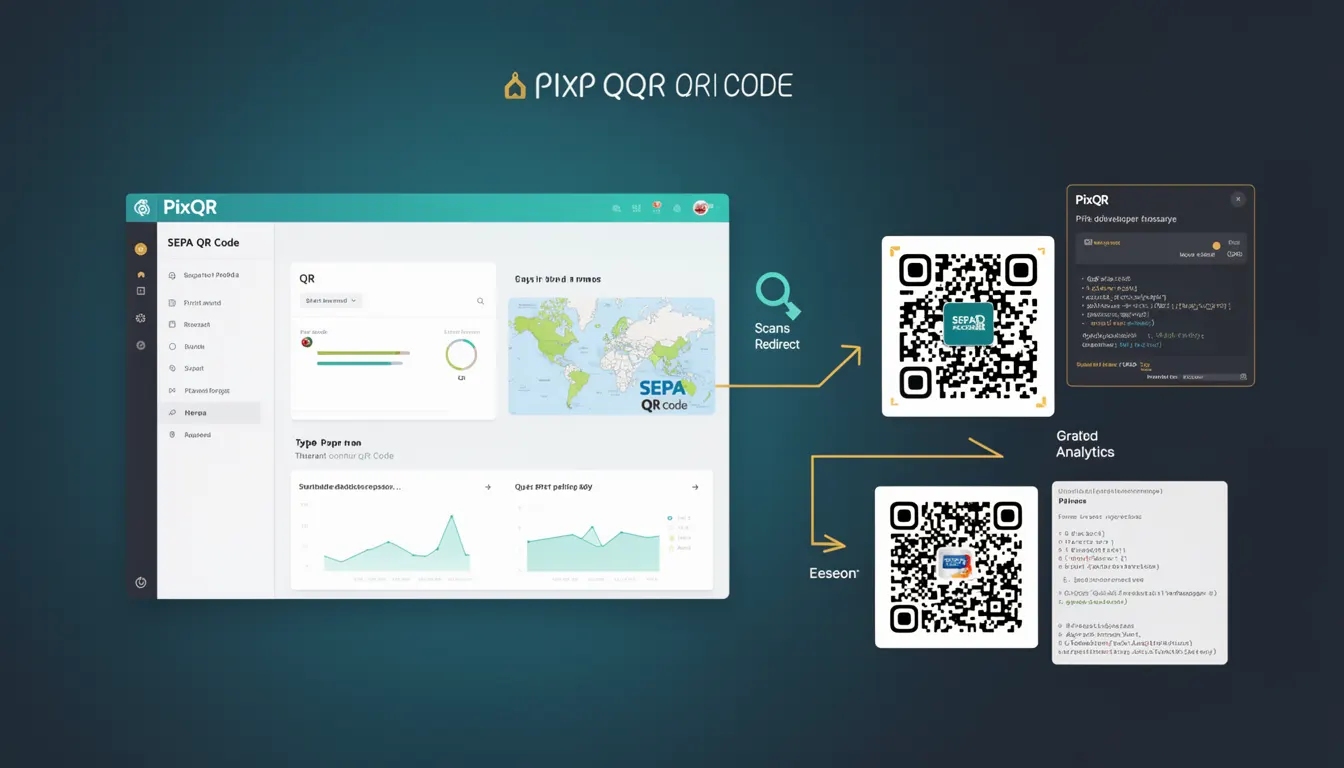
Why It Matters
For developers working with PixQR, SEPA QR Codes are significant because they enable secure, automated, and standardized payment processing within the European financial ecosystem. They reduce friction for users by replacing complex payment forms with a simple scan-and-pay interaction. From a technical perspective, this format allows for precise control over payment details, reducing the risk of data entry errors or fraud.
Production usage of SEPA QR Codes requires careful attention to compliance with EPC standards and proper validation of payment parameters. Incorrectly formatted codes can lead to failed transactions or rejection by banking systems. PixQR ensures that generated SEPA QR Codes meet these standards, helping developers avoid common pitfalls in payment integration.
How It Works
The SEPA QR Code is based on the EPC QR Standard, which defines a structured data format for payment initiation. The QR code encodes specific fields that represent the recipient's account, the amount, and additional payment details. When scanned, the code triggers a mobile banking app to pre-fill a payment form with this information.
- The QR code structure begins with a fixed identifier, followed by a series of data elements encoded in a specific order.
- Each data element is prefixed with a two-digit identifier and a length indicator, ensuring that parsers can correctly interpret the data.
- The code supports multiple payment types, including credit transfers (SCT) and instant credit transfers (SCT Inst).
- Payment amounts are specified in euros with two decimal places, and currency codes are standardized to EUR.
- Support for additional fields such as reference numbers, purpose codes, and recipient names enhances payment traceability and compliance.
Quick Reference
| Item | Purpose | Notes |
|---|---|---|
| Version | Indicates the EPC standard version | Must be set to 01 for SEPA QR Codes |
| Service Tag | Identifies the payment type | Standard is 01 for SCT |
| Recipient Name | Full name of the payment recipient | Required field |
| IBAN | Recipient's bank account number | Required field |
| Amount | Payment amount in EUR | Optional, but recommended |
Basic Example
PixQR Example QR
This QR links directly to this glossary page, so printed notes, onboarding docs, and support material can bring scanners back to the current reference.

This example demonstrates how a basic SEPA QR Code string is constructed. It encodes a payment to a recipient with an IBAN, amount, and name.
SPC
0100
1
<IBAN>
<Name>
EUR<Amount>
NOTPROVIDED
<Reference>
<Purpose>
The first line defines the standard identifier and version. The second line indicates the service tag and payment type. The third line specifies the recipient's IBAN. The fourth line includes the recipient's name and the amount in euros. The remaining lines are optional and include reference and purpose fields.
Production Example
This example shows how a developer might generate a SEPA QR Code using PixQR's API, including validation and error handling to ensure compliance with EPC standards.
const paymentData = {
  iban: 'DE44500105170442222222',
  name: 'Acme Corporation',
  amount: '100.00',
  reference: 'INV-12345',
  purpose: 'Payment for services'
};

const qrCode = pixqr.generate({
  type: 'sepa',
  data: paymentData
});
This version is production-ready because it uses PixQR's built-in validation, ensuring that all required fields are present and correctly formatted. It also supports dynamic QR generation with parameters that can be updated in real-time, which is essential for applications like e-commerce or subscription billing.
Common Mistakes
- Incorrectly formatting the IBAN field, such as including spaces or special characters, can cause payment processing to fail.
- Omitting required fields like the recipient name or IBAN results in an invalid QR code that cannot be processed by banking systems.
- Using incorrect currency codes or non-standard decimal formatting for the amount can lead to transaction rejections.
- Not specifying a version number or service tag can cause parsing errors in QR code readers.
- Generating QR codes without validating the data structure can lead to inconsistent or non-compliant output, especially when integrating with third-party systems.
Security And Production Notes
- Always validate the IBAN format using a checksum algorithm to prevent fraudulent entries.
- Ensure that QR code generation is handled server-side to prevent exposure of sensitive payment data.
- Implement secure storage and transmission of payment data, using HTTPS and encryption where necessary.
- Test QR code output with real banking apps to ensure compatibility and correct interpretation.
- Limit the scope of data included in QR codes to reduce potential attack surfaces and maintain compliance.
Related Concepts
SEPA QR Codes are closely related to several other QR code types and payment technologies. These include:
- QR Code Standards: The EPC QR Standard is a subset of broader QR code specifications, such as ISO/IEC 18004, which define general QR code structure and encoding.
- Payment Initiation: SEPA QR Codes are a form of payment initiation, similar to traditional payment forms or digital wallets, but with enhanced automation.
- Dynamic QR Codes: PixQR supports dynamic QR codes that can update payment parameters without regenerating the code, which is useful for recurring payments.
- Banking API Integration: SEPA QR Codes often integrate with banking APIs to enable real-time payment processing and confirmation.
- Compliance and Validation: Proper implementation of SEPA QR Codes requires adherence to EPC guidelines and financial compliance standards, especially in regulated environments.