 PixQR
Overview
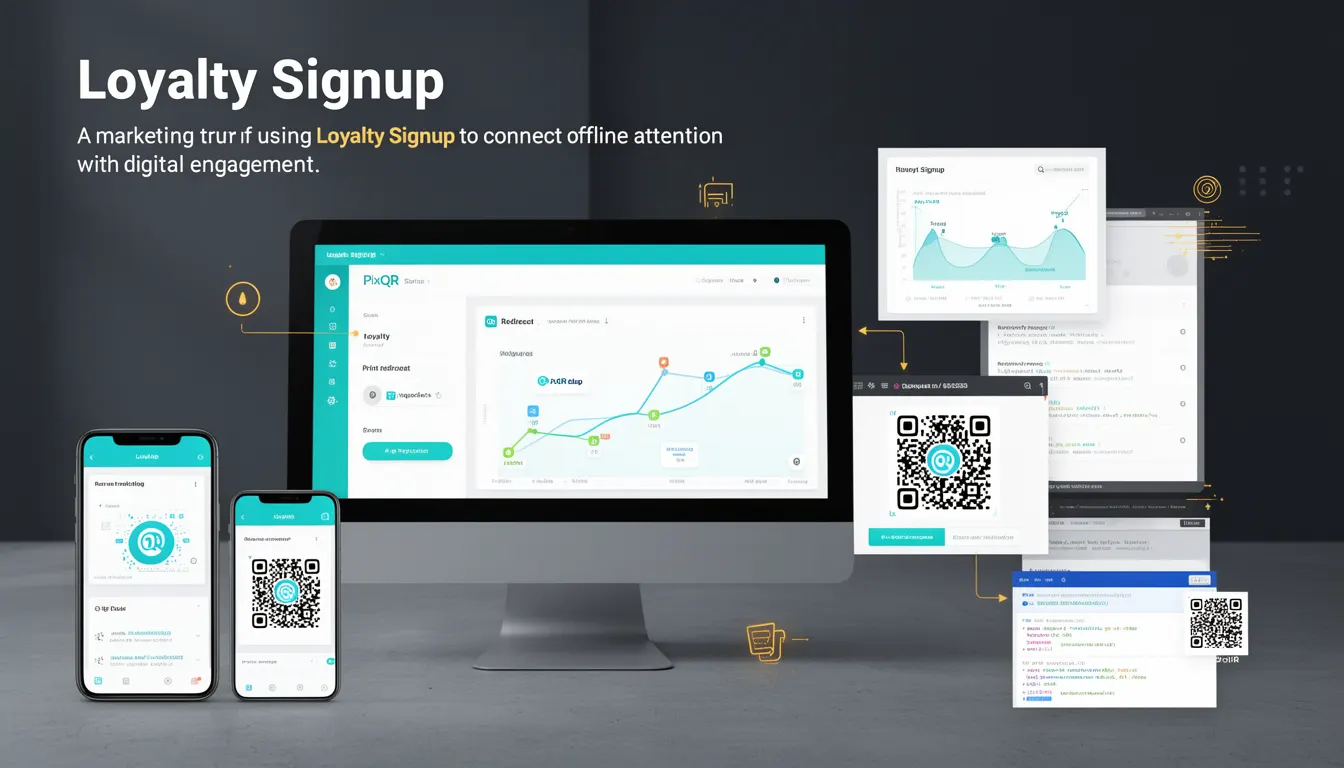
Loyalty Signup is a marketing term used in the context of QR code platforms like PixQR to describe the process of connecting offline user attention with digital engagement through a QR code. When a user scans a QR code, they are redirected to a landing page or form where they can enroll in a loyalty program. This mechanism bridges physical and digital experiences, enabling businesses to collect user data, encourage participation, and track engagement.
For developers working with PixQR, Loyalty Signup is a core feature that integrates QR code generation, dynamic redirects, and data collection workflows. It allows developers to configure a QR code that, when scanned, leads to a specific endpoint that handles user enrollment, captures relevant data, and logs the interaction for analytics.
Why It Matters
From a developer perspective, Loyalty Signup is a key element in building effective digital engagement strategies. It allows for seamless integration of offline marketing efforts with online systems, enabling accurate tracking of user actions and conversion rates. The technical implementation impacts how data flows from the QR scan to the backend, how user privacy is maintained, and how analytics are structured.
For security and privacy-conscious developers, Loyalty Signup requires careful attention to data validation, endpoint security, and compliance with privacy regulations such as GDPR or CCPA. Ensuring that user information is collected and stored securely, and that the redirect mechanism is safe from spoofing or phishing, is critical. Additionally, developers must consider performance implications of redirect handling and how the signup flow affects overall system scalability.
How It Works
The Loyalty Signup process involves several technical components working in concert. When a QR code is scanned, it triggers a redirect to a configured URL. This URL is typically a landing page or form that collects user information and enrolls them in a loyalty program. The platform must ensure that the redirect is safe, that the form submission is secure, and that user data is properly logged and transmitted.
- The QR code itself is generated with a dynamic URL that can be updated without regenerating the physical code.
- When scanned, the QR code initiates a redirect to a pre-configured endpoint that serves the loyalty signup form.
- The form must be designed to collect necessary data such as email, name, or phone number, and validate inputs to prevent injection or malformed submissions.
- Upon submission, the platform logs the interaction, updates the user’s loyalty status, and may trigger additional actions like sending a welcome email or updating a CRM.
- Analytics are collected to track scan rates, conversion rates, and user behavior, enabling marketing optimization.
Quick Reference
| Item | Purpose | Notes |
|---|---|---|
| QR Code Redirect URL | Points to the loyalty signup form | Must be HTTPS and secure |
| Form Validation | Ensures data integrity | Prevents injection and malformed inputs |
| Analytics Tracking | Logs user interactions | Used for conversion optimization |
| User Data Capture | Collects enrollment information | Must comply with privacy laws |
| Endpoint Security | Prevents unauthorized access | Requires authentication or rate limiting |
Basic Example
PixQR Example QR
This QR links directly to this glossary page, so printed notes, onboarding docs, and support material can bring scanners back to the current reference.
/glossary/qr-code-marketing/qr-code-marketing-loyalty-signup

This example demonstrates a basic Loyalty Signup QR code redirect URL structure. It shows how a user is directed to a form endpoint upon scanning.
https://pixqr.example.com/loyalty/signup?source=store&campaign=fall2024The URL includes parameters such as source and campaign to help track the origin and context of the signup. This URL is embedded in the QR code and is the first step in the Loyalty Signup flow.
Production Example
This example illustrates a more robust Loyalty Signup implementation, including validation, error handling, and secure endpoint configuration.
https://api.pixqr.com/v1/redirect/loyalty?token=abc123&user_id=456×tamp=1678886400In a production environment, the redirect URL includes a token for authentication, a user identifier, and a timestamp to prevent replay attacks. The endpoint validates these parameters, ensures the request is legitimate, and then serves the loyalty form or redirects to a success page after processing the signup.
Common Mistakes
- Using HTTP instead of HTTPS for the redirect endpoint, which exposes user data to interception.
- Not validating form inputs, leading to potential injection or data corruption.
- Hardcoding user identifiers or tokens in URLs, which can be exploited for unauthorized access.
- Ignoring analytics tracking, which prevents optimization of marketing campaigns.
- Failing to implement rate limiting or authentication on the signup endpoint, making it vulnerable to abuse.
Security And Production Notes
- Always use HTTPS for all endpoints involved in the Loyalty Signup process to protect user data.
- Implement input validation and sanitization to prevent injection attacks.
- Use tokens or authentication mechanisms to secure redirect endpoints and prevent unauthorized access.
- Log all interactions for audit and analytics purposes, but ensure logs do not contain sensitive user data.
- Ensure that the loyalty form or endpoint is compliant with privacy regulations and user consent requirements.
Related Concepts
Loyalty Signup is closely related to several other developer and marketing concepts. QR code generation is fundamental, as it provides the physical or digital touchpoint. Dynamic redirects allow for updates without regenerating physical codes. Analytics and tracking systems are essential for measuring success. Data privacy and compliance are critical for protecting user information. Finally, secure API integration ensures that the signup process is robust and scalable.