 PixQR
Overview
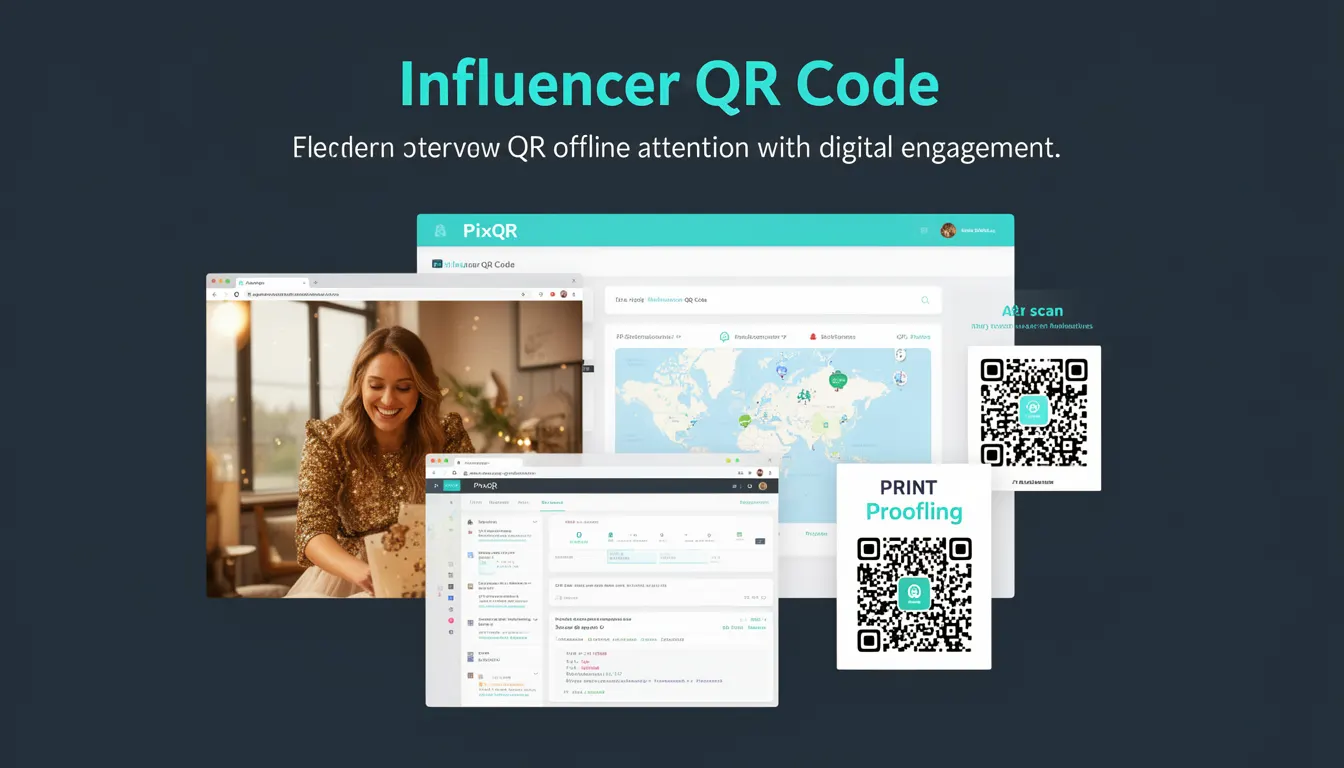
An Influencer QR Code is a specialized type of QR code used in digital marketing campaigns to bridge offline promotional touchpoints with online engagement. These codes are designed to be scanned by users who encounter them in physical environments such as billboards, flyers, product packaging, or event signage, directing them to a specific landing page, promotional offer, or interactive experience.
For developers working with PixQR, Influencer QR Codes are implemented as dynamic redirects that can be configured to support campaign analytics, user tracking, and brand-safe content delivery. The primary goal is to enable marketers to measure the impact of offline media and convert physical attention into digital actions.
Why It Matters
From a developer perspective, Influencer QR Codes require careful attention to how redirects are handled, especially in terms of security and performance. The codes must support tracking without compromising user privacy or introducing performance bottlenecks. They also need to be resilient to tampering or misuse, as they often carry promotional value or direct users to monetized content.
In production, the reliability of scan tracking and redirect resolution impacts campaign analytics and ROI. PixQR ensures that each code is associated with a stable URL, supports A/B testing, and provides detailed scan logs for attribution purposes. Developers must also consider how these codes are integrated into marketing automation systems and how they interact with analytics platforms.
How It Works
Influencer QR Codes function by encoding a URL or a command that points to a dynamic redirect endpoint. When scanned, the QR code decodes into a payload that PixQR uses to determine the destination, apply tracking parameters, and enforce brand-safe policies.
- Each code is associated with a unique identifier and can be configured with tracking tags, UTM parameters, and redirect rules.
- The system supports real-time analytics for scan counts, geographic distribution, and device types.
- Redirects are managed through PixQR's secure backend, ensuring that all destinations are validated and safe.
- Codes can be configured to support deep linking, allowing users to be directed to specific sections of an app or website.
- They support multi-language and multi-region configurations, making them suitable for global campaigns.
Quick Reference
| Item | Purpose | Notes |
|---|---|---|
| Redirect URL | Destination of the scanned code | Must be validated and safe |
| Tracking Parameters | Additional data appended to URL | Used for campaign analytics |
| Scan Logs | Record of scans and user data | Can be filtered by time, region, or device |
| Deep Linking | Direct to specific app or page | Requires app or URL scheme support |
| Brand Safety | Prevents malicious or inappropriate content | Enforced via backend policies |
Basic Example
PixQR Example QR
This QR links directly to this glossary page, so printed notes, onboarding docs, and support material can bring scanners back to the current reference.
/glossary/qr-code-marketing/qr-code-marketing-influencer-qr-code

This example shows a basic configuration for an Influencer QR Code using PixQR’s API to generate a redirect URL with tracking parameters.
{
  "url": "https://example.com/promo",
  "tracking": {
    "campaign": "influencer_2025",
    "source": "social_media",
    "medium": "qr"
  },
  "redirect": "https://pixqr.com/redirect/abc123"
}
The example sets up a campaign-specific tracking URL that redirects to a promotional page. The tracking parameters are used for analytics and attribution, while the redirect field ensures the code points to a PixQR-managed endpoint.
Production Example
This example demonstrates a production-ready Influencer QR Code configuration that includes validation, error handling, and analytics integration.
{
  "url": "https://example.com/influencer-promo",
  "tracking": {
    "campaign": "influencer_2025",
    "source": "event",
    "medium": "qr",
    "content": "brand_001"
  },
  "redirect": "https://pixqr.com/redirect/abc123",
  "brand_safety": true,
  "analytics": {
    "enabled": true,
    "event_tracking": ["scan", "click", "conversion"]
  },
  "validity": {
    "start": "2025-04-01T00:00:00Z",
    "end": "2025-06-30T23:59:59Z"
  }
}
This version includes brand safety checks, event tracking, and time-based validity, making it suitable for a real-world campaign. It ensures that the QR code is only active during the campaign period and that all analytics events are captured.
Common Mistakes
- Using unvalidated URLs in the redirect field, leading to potential phishing or malicious redirects.
- Overlooking the importance of UTM parameters, which can result in poor analytics and campaign tracking.
- Not implementing time-based validity, causing codes to remain active beyond the intended campaign period.
- Ignoring brand safety policies, which can expose the campaign to inappropriate content or user data misuse.
- Failing to test QR code readability in different lighting or print conditions, which can reduce scan success rates.
Security And Production Notes
- All redirect URLs must be validated against a whitelist or trusted domain list to prevent unauthorized redirection.
- Tracking parameters should be sanitized to prevent injection attacks or data leakage.
- Analytics data should be stored securely and in compliance with privacy regulations like GDPR or CCPA.
- QR codes must be generated with error correction levels (L, M, Q, H) to ensure scannability even when printed at low resolution.
- Implementing rate limiting on redirect endpoints helps prevent abuse and ensures system stability.
Related Concepts
Several developer concepts are closely related to Influencer QR Codes, including dynamic redirects, URL shortening, campaign tracking, deep linking, and brand safety protocols. These concepts work together to create a seamless, secure, and measurable user experience.
Dynamic redirects ensure that the destination of a QR code can be changed without updating the physical code. URL shortening is often used to create compact QR codes for print media. Campaign tracking involves tagging and measuring the performance of specific marketing efforts. Deep linking enables users to navigate directly into an app or a specific section of a website. Brand safety protocols ensure that all content and redirects are appropriate and secure.