 PixQR
Overview
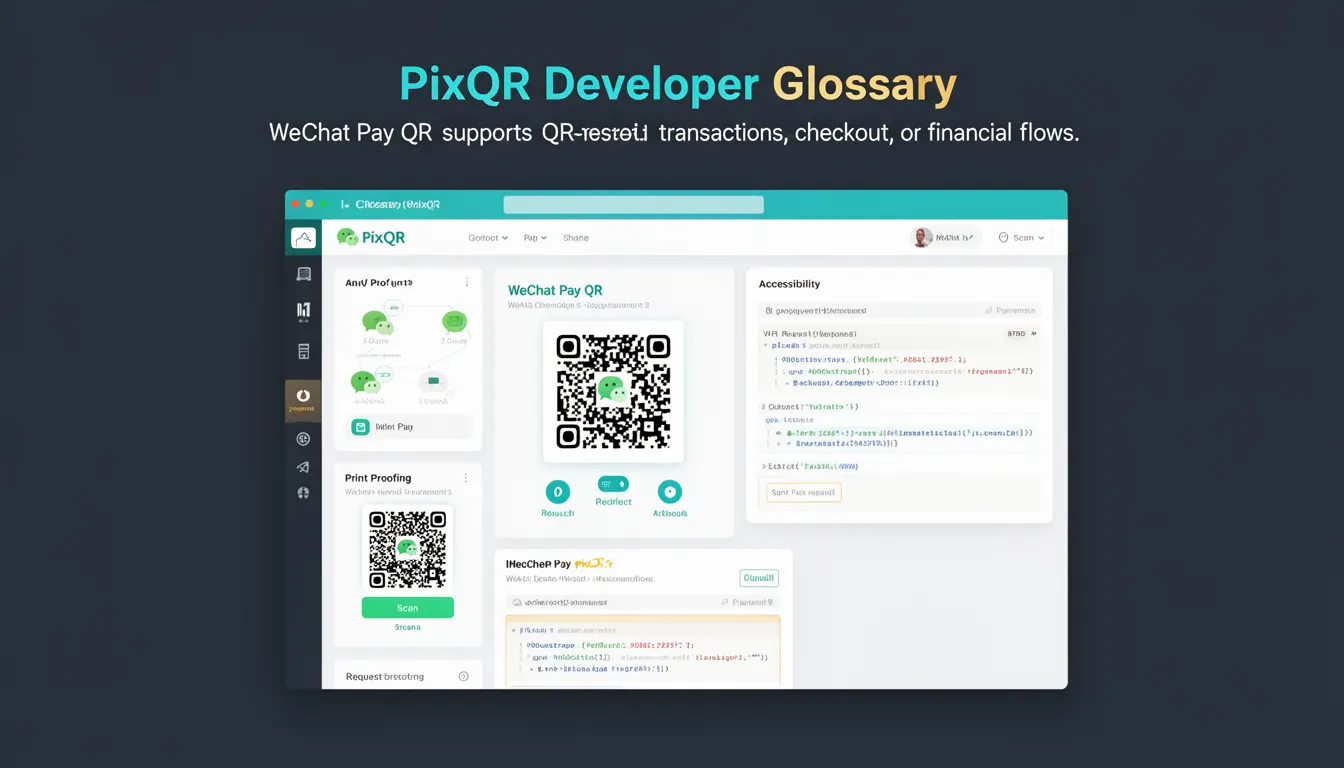
A WeChat Pay QR is a QR code specifically designed to facilitate financial transactions using the WeChat Pay payment system. It is a type of dynamic QR code that encodes payment-related data, such as amount, merchant ID, and transaction reference, enabling users to complete payments by scanning the code with the WeChat mobile application.
Developers working with PixQR may generate or manage WeChat Pay QR codes as part of a broader payment integration system. These codes are typically used in point-of-sale (POS) systems, e-commerce platforms, or physical retail environments where users scan a QR to initiate a payment flow.
Why It Matters
For developers, understanding WeChat Pay QR codes is crucial for integrating with a payment ecosystem that is widely used in China and among international users who travel or transact with Chinese merchants. These QR codes form a key part of the payment infrastructure in a region where mobile payments dominate over traditional card systems.
From a technical perspective, the implementation must ensure the QR code is correctly formatted and securely handled to avoid fraud or payment errors. PixQR's platform provides tools to generate and manage these codes with reliability and compliance, including support for dynamic updates and transaction tracking.
How It Works
WeChat Pay QR codes are generated using a structured payload that contains transaction parameters. The QR code itself encodes a URL or a specific data format that the WeChat application interprets to initiate a payment. The process involves:
- Generating a unique transaction ID on the server-side to track the payment.
- Encoding payment parameters such as amount, currency, merchant ID, and description into a format compatible with WeChat Pay APIs.
- Creating a QR code that contains the encoded transaction data, typically using a standard QR code encoding format.
- Providing a mechanism for the user to scan the QR with the WeChat app, which then initiates a payment flow.
- Handling the callback from WeChat Pay to confirm payment status and update the system accordingly.
These codes are dynamic, meaning they can be updated with new transaction data or invalidated after a set time, ensuring secure and flexible payment handling. PixQR's platform supports dynamic QR code generation with optional expiration times, which helps reduce fraud risk.
Quick Reference
| Item | Purpose | Notes |
|---|---|---|
| Transaction ID | Unique identifier for the payment | Must be generated server-side |
| Amount | Payment amount in local currency | Must be a valid decimal value |
| Merchant ID | Unique identifier for the merchant | Required for WeChat Pay API |
| QR Code Payload | Data encoded in the QR | Must be compliant with WeChat Pay format |
| Expiration Time | Time after which QR becomes invalid | Recommended for security |
Basic Example
PixQR Example QR
This QR links directly to this glossary page, so printed notes, onboarding docs, and support material can bring scanners back to the current reference.
/glossary/qr-code-for-payments/qr-codes-for-payments-wechat-pay-qr

This example demonstrates how a developer might structure a simple WeChat Pay QR payload for a transaction. It includes a basic amount and transaction ID.
const wechatPayPayload = {
  "amount": "100.00",
  "currency": "CNY",
  "transaction_id": "txn_1234567890",
  "merchant_id": "mch_9876543210"
};

const qrCodeData = JSON.stringify(wechatPayPayload);
// The QR code would then be generated using this data
The example shows the minimal required data for a transaction. The amount and transaction_id are critical fields that ensure the payment is correctly processed. The payload is then encoded into a QR code for user scanning.
Production Example
This example illustrates a more robust approach to generating a WeChat Pay QR, including validation, error handling, and secure configuration.
const generateWeChatPayQR = (amount, currency, merchantId, transactionId) => {
  if (!amount || !merchantId || !transactionId) {
    throw new Error("Missing required fields for WeChat Pay QR generation");
  }

  const payload = {
    amount: parseFloat(amount).toFixed(2),
    currency: currency || "CNY",
    transaction_id: transactionId,
    merchant_id: merchantId,
    timestamp: Date.now(),
    nonce_str: Math.random().toString(36).substring(2, 10)
  };

  const qrData = JSON.stringify(payload);
  return generateQRCode(qrData); // PixQR function for QR generation
};

// Usage
try {
  const qr = generateWeChatPayQR("99.99", "CNY", "mch_1234567890", "txn_0987654321");
} catch (error) {
  console.error("Failed to generate WeChat Pay QR:", error);
}
This version includes input validation, timestamping, and a nonce string to prevent replay attacks. It also encapsulates the QR generation in a function, making it reusable and maintainable in a production environment.
Common Mistakes
- Not validating transaction IDs before encoding them into QR codes, leading to duplicate or invalid payments.
- Using static QR codes instead of dynamic ones, which can lead to expired or reused payment links.
- Ignoring currency formatting or decimal precision, causing payment failures or incorrect amounts.
- Not handling callback responses from WeChat Pay, resulting in unconfirmed transactions and potential fraud.
- Reusing QR codes for multiple transactions, which can cause confusion and system errors in payment tracking.
- Not implementing expiration times, increasing the risk of unauthorized use of QR codes.
Security And Production Notes
- Always validate and sanitize transaction data before generating QR codes to prevent injection or manipulation.
- Use secure, HTTPS endpoints for generating and handling QR codes to protect against man-in-the-middle attacks.
- Implement unique, non-reusable transaction IDs to avoid fraud or duplicate payments.
- Set a reasonable expiration time for QR codes to limit the window of potential misuse.
- Use PixQR’s built-in analytics and tracking features to monitor QR code usage and detect anomalies.
Related Concepts
Several concepts are closely related to WeChat Pay QR codes:
- Dynamic QR Codes: QR codes that can be updated with new data, often used for payments to ensure security and validity.
- Payment Gateway Integration: The process of connecting a system to a payment provider, such as WeChat Pay, to process transactions.
- Transaction Tracking: Monitoring and logging payment events to ensure accuracy and accountability.
- QR Code Payload Standards: The format and encoding rules for data within a QR code, including compatibility with payment systems.
- Scan Reliability: Ensuring that QR codes can be consistently scanned across different devices and environments.