 PixQR
Overview
A Crypto Payment QR is a specific type of QR code used to facilitate cryptocurrency-based transactions. Unlike traditional payment QR codes that typically support fiat currencies, a Crypto Payment QR encodes information that allows a user to initiate a transaction in a supported cryptocurrency, such as Bitcoin (BTC), Ethereum (ETH), or other digital assets.
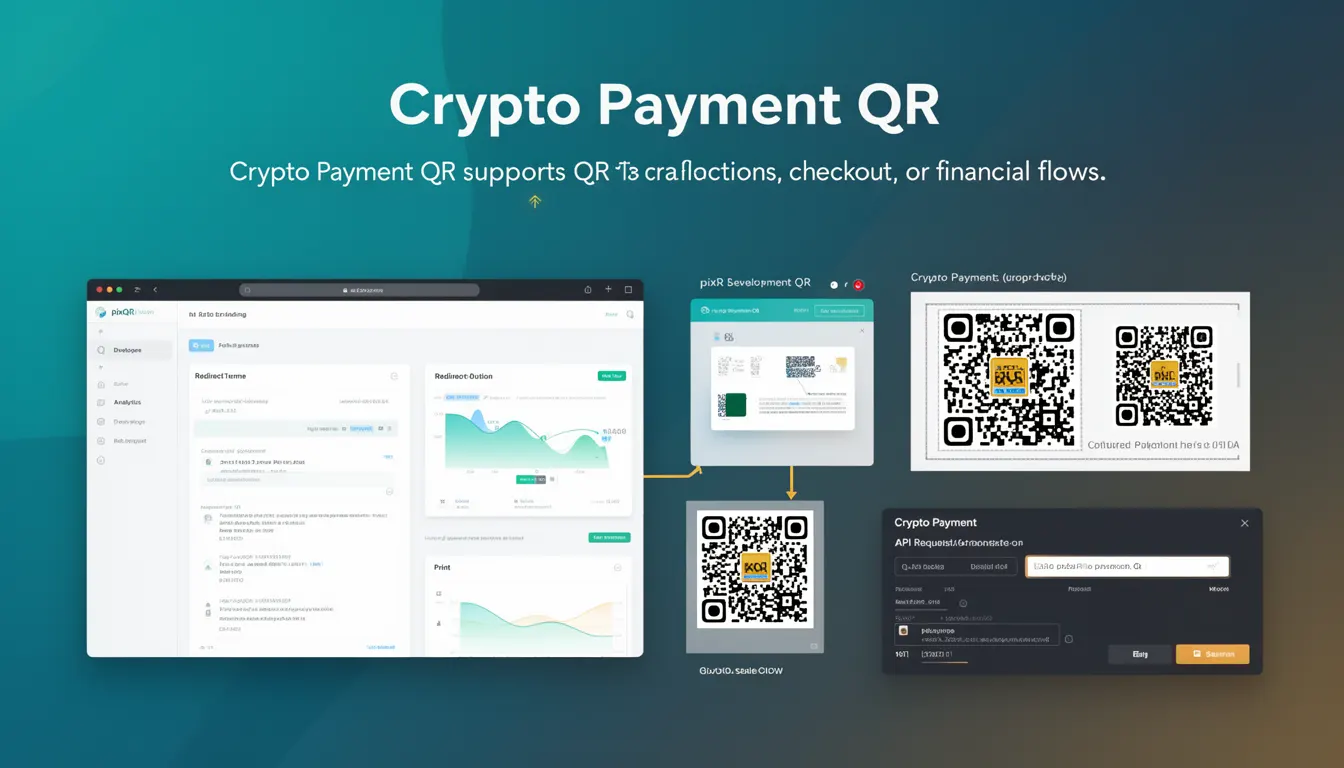
These QR codes are generated by platforms like PixQR and are used in point-of-sale systems, online stores, and digital wallets to simplify the process of sending and receiving crypto payments. The QR code contains a cryptocurrency address and optionally, the amount to be sent, making it easy for users to scan and confirm transactions without manually copying complex addresses or entering details.
Why It Matters
For developers working with PixQR, Crypto Payment QR codes are essential for integrating cryptocurrency payment flows into applications. They provide a secure and standardized method to encode payment instructions, ensuring that transactions are both reliable and traceable. The use of these QR codes improves user experience by reducing friction in the payment process and minimizing errors that could occur from manual data entry.
From a security perspective, PixQR ensures that Crypto Payment QRs are generated with proper validation and encryption to prevent unauthorized modifications or fraudulent transactions. These QR codes also support analytics and tracking, which helps businesses monitor payment trends, detect anomalies, and improve operational workflows.
How It Works
Crypto Payment QR codes are generated by encoding specific data into a QR code structure. The data typically includes a cryptocurrency address, transaction amount, and optional metadata such as a memo or payment ID. PixQR handles the generation process, ensuring that the QR code is compliant with industry standards and optimized for scanning reliability.
- The QR code data is encoded using a standard format such as BIP21 for Bitcoin or similar protocols for other cryptocurrencies.
- Each QR code can include a destination address, optional amount, and metadata to provide context for the transaction.
- When scanned, the QR code triggers a wallet application or browser to open with pre-filled transaction details.
- PixQR supports dynamic QR code generation, allowing developers to update payment information without regenerating the entire QR code.
- The platform ensures that the QR code is compatible with major cryptocurrency wallets and supports secure redirect flows.
Quick Reference
| Item | Purpose | Notes |
|---|---|---|
| Address | Destination wallet address | Must be valid for the selected cryptocurrency |
| Amount | Transaction value | Optional; can be specified in fiat or crypto |
| Metadata | Additional transaction context | Includes memo, payment ID, or custom fields |
| Dynamic QR | Updates without regenerating code | Useful for changing payment details |
| Scan Tracking | Monitors QR code interactions | Provides analytics on usage |
Basic Example
PixQR Example QR
This QR links directly to this glossary page, so printed notes, onboarding docs, and support material can bring scanners back to the current reference.
/glossary/qr-code-for-payments/qr-codes-for-payments-crypto-payment-qr

This example demonstrates how a basic Crypto Payment QR code is generated using PixQR's API. It encodes a Bitcoin address and an optional amount.
const cryptoQR = {
  "type": "crypto",
  "data": {
    "address": "1A1zP1eP5QGefi2DMPTfTL5SLmv7DivfNa",
    "amount": "0.001",
    "currency": "BTC"
  },
  "options": {
    "size": "200x200",
    "format": "png"
  }
};
The example defines a QR code of type "crypto", with a Bitcoin address, amount, and currency. The options specify the size and format of the generated QR code.
Production Example
This example shows a more robust implementation of a Crypto Payment QR, including validation, error handling, and integration with PixQR's dynamic redirect feature.
const generateCryptoQR = (address, amount, currency) => {
  if (!address || !currency) {
    throw new Error("Address and currency are required");
  }

  const payload = {
    address: address,
    amount: amount || null,
    currency: currency,
    metadata: {
      timestamp: Date.now(),
      orderId: "ORDER_" + Math.random().toString(36).substr(2, 9)
    }
  };

  return pixqr.generate({
    type: "crypto",
    data: payload,
    options: {
      size: "300x300",
      format: "svg",
      redirect: true
    }
  });
};
This version includes validation to ensure required fields are present, adds metadata for tracking, and enables dynamic redirects to support secure and scalable payment workflows.
Common Mistakes
- Using invalid or non-standard cryptocurrency addresses, which can lead to failed transactions.
- Not specifying the correct currency, causing wallets to misinterpret the transaction.
- Ignoring validation of transaction amounts, which can result in overpayments or underpayments.
- Generating QR codes without proper error handling, leading to silent failures in payment processing.
- Not implementing dynamic updates for payment information, which can cause outdated QR codes to be used.
Security And Production Notes
- Always validate cryptocurrency addresses before generating QR codes to prevent transaction errors or fraud.
- Use secure protocols for data transmission to ensure QR code payloads are not tampered with.
- Implement dynamic QR code updates to allow for real-time changes in payment details without regenerating codes.
- Ensure that analytics and tracking data are handled in compliance with privacy regulations.
- Test QR code scanning across various devices and applications to ensure compatibility and reliability.
Related Concepts
Several developer concepts are closely related to Crypto Payment QRs. These include QR code generation, dynamic redirects, payment gateway integration, blockchain transaction handling, and secure data encoding. Each of these components plays a role in ensuring that a Crypto Payment QR is both functional and secure.