 PixQR
Overview
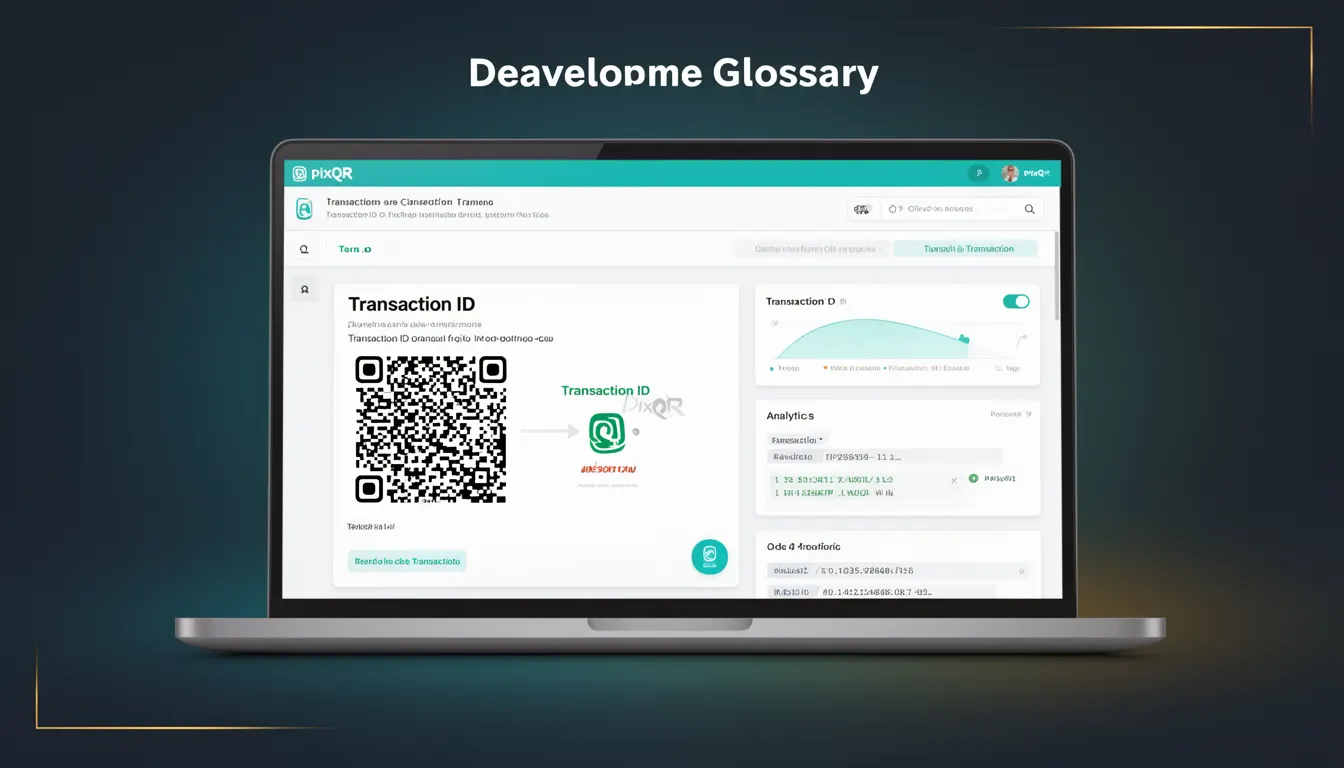
A Transaction ID in the context of PixQR and QR-based payments refers to a unique identifier assigned to each financial transaction initiated through a QR code. This identifier serves as a critical tracking and reconciliation mechanism for both the merchant and the payment processor. When a user scans a PixQR payment code, the system generates a Transaction ID that links the scan event to a specific payment, enabling accurate transaction logging, fraud detection, and financial reporting.
Transaction IDs are essential for developers building payment integrations, especially when using PixQR's dynamic QR generation or redirect services. They allow systems to correlate QR scan events with payment outcomes, ensuring that payment confirmation and reconciliation are traceable. These IDs are particularly relevant in scenarios involving batch processing, API integrations, or financial audit requirements where precise transactional data is needed.
Why It Matters
Transaction IDs are fundamental for operational integrity and financial accountability. In PixQR, each QR scan that leads to a payment generates a unique Transaction ID, which becomes the core reference point for payment tracking. For developers, this ID ensures that payment events are correctly logged, reported, and reconciled, reducing discrepancies in financial systems and preventing fraud through clear transaction trails.
From a security perspective, Transaction IDs help in detecting and mitigating fraudulent activities. If a QR code is scanned multiple times or if a transaction fails, the ID enables developers to trace the event and take appropriate action. Additionally, in compliance-driven environments, these IDs are critical for audit trails, making them essential for systems handling regulated financial data.
How It Works
When a user scans a QR code generated by PixQR, the system records the scan event and assigns a unique Transaction ID. This ID is then associated with the payment request and propagated through the payment flow, from initial scan to final settlement. The mechanism involves several steps and components:
- The QR code contains a payload that includes a reference to the transaction, often encoded in a structured format such as a URL or JSON.
- Upon scanning, the system generates a Transaction ID based on internal logic, often incorporating timestamps and unique identifiers to ensure uniqueness.
- The Transaction ID is stored in PixQR's internal database along with metadata such as scan time, device information, and payment status.
- This ID is returned to the merchant's system via API callbacks or webhook notifications, allowing real-time transaction tracking.
- For dynamic QR codes, the Transaction ID may be used to update the QR content in real-time, reflecting payment status or redirecting to confirmation pages.
The Transaction ID is typically a string of alphanumeric characters, often prefixed with a specific identifier to denote the type of transaction or system. It is designed to be globally unique, ensuring that no two transactions share the same ID, even across different merchants or platforms.
Quick Reference
| Item | Purpose | Notes |
|---|---|---|
| Transaction ID | Unique identifier for a payment transaction | Generated per QR scan, used for tracking and reconciliation |
| QR Payload | Contains reference to transaction ID | Encoded in the QR code for scanning systems |
| API Callback | Transmits Transaction ID to merchant system | Used for real-time transaction status updates |
| Dynamic QR | Updates QR content based on Transaction ID | Supports redirecting users based on payment status |
| Database Entry | Stores Transaction ID with metadata | Enables audit trails and fraud detection |
Basic Example
PixQR Example QR
This QR links directly to this glossary page, so printed notes, onboarding docs, and support material can bring scanners back to the current reference.
/glossary/qr-code-for-payments/qr-codes-for-payments-transaction-id

This basic example demonstrates how a Transaction ID might be generated and returned when a QR code is scanned in a payment system.
const transactionId = "TXN_20241201_789456";
console.log("Transaction ID:", transactionId);
// Output: Transaction ID: TXN_20241201_789456
This simple example shows a Transaction ID being generated with a prefix and timestamp. In a real-world scenario, this ID would be generated by PixQR's backend upon QR scan and returned to the merchant's application via an API endpoint.
Production Example
This example illustrates a more realistic usage of Transaction IDs in a payment integration, including validation, error handling, and API communication.
function handleQRScan(scanData) {
  const transactionId = generateTransactionId();
  const payload = {
    transactionId: transactionId,
    timestamp: Date.now(),
    amount: scanData.amount,
    currency: scanData.currency
  };

  try {
    const response = fetch('/api/transaction/start', {
      method: 'POST',
      headers: { 'Content-Type': 'application/json' },
      body: JSON.stringify(payload)
    });

    if (!response.ok) {
      throw new Error('Transaction start failed');
    }

    return transactionId;
  } catch (error) {
    console.error('Error handling QR scan:', error);
    return null;
  }
}

function generateTransactionId() {
  return 'TXN_' + Date.now() + '_' + Math.floor(Math.random() * 1000000);
}
This version includes proper error handling and uses a real-world function to generate a unique Transaction ID. It demonstrates how a developer might integrate Transaction IDs into a payment workflow, ensuring that each QR scan is tracked and managed securely.
Common Mistakes
- Reusing Transaction IDs across multiple scans or transactions, which can lead to confusion and reconciliation errors in financial systems.
- Not validating the Transaction ID format before processing, which may cause errors in downstream systems or data corruption.
- Using static Transaction IDs in dynamic QR configurations, reducing flexibility and traceability in payment flows.
- Ignoring Transaction ID in API callbacks or webhook notifications, leading to incomplete transaction tracking and audit gaps.
- Storing Transaction IDs in plaintext or unencrypted logs, exposing sensitive transaction data to unauthorized access.
- Not implementing unique ID generation logic, resulting in collisions or duplicate identifiers in high-volume systems.
Security And Production Notes
- Transaction IDs must be cryptographically secure to prevent predictable or guessable identifiers that could be exploited by attackers.
- Ensure Transaction IDs are only transmitted over secure channels (HTTPS) to avoid interception during API communication.
- Validate and sanitize Transaction IDs in all input and output paths to prevent injection or data corruption issues.
- Log Transaction IDs with timestamps and metadata to support forensic analysis and fraud investigations.
- Implement rate limiting or throttling on Transaction ID generation to prevent abuse or denial-of-service scenarios.
Related Concepts
Transaction ID connects closely with several other developer concepts in payment systems:
Payment Gateway: Transaction IDs are often used to correlate payment requests with responses from payment gateways, ensuring that merchants can track transactions across multiple platforms.
Webhook: Transaction IDs are frequently passed through webhook notifications to inform merchants of payment status changes, allowing real-time updates in their systems.
QR Payload: The Transaction ID is embedded within the QR code's payload, making it essential for decoding and processing QR scans.
API Integration: Developers must ensure that Transaction IDs are correctly handled in API calls, especially when integrating with PixQR's payment processing services.
Database Design: Transaction IDs are often used as primary keys or foreign keys in payment-related database tables, requiring proper indexing and schema design for performance and scalability.