 PixQR
Overview
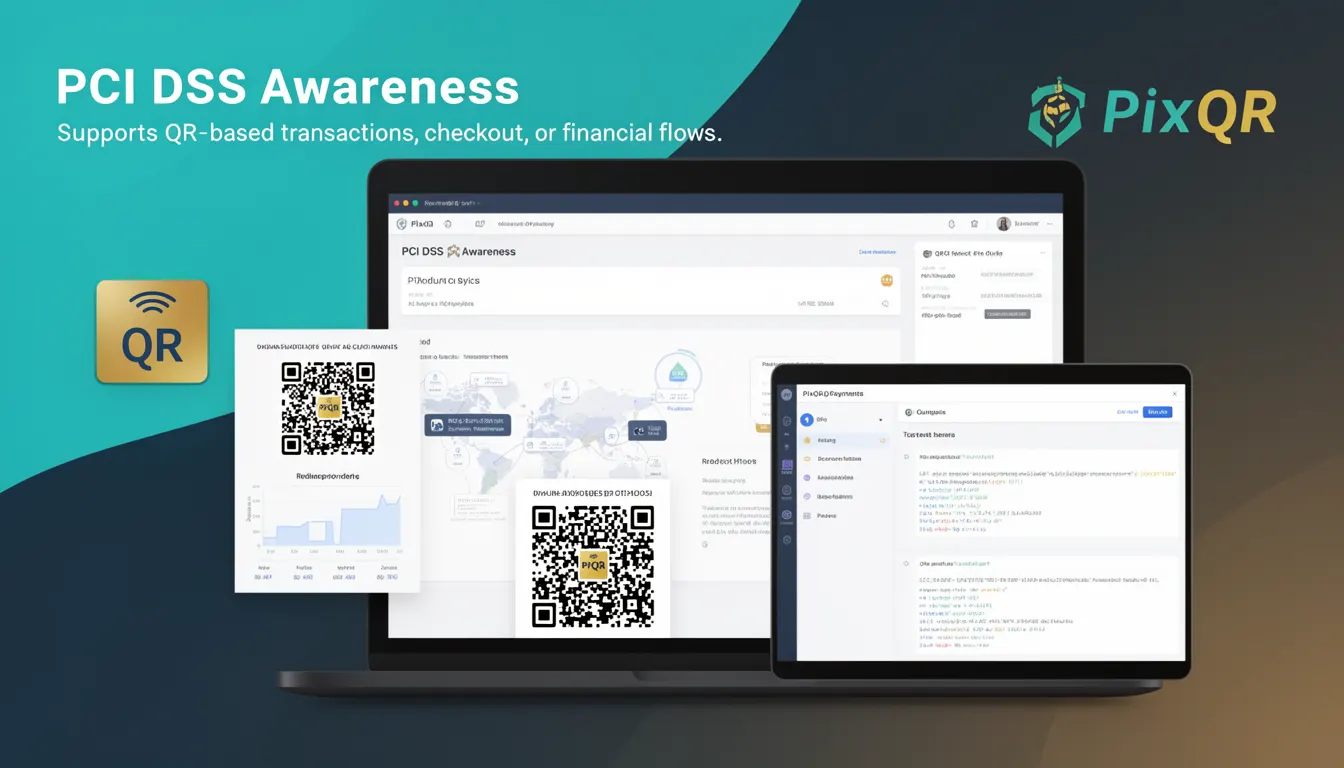
PCI DSS Awareness, in the context of QR code for payments, refers to the level of understanding and implementation of Payment Card Industry Data Security Standard (PCI DSS) requirements within systems that process, store, or transmit cardholder data. This term is particularly relevant when integrating QR-based payment flows into applications or platforms such as PixQR, where secure transaction handling is critical.
For developers working with PixQR, PCI DSS Awareness ensures that QR code-based payment solutions are designed with security best practices, including encryption, access controls, and data integrity. It supports the creation of secure, compliant payment pathways that protect sensitive financial data and meet regulatory expectations. This awareness directly impacts how QR codes are generated, validated, and managed within payment workflows.
Why It Matters
PCI DSS Awareness is essential for developers building payment-enabled QR code systems because it directly impacts compliance with global financial regulations. Without proper awareness, developers risk creating systems that expose cardholder data to breaches, resulting in fines, legal liability, and reputational damage.
For PixQR, this means that QR code generation and redirection must adhere to strict data handling protocols. This includes ensuring that payment data is not exposed in URLs, that tokens are used instead of raw card data, and that access to payment-related APIs is restricted. When developers are PCI DSS-aware, they implement systems that reduce attack surface, support audit readiness, and maintain user trust in financial transactions.
How It Works
PCI DSS Awareness in QR-based payments involves a set of operational and technical practices that ensure secure handling of cardholder information. It encompasses data encryption, access control, monitoring, and system integrity checks.
- Encryption of cardholder data at rest and in transit using protocols like TLS 1.3 and AES-256 ensures data is unreadable if intercepted.
- Tokenization of sensitive data allows QR codes to reference payment tokens instead of actual card details, reducing exposure.
- Access control mechanisms restrict who can generate, modify, or access QR codes and related payment data.
- Logging and monitoring systems track QR code usage, redirect events, and access attempts for compliance and audit purposes.
- Secure APIs and authentication tokens are used to ensure that only authorized systems can interact with payment endpoints.
Quick Reference
| Item | Purpose | Notes |
|---|---|---|
| Tokenization | Replaces sensitive data with non-sensitive tokens | Used in QR code payloads to avoid exposing card data |
| Encryption | Protects data in transit and at rest | Must use TLS 1.3 and AES-256 |
| Access Control | Limits system access to authorized entities | Implemented via API keys and role-based permissions |
| Logging | Tracks QR code usage and redirect events | Required for audit and compliance |
| API Authentication | Secures communication with payment systems | Use OAuth 2.0 or similar secure methods |
Basic Example
PixQR Example QR
This QR links directly to this glossary page, so printed notes, onboarding docs, and support material can bring scanners back to the current reference.
/glossary/qr-code-for-payments/qr-codes-for-payments-pci-dss-awareness

This example demonstrates how a QR code payload might be structured using a token instead of raw card data, ensuring compliance with PCI DSS requirements.
const qrPayload = {
  "token": "txn_abc123xyz",
  "amount": 100.00,
  "currency": "USD",
  "timestamp": "2025-04-05T10:00:00Z"
};
The payload includes a token that references the actual payment data on the backend. This prevents sensitive information from being embedded in the QR code itself, aligning with PCI DSS standards.
Production Example
This example shows a more robust implementation that includes secure API usage, tokenization, and access control for generating a compliant QR code.
const generateSecureQR = async (paymentData) => {
  const token = await createPaymentToken(paymentData);
  const qrData = {
    token: token,
    amount: paymentData.amount,
    currency: paymentData.currency,
    redirectUrl: "https://api.pixqr.com/redirect"
  };
  const response = await fetch("https://api.pixqr.com/qr/generate", {
    method: "POST",
    headers: {
      "Authorization": "Bearer " + getAuthToken(),
      "Content-Type": "application/json"
    },
    body: JSON.stringify(qrData)
  });
  return response.json();
};
This version ensures that sensitive data is not passed directly into the QR code, and all communication is authenticated and encrypted. It also uses a secure tokenization system, which is essential for maintaining PCI DSS compliance.
Common Mistakes
- Embedding raw card data in QR codes, violating PCI DSS requirements for data exposure.
- Using weak encryption or outdated TLS versions in API communications.
- Reusing API keys or tokens across multiple systems, increasing risk of compromise.
- Not implementing proper access controls for QR code generation and management APIs.
- Ignoring logging and monitoring for QR code usage, making audits difficult.
- Failing to validate redirect URLs, allowing potential phishing or malicious redirection.
Security And Production Notes
- Always use TLS 1.3 and AES-256 for data encryption in transit and at rest.
- Implement tokenization for sensitive data in QR code payloads to avoid direct exposure.
- Ensure that all API endpoints are secured with strong authentication and access control.
- Log all QR code generation and redirect events for compliance and audit purposes.
- Validate all redirect URLs to prevent malicious redirection or phishing attacks.
Related Concepts
PCI DSS Awareness connects closely with several core payment and security concepts:
- Tokenization is the process of replacing sensitive data with non-sensitive tokens, which is a key PCI DSS requirement for QR code-based transactions.
- Secure APIs ensure that payment data is transmitted securely and that only authorized systems can access sensitive endpoints.
- Data Encryption protects cardholder data in transit and at rest, a core PCI DSS mandate.
- Access Control ensures that only authorized users or systems can generate, manage, or access QR codes.
- Compliance Monitoring involves tracking and logging system activity to meet audit and regulatory requirements.