 PixQR
Overview
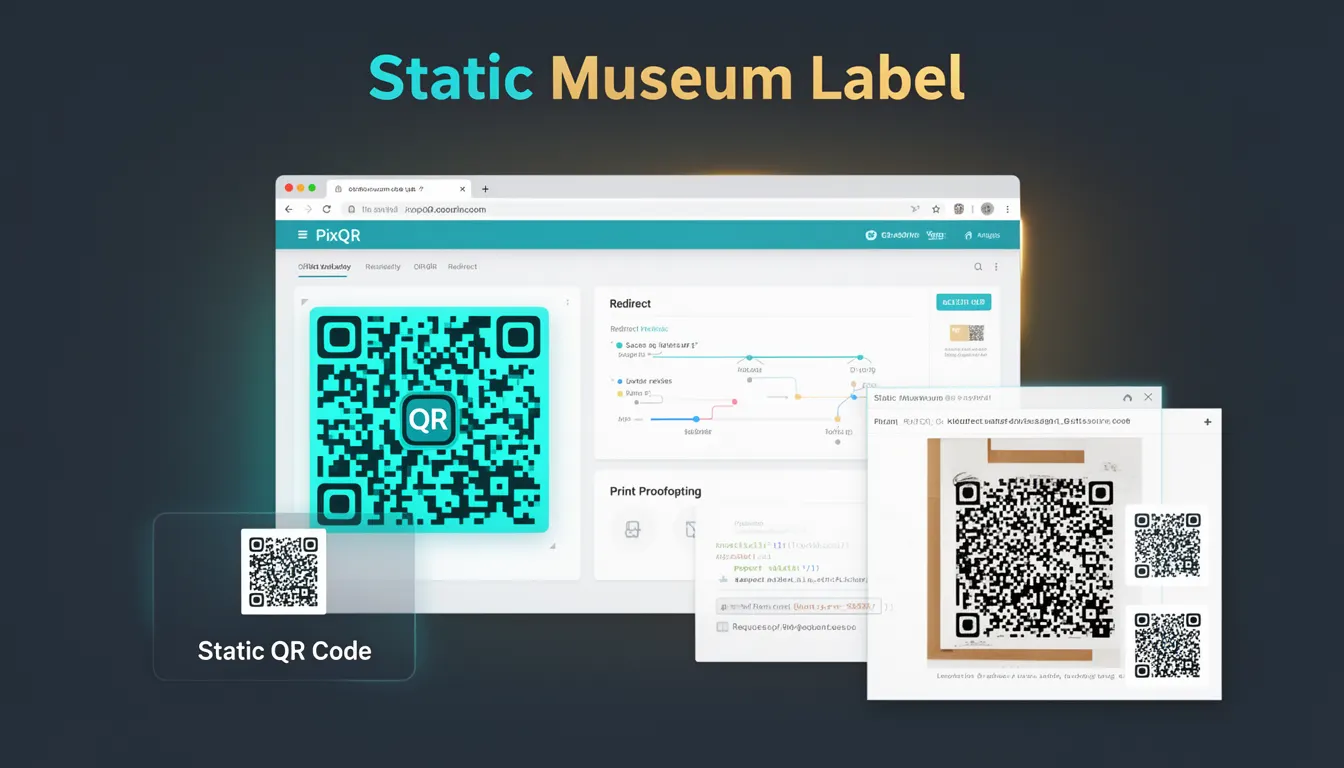
A Static Museum Label in the context of PixQR refers to a QR code configuration where the encoded data is fixed at the time of creation and does not change during its lifecycle. This type of QR code is designed for environments where information must remain consistent, such as museum exhibits, product packaging, or printed materials where the content is intended to be permanent or rarely updated.
Static Museum Labels are distinct from dynamic QR codes, which can be modified post-creation through backend systems. The term emphasizes the immutability and long-term reliability of the QR code’s content, aligning with PixQR’s focus on brand-safe design and operational security.
Why It Matters
For developers working with PixQR, understanding Static Museum Labels is crucial when designing systems for long-term content stability. These labels ensure that once a QR code is printed or deployed, it consistently leads to the same information, which is essential for trust, analytics accuracy, and compliance in regulated environments like museums or retail.
Static Museum Labels also play a role in performance and privacy considerations. Since the QR code content is fixed, it reduces the need for dynamic lookups or API calls during scans, which improves reliability in low-connectivity areas. This is particularly relevant in outdoor or remote museum settings where network stability may be an issue.
How It Works
When generating a Static Museum Label in PixQR, the system encodes a fixed payload into the QR code. This payload can include a URL, text, or structured data such as a vCard or geo-location. Once the QR code is generated, its content cannot be altered without regenerating the code entirely.
- The payload is embedded directly into the QR code matrix, making it immutable after generation.
- Static Museum Labels support all standard QR code data types including URLs, text, and binary data.
- Each label has a unique identifier assigned by the PixQR system, enabling tracking and analytics without modifying the encoded content.
- These codes are designed to be highly scannable and resistant to degradation, supporting long-term print reliability.
- Static Museum Labels can be configured with expiration dates or usage limits, but the encoded content itself remains unchanged.
Quick Reference
| Item | Purpose | Notes |
|---|---|---|
| Encoded Payload | Fixed data within the QR code | Immutable after generation |
| Label ID | Unique identifier for tracking | Separate from encoded content |
| QR Matrix | Physical representation of data | Scannable in all standard formats |
| Expiration Date | Optional time-based limit | Does not affect content |
| Usage Limit | Optional scan count cap | Does not affect content |
Basic Example
PixQR Example QR
This QR links directly to this glossary page, so printed notes, onboarding docs, and support material can bring scanners back to the current reference.
/glossary/qr-code-static/static-qr-codes-static-museum-label

This example shows a basic Static Museum Label configuration where a fixed URL is encoded into a QR code. The QR code is intended to point to a museum exhibit page.
{ "type": "static", "payload": "https://museum.example.com/exhibit/123", "label_id": "MUSEUM-001" }The payload is a fixed URL, and the label_id allows tracking without altering the QR code content. This is a minimal example for illustrative purposes.
Production Example
In a production environment, a Static Museum Label may include additional metadata for analytics, branding, and compliance. This example shows a more robust configuration with optional parameters for advanced usage.
{ "type": "static", "payload": "https://museum.example.com/exhibit/123", "label_id": "MUSEUM-001", "expires_at": "2025-12-31", "scan_limit": 1000, "branding": { "logo_url": "https://museum.example.com/logo.png", "color_scheme": "#003366" } }This configuration includes expiration, scan limits, and branding options, but the payload remains unchanged. The label_id enables backend tracking and analytics, while the payload ensures consistent access to the exhibit information.
Common Mistakes
- Assuming that static QR codes can be updated post-generation, leading to unexpected behavior when users scan codes that no longer match the intended content.
- Not validating the payload format before generating the code, resulting in invalid QR codes that fail to scan.
- Using the label_id for content identification instead of the payload, which causes confusion in analytics and content tracking.
- Ignoring the expiration or scan limit parameters, leading to potential misuse or unauthorized access after the intended period.
- Choosing a payload that is too long for QR code compatibility, causing scanning errors or reduced reliability in print environments.
Security And Production Notes
- Static Museum Labels do not require backend authentication or session management, reducing potential attack vectors.
- Since the content is fixed, it is less prone to data leakage or injection attacks compared to dynamic systems.
- Ensure the payload URL or data is sanitized and compliant with branding or content policies to maintain brand safety.
- Use short, stable identifiers for label IDs to prevent confusion in analytics and tracking systems.
- Static QR codes are ideal for offline or low-connectivity environments, but ensure the encoded data is fully self-contained or cached locally.
Related Concepts
Static Museum Labels are closely related to several core PixQR concepts:
- Dynamic Redirects: Unlike static labels, dynamic redirects allow content changes after code generation, offering flexibility but requiring backend infrastructure.
- Scan Tracking: Static labels support tracking via unique identifiers, enabling analytics without altering content.
- Brand-Safe Design: Static labels ensure consistent branding and content integrity, aligning with PixQR’s focus on safe, reliable QR code deployment.
- Privacy and Compliance: Static labels are well-suited for environments where data privacy and regulatory compliance are critical, as content cannot be modified post-deployment.
- Print Reliability: Static QR codes are optimized for physical print, ensuring consistent scannability across various materials and lighting conditions.