 PixQR
Overview
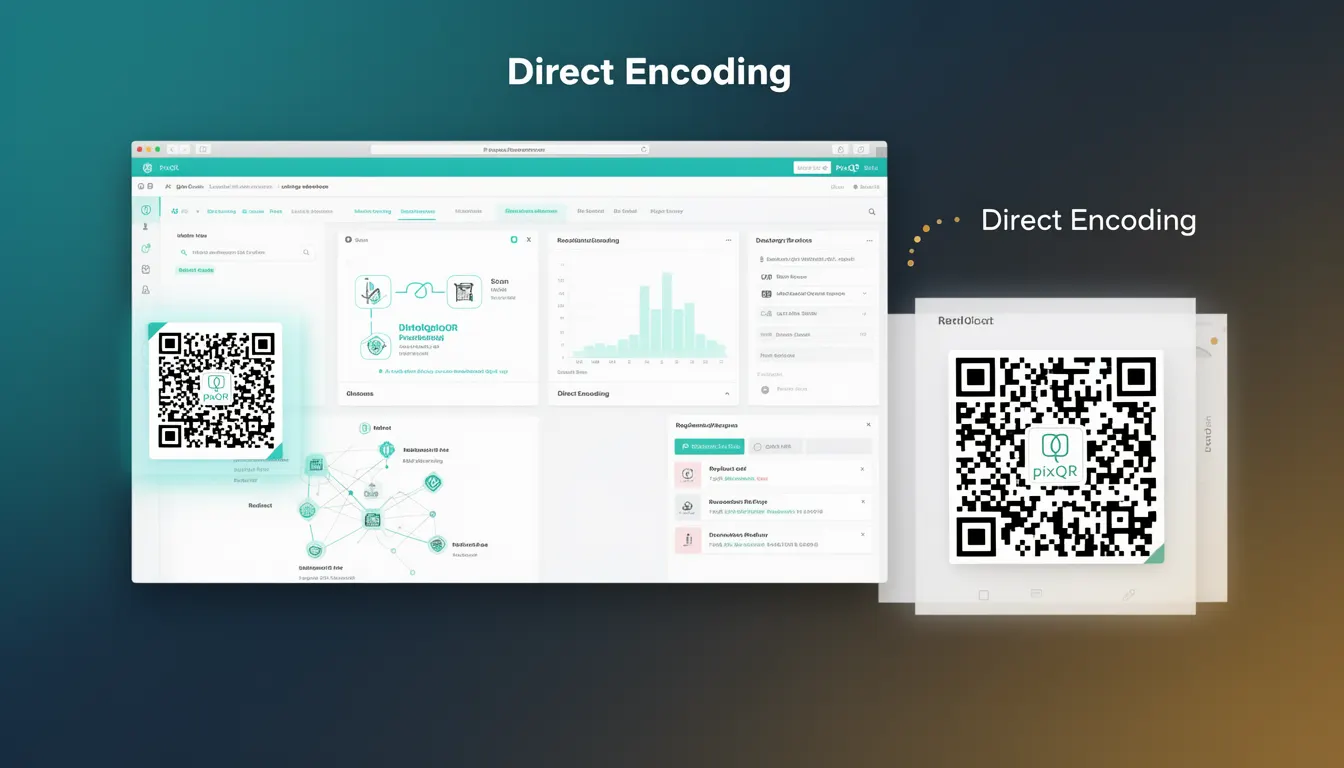
Direct Encoding in the context of PixQR refers to a QR code generation technique where the encoded data is fixed at the time of creation. Unlike dynamic QR codes that can be updated post-generation, a Direct Encoded QR code contains immutable data that cannot be altered after the code is generated. This approach ensures consistency and reliability for scenarios where the target content must remain static and unchanged.
Developers use Direct Encoding when they need to ensure that a QR code always points to the same resource or contains the same information, regardless of how many times it is scanned or shared. It is particularly relevant in branding, marketing, and secure distribution workflows where modification of the encoded content could compromise integrity or trustworthiness.
Why It Matters
Direct Encoding is essential in PixQR workflows where trust and consistency are paramount. It prevents accidental or malicious changes to QR code content, which is critical in scenarios such as product labels, official announcements, or secure access tokens. When QR codes are used for authentication, compliance, or print distribution, Direct Encoding guarantees that the data encoded in the QR code remains unchanged throughout its lifecycle.
For developers, Direct Encoding simplifies content management by eliminating the need for dynamic update mechanisms. It also enhances scan reliability because there is no ambiguity or risk of redirection to a different or unexpected destination. This is especially important in environments where QR code integrity is a security concern, such as in financial transactions, supply chain tracking, or access control systems.
How It Works
Direct Encoding in PixQR involves generating a QR code with a fixed payload that is embedded into the QR code image at the time of creation. This payload can be a URL, text, or other structured data, but it cannot be modified afterward. The QR code is generated using a deterministic process, ensuring that the same input data always produces the same output QR code image.
- Input data is processed through a hashing or encoding algorithm to generate a fixed payload.
- The payload is embedded into the QR code matrix using a standard encoding mode (numeric, alphanumeric, byte, or kanji).
- Once the QR code is generated, its structure and content are immutable.
- Scanning the QR code always returns the same fixed result, regardless of external changes to the source data.
- Direct Encoding supports multiple data types, including URLs, plain text, and structured data formats like JSON or XML.
Quick Reference
| Item | Purpose | Notes |
|---|---|---|
| Encoding Mode | Selects how data is encoded into the QR code matrix | Must match the data type for optimal compression |
| Fixed Payload | Data embedded into the QR code at creation | Cannot be changed after generation |
| QR Matrix | 2D grid structure containing encoded data | Immutable once generated |
| Data Type Support | URLs, text, JSON, XML | Each type requires specific encoding mode |
| Scanning Behavior | Always returns the same fixed result | Ensures reliability and trust |
Basic Example
PixQR Example QR
This QR links directly to this glossary page, so printed notes, onboarding docs, and support material can bring scanners back to the current reference.

This example shows how a simple URL is encoded directly into a QR code using PixQR’s Direct Encoding feature.
const qrData = "https://example.com/product/12345";
const qrCode = pixqr.generate({
  data: qrData,
  encodingMode: "direct"
});
console.log(qrCode);
The example uses the generate method with a fixed URL and specifies encodingMode: "direct". The resulting QR code will always point to the same URL, regardless of any future changes to the target page.
Production Example
In a production environment, Direct Encoding is used for branding, compliance, and secure distribution. This example demonstrates how a QR code is generated with validation and error handling for a product identifier.
function generateProductQR(productId) {
  if (!productId || typeof productId !== 'string') {
    throw new Error('Invalid product ID');
  }
  const url = `https://company.com/products/${productId}`;
  try {
    const qrCode = pixqr.generate({
      data: url,
      encodingMode: "direct",
      size: 300,
      errorCorrection: "M"
    });
    return qrCode;
  } catch (error) {
    console.error('QR generation failed:', error);
    throw error;
  }
}
const productQR = generateProductQR("ABC123XYZ");
This version includes input validation, error handling, and specific QR code settings. It is suitable for production workflows where reliability, consistency, and data integrity are required.
Common Mistakes
- Using Direct Encoding for dynamic content that needs to be updated post-generation, which leads to outdated or incorrect QR code behavior.
- Assuming that Direct Encoding automatically ensures security, when in fact it only guarantees immutability, not encryption or access control.
- Not validating input data before encoding, which can lead to malformed QR codes or unexpected scanning results.
- Choosing the wrong encoding mode for data type, resulting in larger QR codes or inefficient data representation.
- Confusing Direct Encoding with dynamic QR code behavior, causing incorrect API usage or configuration in PixQR workflows.
Security And Production Notes
- Direct Encoding ensures that the QR code content is immutable, which is beneficial for compliance and trust in sensitive applications.
- Always validate and sanitize input data to prevent injection or malformed QR code generation.
- Use appropriate error correction levels to maintain QR code scannability under various conditions.
- Consider access control or tokenization for sensitive data, as Direct Encoding alone does not provide encryption.
- Ensure that QR code size and matrix structure are optimized for print or digital display to maintain scan reliability.
Related Concepts
Direct Encoding is closely related to several QR code and data management concepts:
- Dynamic QR Codes — QR codes that can be updated post-generation, contrasting with the fixed nature of Direct Encoding.
- Encoding Modes — The methods used to represent data in QR code matrices, such as numeric, alphanumeric, and byte modes.
- Immutable Data — The principle that data remains unchanged once set, a core feature of Direct Encoding.
- QR Code Integrity — The assurance that a QR code will always return the same data, which Direct Encoding ensures.
- Scanning Reliability — The consistency of QR code scanning outcomes, a key benefit of Direct Encoding.