 PixQR
Overview
A Dense Static Code is a type of static QR code where the encoded data is fixed at the time of generation and cannot be modified afterward. This term specifically refers to QR codes that are designed to store a predetermined set of information, such as a URL, text, or binary data, and are intended for long-term use in environments where data integrity and consistency are critical.
In the context of PixQR, a Dense Static Code is typically generated for scenarios where a QR code must reliably point to a specific resource without any dynamic redirection or modification. This is often used in physical product labeling, marketing materials, or any application where the content must remain unchanged for the lifetime of the code.
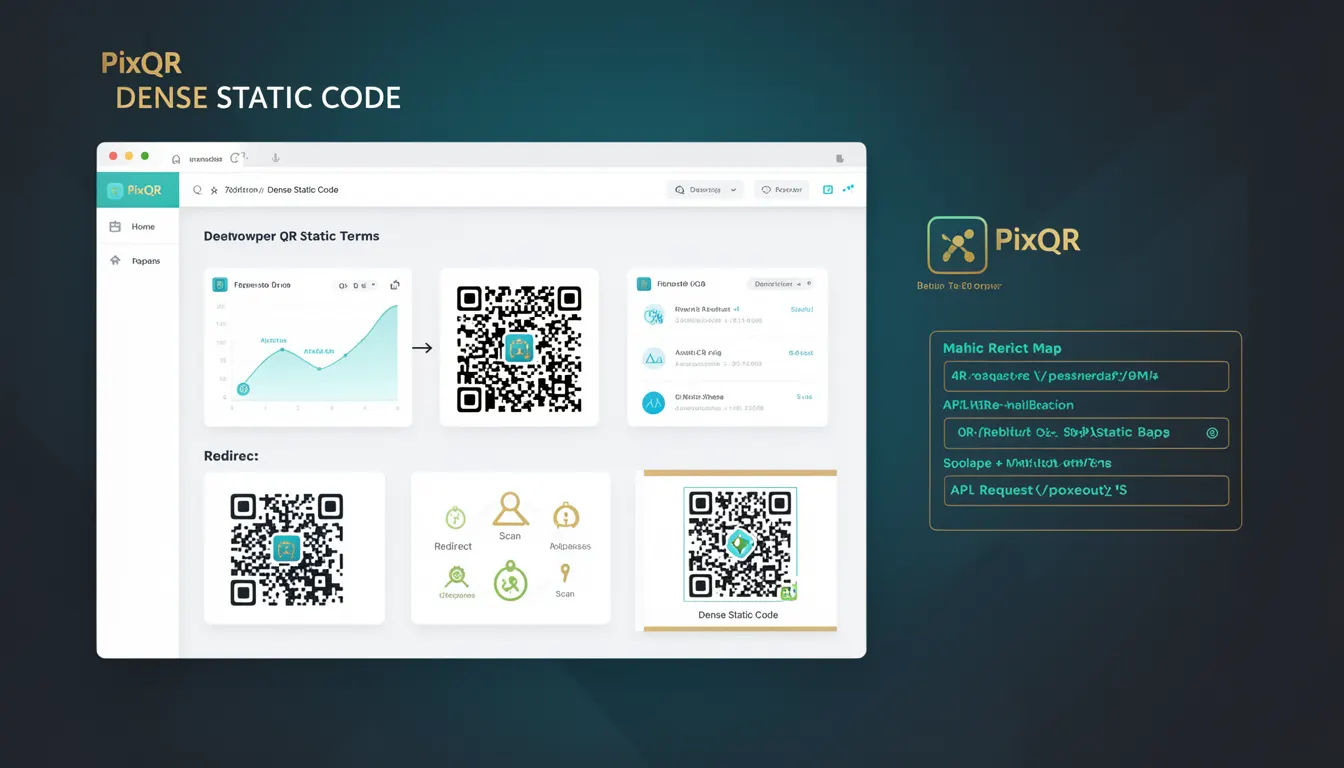
Why It Matters
For developers working with PixQR, understanding Dense Static Codes is essential because they are foundational to creating reliable, consistent, and predictable QR code systems. Unlike dynamic QR codes, which can be updated or redirected at any time, static codes provide stability and security by ensuring that once a code is created, its content remains fixed. This makes them ideal for applications where the integrity of the scanned data is paramount, such as product identification, secure access tokens, or brand-safe marketing campaigns.
From a production perspective, using Dense Static Codes avoids the complexity and risk of managing dynamic content updates. It also ensures that scanned codes will always lead to the same destination, which is crucial for analytics, compliance, and user experience consistency.
How It Works
The generation of a Dense Static Code involves encoding a fixed dataset into a QR code structure using a specific error correction level and data mode. The process is deterministic, meaning that the same input data will always produce the same QR code output. This makes Dense Static Codes suitable for long-term storage and reliable scanning.
- The data encoded into a Dense Static Code is immutable once generated, ensuring that the content scanned by users remains consistent.
- These codes are typically generated using a QR code library that supports fixed data encoding, such as those compliant with ISO/IEC 18004 standards.
- They are designed for high reliability and minimal error correction, making them efficient for physical print applications where scanning conditions may vary.
- Each Dense Static Code is associated with a unique identifier or hash to prevent accidental duplication or unauthorized modification.
- When integrated into a PixQR system, these codes are stored in a secure database with metadata that tracks their usage, creation, and expiration if applicable.
Quick Reference
| Item | Purpose | Notes |
|---|---|---|
| Fixed data encoding | Ensures content remains unchanged | Used in stable product labeling |
| Error correction level | Controls resilience to damage | Typically set to M or H for static codes |
| Immutable output | Prevents modification after generation | Enforced by PixQR platform |
| QR code version | Determines capacity and size | Auto-calculated based on input |
| Metadata tracking | Logs usage and creation | Stored in PixQR database |
Basic Example
PixQR Example QR
This QR links directly to this glossary page, so printed notes, onboarding docs, and support material can bring scanners back to the current reference.

This example shows a basic static QR code generation using a PixQR API endpoint. The data is encoded directly into the QR code without any dynamic parameters.
POST /api/v1/qrcode
{
  "data": "https://example.com/product/12345",
  "type": "static",
  "error_correction": "M"
}
The key line here is the "type": "static" parameter, which instructs PixQR to generate a Dense Static Code. The error correction level is set to "M" for medium resilience to damage.
Production Example
In a production environment, a Dense Static Code is often generated as part of a larger workflow that includes validation, metadata tagging, and secure storage. This example demonstrates how a system might generate a static code for a product label.
POST /api/v1/qrcode
{
  "data": "https://pixqr.com/products/abc123",
  "type": "static",
  "error_correction": "H",
  "metadata": {
    "product_id": "abc123",
    "label_type": "product",
    "created_at": "2025-04-01T10:00:00Z"
  },
  "tags": ["inventory", "brand-safe"]
}
This version includes metadata and tags to support tracking and compliance. The error correction is set to "H" (high) to ensure maximum durability, which is critical for physical product labels that may be exposed to wear or environmental conditions.
Common Mistakes
- Using static codes for dynamic content: This can lead to outdated or incorrect information being scanned, especially if the code is expected to change over time.
- Incorrect error correction level: Choosing a low correction level for physical labels may result in unreadable codes under adverse scanning conditions.
- Overlooking metadata tracking: Failing to track static codes can make it difficult to audit or manage them in large-scale deployments.
- Not validating input data: Including malformed or sensitive data in a static code can compromise security or cause scanning failures.
- Ignoring lifecycle management: Static codes, though immutable, still require a defined lifecycle for creation, storage, and decommissioning to maintain system integrity.
Security And Production Notes
- Static codes are inherently secure because they cannot be modified after creation, reducing the risk of unauthorized changes.
- Input data should always be sanitized to prevent injection or unexpected behavior during code generation.
- Metadata associated with static codes should be protected from unauthorized access to avoid data leakage.
- Use high error correction levels for physical applications to ensure code readability under various conditions.
- Implement access controls and audit logs to track who generates and manages static codes within a PixQR system.
Related Concepts
Dense Static Codes are closely related to several other QR code concepts. Dynamic Redirect Codes, for example, offer the opposite functionality, allowing content to be updated post-generation. QR Code Versions define the size and capacity of the code, while Error Correction Levels determine how much damage the code can sustain. Additionally, PixQR's support for brand-safe design and scan reliability ensures that static codes maintain quality and consistency across all use cases. Finally, Analytics and Operational Workflows are essential for tracking the usage and performance of static codes in production environments.