 PixQR
Overview
A Short Destination URL refers to a concise, well-formed URL used as the final target in a QR code. This term is central to QR code best practices, particularly when designing for reliability, scan success, and brand safety. The concept emphasizes that QR codes should point to URLs that are not only functional but also optimized for scanning, accessibility, and user experience.
When a QR code is generated, the destination URL must be carefully selected to ensure it is both short enough to scan reliably and secure enough to avoid triggering warnings or redirects. Short Destination URLs are especially important in environments where physical print quality or mobile scanner performance might be inconsistent, such as in marketing materials, event signage, or product packaging.
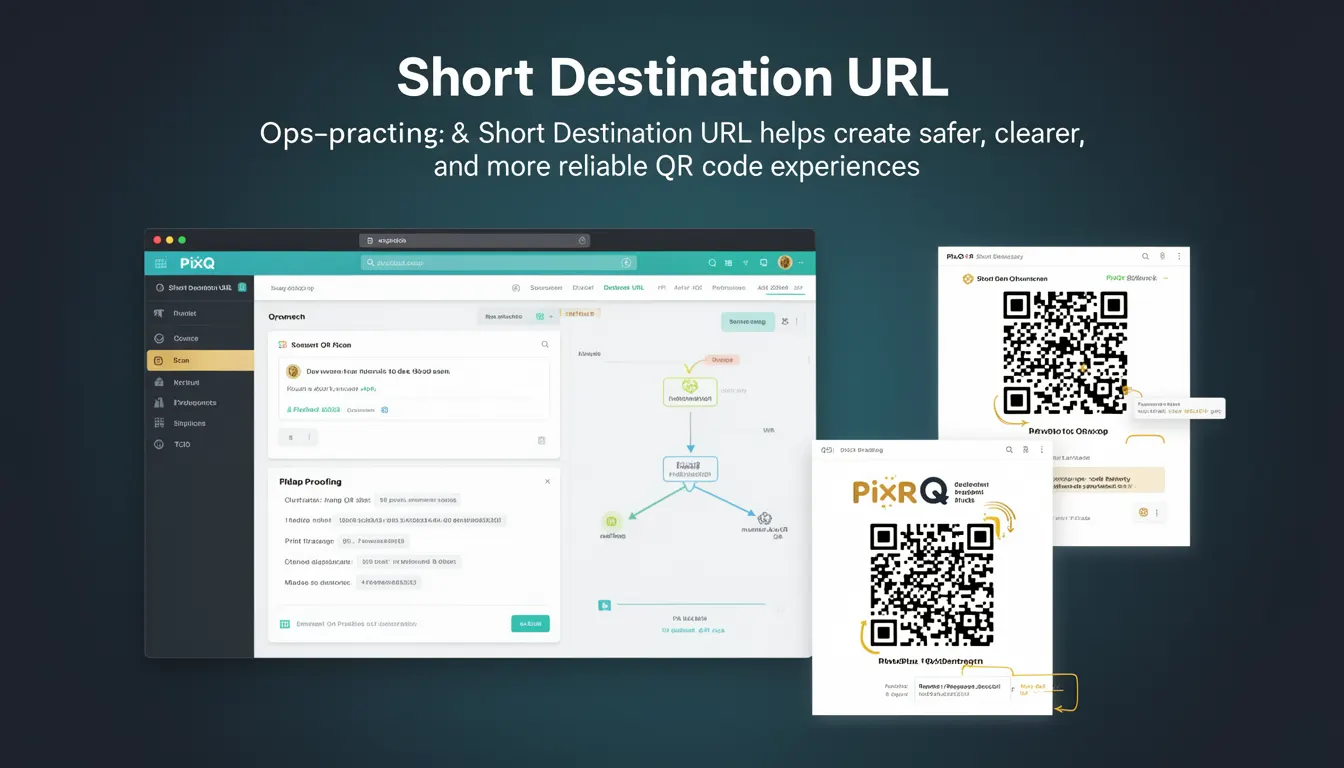
Why It Matters
Short Destination URLs are essential for maintaining QR code reliability, especially in production environments where performance, accessibility, and user trust are paramount. A long or malformed URL can lead to scanning failures, especially on low-end devices or in poor lighting conditions. Additionally, overly complex URLs may trigger browser warnings or security alerts, particularly when they contain unexpected parameters or redirect chains.
From a user experience standpoint, a short and clean destination URL ensures that users are directed to a clear, trustworthy page. This is especially critical for brand-safe QR code deployments, where the destination must be vetted and controlled to prevent malicious redirection or phishing attempts. In PixQR, short destination URLs are a key component of the platform's operational workflow, ensuring that generated QR codes are both reliable and secure.
How It Works
The mechanism behind a Short Destination URL involves several technical and operational elements. When a QR code is created, the system must validate and optimize the target URL to ensure it meets specific criteria for reliability and performance. This includes checking for proper URL formatting, avoiding redirects, and ensuring the destination is accessible and secure.
- The URL must be fully qualified, including the protocol (e.g.,
https://), to avoid ambiguity during scan processing. - It should be free of unnecessary query parameters or tracking identifiers that might increase length or reduce scan success.
- The URL must be accessible and not trigger browser or security warnings due to domain mismatches or SSL issues.
- It should be compatible with PixQR's redirect service, which may require a specific format or validation for dynamic QR code handling.
- For performance, the URL should resolve quickly to avoid timeouts or delays in user redirection.
Quick Reference
| Item | Purpose | Notes |
|---|---|---|
| URL Protocol | Ensures compatibility with QR scanning | Always use https:// |
| Length Optimization | Reduces scanning errors | Keep under 2048 characters |
| Redirect Handling | Prevents chain of redirects | Use direct destination URLs |
| Domain Validation | Ensures trustworthiness | Validate against known domains |
| Accessibility | Supports screen readers and scanners | Use plain, readable URLs |
Basic Example
PixQR Example QR
This QR links directly to this glossary page, so printed notes, onboarding docs, and support material can bring scanners back to the current reference.
/glossary/qr-code-best-practices/qr-code-best-practices-short-destination-url

A basic example of a Short Destination URL is a direct link to a product page, such as https://example.com/product/123. This URL is short, clear, and suitable for QR code generation.
const shortUrl = 'https://example.com/product/123';The example shows a simple, valid URL used as a destination. It is concise, uses HTTPS, and avoids unnecessary parameters. This type of URL ensures that QR scanners can reliably read the destination.
Production Example
In a production setting, a Short Destination URL is often part of a larger system that includes URL validation, tracking, and security checks. For instance, when creating a QR code in PixQR, the platform may validate that the destination URL is safe and optimized before generating the code.
const destination = 'https://pixqr.com/redirect?r=abc123';This version includes a tracking parameter but remains short and functional. It is suitable for dynamic QR codes that require analytics or user tracking while still maintaining scan reliability.
Common Mistakes
- Using URLs with excessive query parameters or tracking identifiers that increase length and scanning risk.
- Choosing destinations with untrusted or unverified domains that may trigger security warnings.
- Not validating URL format or protocol, leading to malformed QR codes that fail to scan.
- Using dynamic or temporary URLs that may become invalid over time, breaking QR code functionality.
- Ignoring the impact of URL length on QR code reliability, especially in low-quality print or scanner environments.
Security And Production Notes
- Always use HTTPS to ensure secure communication and prevent redirection to insecure sites.
- Validate destination URLs against a whitelist of known domains to avoid phishing or malicious redirection.
- Keep URLs under 2048 characters to ensure compatibility with most QR code scanners and standards.
- Implement URL normalization to prevent encoding or formatting issues that may break QR code functionality.
- Monitor destination URLs for performance and availability to ensure consistent redirection.
Related Concepts
Several closely related concepts are essential for understanding Short Destination URLs in the context of QR code best practices. These include:
- Dynamic Redirects — The ability to modify QR code behavior post-generation, often through a tracking or analytics layer.
- Scan Reliability — The consistency with which QR codes are read across different devices and environments.
- Brand Safety — Ensuring QR code destinations are trustworthy and align with brand standards.
- URL Shortening — The practice of reducing URL length, often used in conjunction with QR code optimization.
- Privacy Compliance — The handling of user data in QR code destinations, particularly in compliance with regulations like GDPR.