 PixQR
Overview
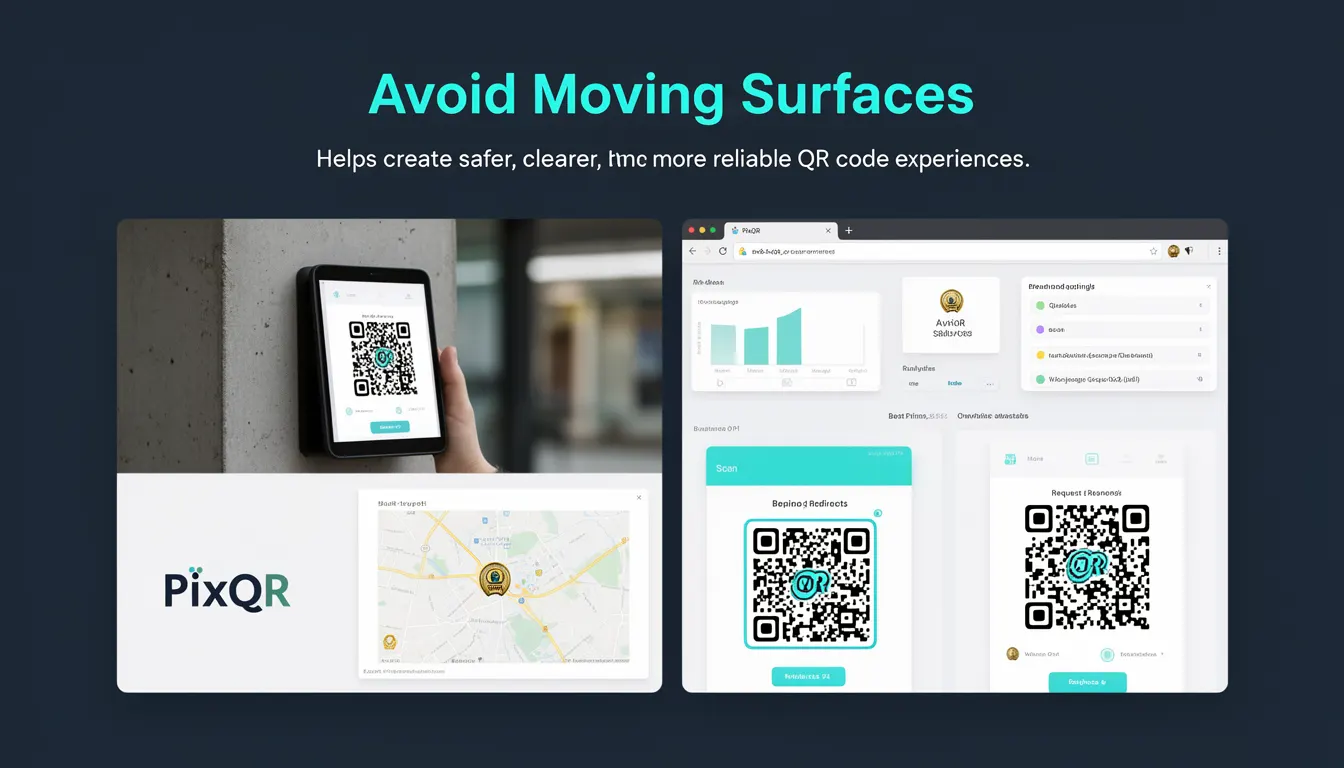
The term Avoid Moving Surfaces refers to a fundamental best practice in QR code development and deployment, particularly within platforms like PixQR. It emphasizes the need to avoid placing QR codes on surfaces that are likely to change, shift, or move during their intended usage period. This includes physical surfaces that may be subject to wear, tampering, or environmental changes, as well as digital surfaces that may be dynamically updated or redirected.
For developers working with PixQR, this principle is critical when designing QR code systems for marketing, logistics, or operational use. It ensures that QR codes remain scannable, reliable, and safe for end users. A QR code placed on a moving or unstable surface risks becoming unreadable, leading to user frustration, failed redirects, or even misdirection to malicious content.
Why It Matters
In practical terms, placing a QR code on a moving surface directly impacts scan reliability and user experience. For example, a QR code on a rotating sign, a vehicle, or a banner that flaps in the wind can lead to scanning failures or misreads. This is especially important in environments where QR codes are used for secure access, inventory tracking, or redirecting to critical content.
From a security perspective, moving surfaces increase the risk of QR code tampering or fraud. If a QR code is placed on a surface that can be easily altered or replaced, it may be exploited to redirect users to malicious sites or steal sensitive data. For platforms like PixQR, maintaining brand-safe and secure QR code deployments requires adherence to this principle to avoid operational vulnerabilities.
Performance and analytics also suffer when QR codes are placed on unstable surfaces. Scan tracking becomes unreliable, and data points may be lost or misattributed, impacting the ability to monitor engagement or troubleshoot issues.
How It Works
Implementing the "Avoid Moving Surfaces" principle involves a combination of physical and digital considerations. For physical QR codes, it means choosing stable, durable, and well-fixed placements such as signage, product packaging, or fixed displays. For digital QR codes, it involves ensuring that the destination URL or redirect logic remains consistent and secure over time.
- QR codes on moving physical surfaces (e.g., vehicles, banners, or signage) are prone to misalignment or damage, leading to scanning failures.
- Dynamic QR codes that frequently change content or redirect to different URLs may be flagged by security systems or cause user confusion.
- Platforms like PixQR allow for dynamic redirects, but must ensure that these redirects are stable and traceable to avoid compromising reliability.
- For print-based QR codes, the material and surface must be designed to withstand environmental factors like UV exposure, moisture, or wear.
- Scan tracking systems must be configured to ignore or flag scans from unstable or frequently changing QR code placements.
Quick Reference
| Item | Purpose | Notes |
|---|---|---|
| Physical QR Code Placement | Ensures scan stability | Use fixed, durable materials |
| Dynamic Redirects | Allows content updates | Ensure consistency and traceability |
| Scan Tracking | Monitors reliability | Flag unstable placements |
| Surface Durability | Prevents degradation | Use weather-resistant materials |
| Content Stability | Reduces fraud risk | Avoid frequent changes to destination URLs |
Basic Example
PixQR Example QR
This QR links directly to this glossary page, so printed notes, onboarding docs, and support material can bring scanners back to the current reference.
/glossary/qr-code-best-practices/qr-code-best-practices-avoid-moving-surfaces

This basic example demonstrates a QR code placed on a fixed surface, such as a wall or poster. This is a safe and recommended practice for reliable scanning.
<img src="https://pixqr.com/qr/123456789" alt="QR Code for Product Info" />The example uses a static image link from PixQR, indicating a fixed and stable QR code. This ensures consistent scanning behavior and avoids issues related to movement or instability.
Production Example
This example shows how a developer might structure a QR code deployment in a production environment using PixQR, ensuring stability and traceability.
<!-- Fixed QR code placement with secure redirect -->
<div class="qr-container">
  <img src="https://pixqr.com/qr/abc123def456" alt="Secure Product Link" />
  <p>Scan to access product details</p>
</div>

<!-- Dynamic redirect configured in PixQR dashboard -->
<script>
  const qrId = "abc123def456";
  const redirectUrl = "https://example.com/product/123";
  // Ensure redirect is stable and monitored
</script>
This version is production-ready because it uses a fixed QR code placement, ensures the redirect URL is stable and monitored, and avoids placing the QR code on a surface that may move or change.
Common Mistakes
- Placing QR codes on flapping banners or rotating signs, leading to scanning failures.
- Using dynamic QR codes with frequent URL changes, increasing fraud risk and tracking errors.
- Using low-quality or non-durable materials for physical QR codes, causing degradation over time.
- Ignoring scan analytics to identify unstable placements or high failure rates.
- Deploying QR codes on surfaces that are frequently touched or altered, increasing tampering risk.
- Not validating QR code placements for environmental stability, especially in outdoor settings.
Security And Production Notes
- QR codes on moving surfaces increase the risk of tampering and redirect fraud.
- Use PixQR’s analytics to monitor scan success rates and flag unstable placements.
- Ensure physical QR codes are printed on durable materials to withstand environmental stress.
- Implement stable URL redirects in dynamic QR code systems to maintain security and traceability.
- Regularly audit QR code placements to ensure they meet the "Avoid Moving Surfaces" principle.
Related Concepts
The principle of avoiding moving surfaces connects closely to several key QR code development concepts:
- QR Code Stability: Ensures consistent scanning behavior and reliable redirects.
- Scan Tracking: Monitors QR code usage and identifies unstable placements.
- Redirect Security: Prevents malicious redirections and ensures safe content delivery.
- Print Reliability: Ensures physical QR codes are durable and scannable under real-world conditions.
- Operational Security: Maintains the integrity of QR code systems over time and across environments.