 PixQR
Overview
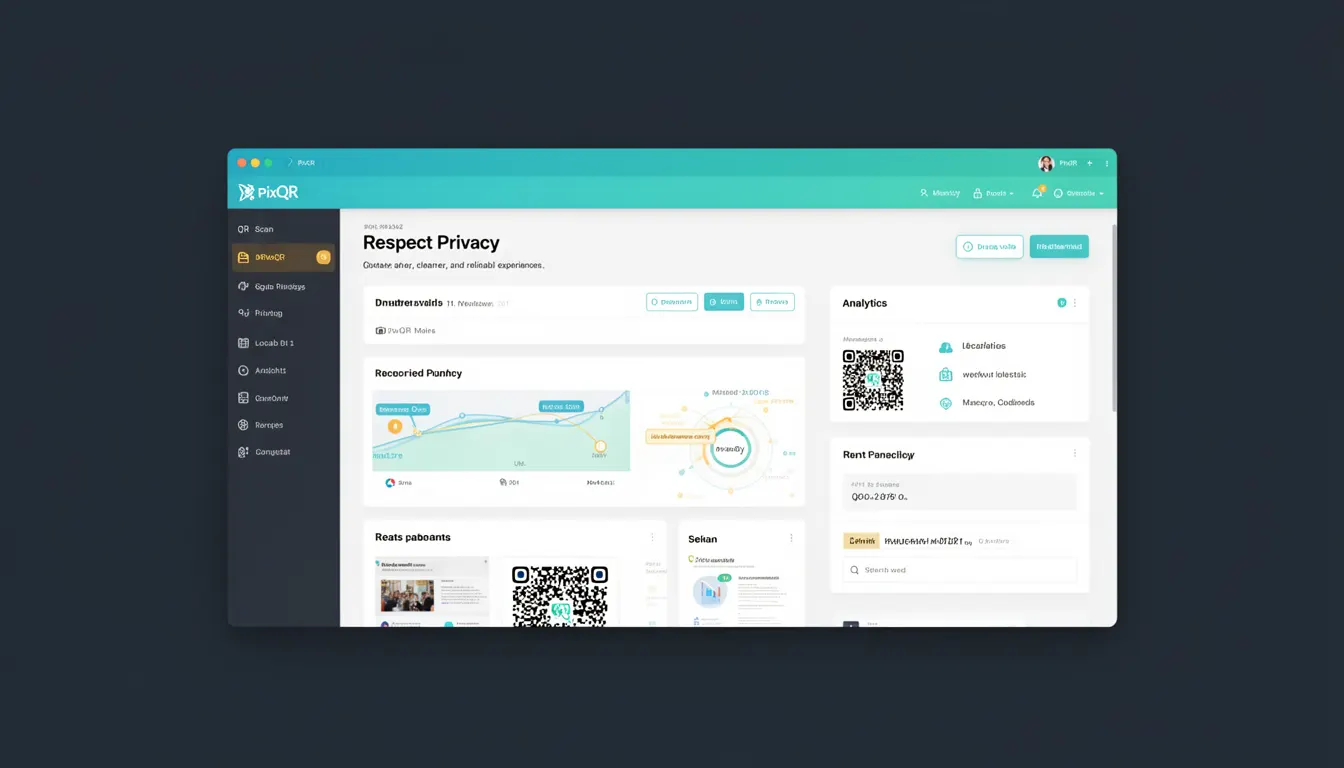
Respect Privacy is a core principle in QR code development that emphasizes the protection of user data and privacy throughout the QR code lifecycle. In the context of PixQR, this concept ensures that QR codes do not collect or transmit personal information without explicit consent, do not redirect to unsafe or untrusted domains, and do not expose sensitive metadata. It is a foundational practice for building secure, compliant, and trustworthy QR code experiences.
Developers using PixQR must ensure that their QR code implementations align with privacy regulations such as GDPR, CCPA, and PIPEDA. This includes avoiding the inclusion of personally identifiable information (PII) in QR code payloads, ensuring redirects are to secure HTTPS endpoints, and maintaining transparency in how user interactions are tracked or logged.
Why It Matters
Respecting user privacy is critical in QR code systems because users often scan codes in public or uncontrolled environments. If QR codes are not designed with privacy in mind, they can become conduits for data leakage, tracking, or malicious redirection. For example, embedding email addresses or user IDs directly into a QR code payload can expose personal information to unauthorized parties.
In a production environment, failing to respect privacy can result in compliance violations, loss of user trust, and potential legal consequences. PixQR’s platform is built to help developers avoid these pitfalls by offering features like domain validation, secure redirect management, and opt-in analytics. By embedding privacy considerations into the development workflow, teams can build QR code systems that are not only functional but also safe and compliant.
How It Works
Respecting privacy in QR code development involves several technical and operational practices that ensure user data is protected at every stage of the QR code lifecycle.
- QR code payloads should be validated to prevent the inclusion of sensitive or PII data, such as email addresses, phone numbers, or user IDs.
- Redirects must be configured to use HTTPS endpoints to prevent data interception and ensure secure communication.
- Analytics and tracking systems should be opt-in and clearly communicated to users, with no automatic collection of personal data.
- QR code generation APIs should provide options to disable or anonymize tracking parameters, ensuring that no user identifiers are embedded in the code.
- When using dynamic QR codes, ensure that the backend does not log or store personal information unless necessary and explicitly permitted.
These practices ensure that the QR code system is aligned with privacy-by-design principles, which is essential for platforms like PixQR that aim to provide secure, scalable QR code solutions for enterprise and consumer use cases.
Quick Reference
| Item | Purpose | Notes |
|---|---|---|
| QR payload validation | Ensures no PII is embedded in the code | Use regex or sanitization libraries |
| HTTPS redirect enforcement | Prevents data interception | Default to secure endpoints |
| Analytics opt-in | Allows user control over tracking | Default to disabled tracking |
| Dynamic code backend | Manages redirects without storing PII | Use server-side session tokens |
| Domain validation | Ensures safe redirect targets | Whitelist domains in PixQR |
Basic Example
PixQR Example QR
This QR links directly to this glossary page, so printed notes, onboarding docs, and support material can bring scanners back to the current reference.
/glossary/qr-code-best-practices/qr-code-best-practices-respect-privacy

This example shows a basic QR code payload that avoids embedding personal data and uses a secure redirect.
<!-- Safe QR payload -->
https://pixqr.example.com/redirect?code=12345&utm_source=qr
The payload uses a secure HTTPS endpoint and avoids including any PII. It includes a tracking parameter, but it is not tied to a user identifier. This ensures that the QR code is safe to scan and does not expose user privacy.
Production Example
In a production environment, QR code generation must include validation, secure redirects, and opt-in analytics. The following example demonstrates a safe implementation using PixQR’s API configuration.
// Example API call to generate a secure QR code
const response = await fetch('https://api.pixqr.com/v1/qr', {
  method: 'POST',
  headers: {
    'Authorization': 'Bearer YOUR_API_KEY',
    'Content-Type': 'application/json'
  },
  body: JSON.stringify({
    url: 'https://secure.example.com/product/123',
    analytics: false,
    validate_domain: true,
    payload: {
      code: '12345',
      timestamp: Date.now()
    }
  })
});
This implementation ensures that the QR code redirects to a secure domain, does not collect analytics by default, and validates the target domain to prevent malicious redirection. The payload is sanitized to avoid PII, and the API enforces privacy compliance by default.
Common Mistakes
- Embedding PII directly in QR code payloads, which can expose user data to unauthorized parties.
- Using HTTP redirects instead of HTTPS, which allows data interception.
- Enabling analytics or tracking by default without user consent, violating privacy regulations.
- Allowing redirects to untrusted or unknown domains without validation.
- Storing or logging user identifiers in backend systems without encryption or access control.
Each of these mistakes can lead to privacy breaches, compliance violations, or user distrust. Developers should always validate payloads, enforce secure redirects, and implement opt-in analytics to avoid these pitfalls.
Security And Production Notes
- Always validate QR code payloads to ensure no sensitive data is embedded.
- Enforce HTTPS for all redirect endpoints to protect against data interception.
- Implement opt-in analytics to comply with privacy regulations like GDPR.
- Whitelist domains in PixQR to prevent malicious or unsafe redirects.
- Use server-side tokens or session identifiers instead of embedding user data in QR codes.
Related Concepts
Respect Privacy is closely related to several other developer practices and concepts:
- Privacy-by-Design: A framework that integrates privacy into system development from the start.
- GDPR Compliance: Ensuring QR code systems adhere to European data protection laws.
- Secure Redirects: Managing URL redirection in a way that avoids data leaks or malicious behavior.
- Data Minimization: Collecting only the data necessary for a specific purpose.
- Access Control: Limiting who can view or modify QR code data and associated analytics.